
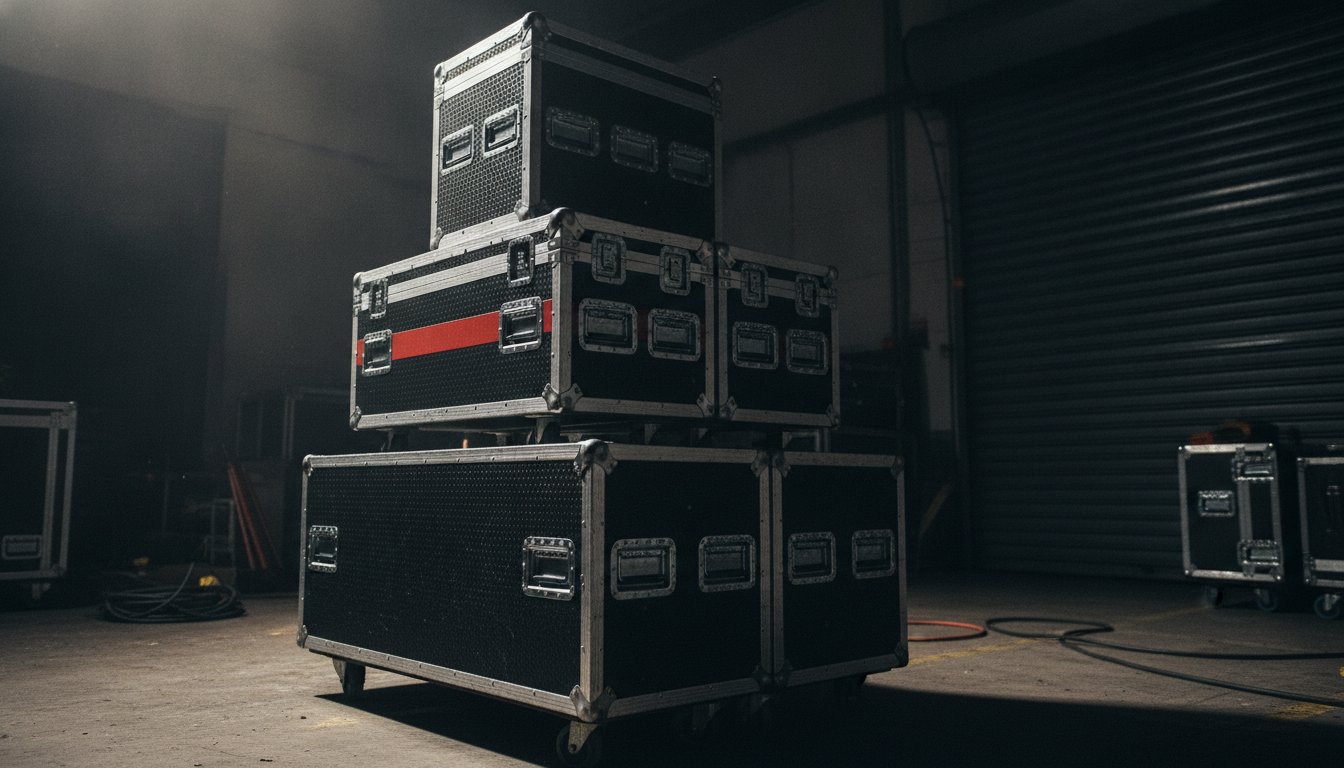
With industrial aluminum prices up 33% and steel climbing 63% since 2020, the financial cost of equipment replacement has transitioned from a routine expense into a significant capital risk. You recognize that a single mechanical failure during load-in does more than stall a soundcheck; it compromises the technical integrity of the entire production cycle. Protecting audio gear on tour is no longer just about convenience. It's a matter of engineering precision and logistical discipline.
This guide provides the technical framework and industrial standards required to safeguard professional audio equipment during high-stakes touring. You'll learn how to implement strategies that ensure zero equipment downtime and maximize the long-term resale value of your inventory. We will analyze the impact of ATA 300 Revision 2020.1 compliance, the latest IATA regulations for lithium battery transport, and the structural requirements for efficient truck packing configurations.
Key Takeaways
- Analyze mechanical threats such as multi-axis vibration and stacking pressure to implement ATA-300 Category 1 protection standards for long-term equipment survival.
- Evaluate shell materials including high-density plastics and plywood with honeycomb-pattern surfaces to enhance structural durability and maintain aesthetic integrity.
- Optimize logistical efficiency for protecting audio gear on tour by aligning case dimensions with vehicle floor space to eliminate shifting and cargo damage.
- Execute thermal management and moisture control protocols to prevent condensation and overheating in critical components like amplifier rack cases and power distribution units.
- Leverage custom-build engineering and specialized internal foam configurations to ensure precise fitment for specific console brands and bespoke touring requirements.
Physical Integrity: Understanding Mechanical Protection Standards
Mechanical integrity is the primary variable in equipment survival. Protecting audio gear on tour requires a mitigation strategy for multi-axis vibration, vertical drops, and cumulative stacking pressure. These forces act upon the chassis of professional consoles and rack-mounted units, often leading to solder joint failure or frame deformation. While a standard enclosure might suffice for local storage, transport-grade engineering is necessary to withstand the G-force impacts of air freight and long-haul trucking. High-stakes production environments demand a shift from basic storage utility to rigorous Road case construction standards that prioritize structural rigidity as the first line of defense.
The industrial benchmark for this level of protection is the ATA-300 Category 1 standard. Following the 2020.1 revision, these specifications ensure that a case can survive the rigors of high-frequency deployment without structural compromise. For engineers, this means selecting ProX Cases and similar professional housings that are built to withstand the physical demands of the global supply chain. Protecting audio gear on tour involves more than just padding; it requires a calculated approach to material science and mechanical assembly.
The Anatomy of Impact Absorption
External shells serve as the primary conduit for kinetic energy distribution. When a case experience a drop, the outer material must dissipate the force across its surface area rather than transferring the shock directly to the internal hardware. Recessed hardware is a critical engineering requirement in this context. By mounting latches and handles within the plane of the shell, you prevent shearing forces from stripping the hardware during tight truck packs or conveyor belt transit. Reinforced ball corners provide the necessary stacking stability, allowing for high-density loading without the risk of corner collapse or shifting during transit.
Internal Support and Component Stress
Large-format mixing consoles are particularly susceptible to "chassis flex," where the internal frame of the desk twists during movement. This torsion places immense stress on internal PCB boards and ribbon cables. Engineering-grade cases mitigate this by providing a rigid external housing that prevents the equipment frame from moving independently of its support structure. ATA Specification 300 Category I designates a reusable shipping container designed to withstand at least 100 round-trip shipments while maintaining the physical integrity of the enclosed equipment. By securing the external housing, you maintain the alignment of sensitive internal components, ensuring that the gear performs to specification upon arrival at the venue.
Case Engineering: Selecting Materials for Maximum Durability
Material selection directly influences the mean time between failure (MTBF) for touring inventory. Protecting audio gear on tour starts with the shell, where engineering specifications must match the anticipated mechanical stress of the road. While standard plywood cases offer high structural rigidity, the industry has evolved to prioritize specific weight-to-strength ratios. High-density polyethylene (HDPE) provides superior impact resistance in lightweight applications, but traditional 3/8-inch or 1/2-inch plywood remains the professional standard for heavy-duty enclosures due to its superior shear strength and mounting stability for heavy hardware.
Plywood vs. Honeycomb Digital™ Surfaces
The Honeycomb Digital™ design utilizes a hexagonal grid pattern that serves a dual purpose. It enhances the surface tension of the laminate, making it significantly more resistant to scratches and gouges compared to flat surfaces. This texture also improves the friction coefficient between stacked cases, reducing the risk of lateral shifting during transit. For professionals requiring the highest tier of European engineering, Santosom Cases undergo rigorous impact testing to ensure they maintain structural integrity through repeated loading cycles. The choice between standard plywood and textured laminates often depends on the frequency of deployment and the specific stacking requirements of your truck pack.
Custom Foam Lining and Shock Mounting
Internal protection requires a specific understanding of polymer science. Protecting audio gear on tour involves managing the deceleration of internal components during an impact. This is achieved through calculated foam density. Ether-based polyurethane foam is generally preferred for its durability and resistance to "foam rot" or crumbling over time, which is common in low-grade materials. In contrast, ester-based foam offers better cushioning for lightweight, delicate electronics but can be more susceptible to environmental degradation.
Selecting the wrong density can lead to "bottoming out," where the equipment hits the case shell despite the padding. For high-sensitivity units like power amplifiers, shock-mounted rack systems utilize internal rail structures suspended on rubber isolators to absorb high-frequency vibrations. When managing these environments, protecting sensitive electronics from moisture and static is essential, as condensation can lead to internal corrosion during rapid temperature shifts. Hardware selection must also prioritize mechanical reliability. Steel butterfly latches provide the necessary clamping force to maintain a gasket seal, while spring-loaded handles ensure that lifting points remain flush with the case shell when not in use. This prevents snagging during tight truck packs.
If you're seeking engineering-grade protection for your professional inventory, browse the full range of ProX Cases to find the exact specification for your hardware.
Logistical Strategy: Optimizing Truck Pack and Load-In Safety
Logistical efficiency is the bridge between successful case engineering and operational longevity. Protecting audio gear on tour requires a strategic understanding of trailer volume, weight distribution, and mechanical friction. While individual case integrity is vital, the collective stability of the truck pack determines the survival of sensitive internal components. Strategic loading minimizes the kinetic energy transferred to the gear during high-speed transit and rough road conditions. By treating the truck as a single, unified system, you reduce the risk of structural damage caused by load shifting or excessive vibration.
Standardized Dimensions for Global Logistics
Professional touring logistics rely on the internal width of standard trailers, typically measuring between 90 and 96 inches. Engineering cases with 22.5-inch and 45-inch footprints allows for a "tight pack" that utilizes every square inch of floor space. Utilizing TruckPaX™ Truck Pack Cases ensures that modular units fit together with zero empty space, preventing the lateral movement that leads to hardware shearing. Interlocking caster cups are a critical secondary feature; they provide a mechanical lock between stacked units. This vertical stability prevents cases from migrating during heavy braking or sharp turns, maintaining the center of gravity and protecting the stagehand teams during the load-out process.
Preventing Transit-Induced Mechanical Failure
A tightly packed truck acts as a secondary shock absorber. When cases are wedged together without gaps, the entire load vibrates at a single frequency rather than individual units colliding with one another. High-risk zones in a trailer, such as the area directly over the axles, experience the highest G-force impacts. Delicate audio gear, including mixing consoles and amplifier racks, should be positioned in the "sweet spot" between the axles where vertical oscillation is minimized. Standardized case dimensions facilitate an interlocking footprint that eliminates lateral shifting and reduces mechanical stress during long-haul transport. Proper tie-down points must be utilized to secure the "wall" of cases, ensuring that stacking pressure is distributed evenly across the reinforced ball corners rather than the weaker shell surfaces.

Environmental Management: Thermal and Moisture Control
Environmental variables represent a persistent threat to electronic longevity, often manifesting as invisible atmospheric damage. Protecting audio gear on tour requires a rigorous mitigation strategy for thermal shock and moisture accumulation. When equipment transitions from a cold trailer into a humid venue, rapid condensation forms on internal circuit boards. This "sweat" leads to immediate short circuits or latent oxidation. Industrial-grade desiccant packs are necessary within sealed enclosures to maintain a stable relative humidity, preventing the degradation of dielectric materials and solder joints during long-term storage or sea-freight transit.
Airflow Engineering in Rack Systems
High-density processing racks generate significant heat soak during extended operation. Effective thermal management in amplifier rack cases depends on calculated airflow pathways and thermal dissipation. Front-and-rear rack rail depth must provide sufficient clearance for cable management without obstructing the intake or exhaust ports of the hardware. Passive cooling utilizes perforated vented panels to facilitate natural convection. In contrast, active systems employ integrated fan units to force air through the chassis, ensuring that digital processing gear remains within safe operating temperatures during high-duty cycles.
Extreme Weather Protection
Outdoor festival environments require a transition from traditional plywood to specialized watertight polymer shells. UltronX™ Watertight Cases utilize injection-molded high-impact resins and EPDM O-ring seals to provide an airtight barrier against the elements. These cases feature pressure equalization valves that manage internal pressure during altitude changes while maintaining the waterproof seal. Regular inspection of the gasket integrity ensures that I/O ports and sensitive faders remain protected from fine dust, sand, and moisture in abrasive outdoor settings. This engineering-grade sealing prevents debris ingress that can cause mechanical failure in faders and potentiometers.
For gear that demands the highest tier of atmospheric and impact protection, browse the UltronX™ range of watertight enclosures to secure your professional inventory.
The ProX Engineering Approach: Hard-Shell Reliability
ProX utilizes a methodical approach to enclosure engineering. The brand prioritizes functional excellence over aesthetic trends. Protecting audio gear on tour requires a chassis that can withstand the cumulative stress of international logistics. For high-value hardware like Pioneer DJ units or large-format consoles, ProX Cases provide the structural reinforcement needed to prevent mechanical failure. This reliability is the result of rigorous precision manufacturing and a deep understanding of the physical demands placed on professional production gear.
Production crews depend on logistical consistency to maintain tight schedules. Santosom-engineered mixer consoles represent the pinnacle of this approach, offering a balance of high-density protection and ergonomic utility. These units integrate seamlessly into modular truck packs. This ensures that the footprint of your inventory remains predictable across different transport vehicles. By maintaining standardized dimensions, you eliminate the variables that lead to load-in delays and equipment damage.
Precision Manufacturing and Quality Control
The manufacturing process relies on CNC-machined accuracy to ensure every component meets exact tolerances. This precision extends to the assembly of shells, hardware, and internal support structures. Standardized hardware components allow for efficient maintenance. If a latch or handle is damaged during a high-impact load-in, replacement parts are readily available and easily installed. For bespoke requirements that fall outside standard dimensions, ZCASE Custom Builds provide a tailored engineering solution. These Polish-made cases are built to the specific mechanical requirements of unique production rigs, maintaining the same industrial standards found in the core product line.
Next Steps: Evaluating Your Touring Inventory
Protecting audio gear on tour is an ongoing engineering challenge. It's recommended that production managers conduct a comprehensive protection audit of their current inventory every 12 months. This involves inspecting gasket integrity, foam density, and hardware tension. If your current enclosures show signs of structural fatigue or shell deformation, it's time to upgrade to industrial-grade protection.
Consult with technical specialists to develop a custom logistical strategy that aligns with your specific touring cycle. The ProX dealer network provides immediate access to professional-grade enclosures, ensuring that your equipment remains operational regardless of the touring environment. To ensure your crew maintains clear coordination during complex setups, learn more about Industrial Wireless Communication Equipment Sales for high-performance systems. By prioritizing engineering precision in your case selection, you ensure zero downtime and maximize the resale value of your professional audio assets.
Securing Technical Assets for Future Deployment
Operational longevity is the direct result of engineering discipline and logistical foresight. Integrating ATA-300 Category 1 standards with high-density truck pack strategies ensures that sensitive hardware remains within its original performance specifications. Protecting audio gear on tour requires a shift from reactive repairs to proactive structural management. By utilizing modular dimensions and advanced polymer science, production teams reduce the risk of mechanical fatigue and environmental degradation across the entire inventory lifecycle.
ProX has been engineering performance-grade protection solutions since 1984. The reliability of these systems is why professionals utilizing Pioneer DJ, QSC, and Roland hardware depend on our mechanical assembly standards. With a global dealer network providing localized touring support, technical crews can maintain operational consistency regardless of the territory. Precision-built enclosures provide the necessary backbone for high-stakes production environments where equipment failure isn't an option. Take the next step in inventory management and browse the full range of ProX professional cases to safeguard your rig. Your equipment represents a significant capital investment; ensure it's built to last for every load-in.
Frequently Asked Questions
How do I protect audio equipment from heat on tour?
Thermal management requires maintaining unobstructed airflow through active or passive cooling systems. Rack mounted gear should utilize vented panels to facilitate natural convection or integrated fan units for forced air cooling. Protecting audio gear on tour from thermal soak also involves ensuring front and rear rack rail depths provide enough clearance for cables to avoid blocking intake ports.
What is an ATA-300 rated case and why does it matter?
ATA Specification 300 Category I is the industrial benchmark for reusable shipping containers designed to withstand a minimum of 100 round trip shipments. This rating ensures that the enclosure provides the mechanical integrity needed to survive the high G-force impacts of air freight and global logistics. It's the primary standard for ensuring long term equipment survival in high stakes environments.
Are hard shell cases better than gig bags for touring?
Hard shell enclosures are the only suitable option for professional touring due to their structural rigidity and impact dissipation. Gig bags lack the compression strength to withstand stacking pressure and provide zero protection against shearing forces during truck loading. Hard shells utilize plywood or high density polymers to prevent chassis flex and internal component damage.
How do I prevent moisture damage to my audio console?
Preventing moisture damage requires the use of industrial desiccants and proper thermal stabilization protocols. You should allow equipment to acclimate to the venue's ambient temperature before applying power to prevent internal condensation from forming on PCB boards. For outdoor environments, utilizing watertight shells with EPDM O-ring seals provides a necessary barrier against humidity and rain.
What is the best way to transport audio gear in a truck?
The most effective strategy is utilizing modular dimensions like those found in TruckPaX™ Truck Pack Cases to create a tight pack. This eliminates empty space and prevents lateral shifting during transit. You should always secure the load with rated tie down points and position sensitive electronics between the vehicle's axles to minimize vertical vibration.
Can I use standard plywood for a DIY touring case?
Standard plywood lacks the structural shear strength and resin quality required for professional touring applications. Industrial cases use specialized 3/8 inch or 1/2 inch laminated plywood that's engineered to hold hardware fasteners under extreme stress. DIY builds often fail at the corners or handle mounting points because the material cannot withstand repeated mechanical impacts.
How do I calculate the foam density needed for my gear?
Foam density is calculated by dividing the total weight of the equipment by the surface area of the supporting foam. The density must be high enough to prevent the gear from bottoming out during a drop but soft enough to decelerate the unit safely. Ether based polyurethane is preferred for professional use because it resists the environmental rot common in lower grade materials.
What are the most common causes of equipment failure on tour?
Most failures result from multi axis vibration, chassis flex, and thermal mismanagement during operation. Protecting audio gear on tour involves mitigating these physical threats through calculated case engineering and strategic truck packing. Mechanical shock from improper handling and internal condensation during rapid temperature shifts are also leading causes of latent electronic failure.
Disclaimer
Any trademarks, trade names or brand names appearing herein that do not belong to ProX are the property of their respective owners and/or companies, and such appearance doesn't and shall not constitute or imply endorsement, sponsorship or recommendation by ProX.


