

What if a case fits your LED panels but still slows every load-in? A custom flight case for LED video wall panels should account for more than panel dimensions. Loading order, access, identification, and how crews handle equipment between venues all affect whether the case works in production.
A generic layout may not suit panels with specific dimensions or handling requirements. A well-specified case brings protection and workflow together, helping crews load, locate, and unload panels in an orderly way while supporting repeated transport and handling.
In this guide, you’ll learn what information to give a case engineer, from panel measurements and orientation to the practical details of loading and setup. We’ll also cover how to describe your transport requirements and internal organization needs, so the design reflects how your team works. ProX has engineered performance gear since 1984, and its custom case projects are designed around equipment dimensions and protection requirements.
Key Takeaways
- Specify panel orientation, access, separation, and handling needs alongside dimensions to make the case functional in production.
- A custom flight case for LED video wall panels can be designed around the equipment fit and protection requirements defined for the project.
- Compare standard and custom options by fit, adaptability, internal organization, and how clearly you can define your requirements.
- Prepare a useful design brief with panel make and model, external dimensions, quantity, and configuration details.
- ProX’s custom case engineering translates equipment and protection requirements from the project brief into case design and manufacturing.
Why LED Video Wall Panels Need a Purpose-Designed Flight Case
A panel case has two related jobs: protect specified equipment during transport and support the way crews handle it. A case may hold panels securely yet still make loading, identification, or unloading awkward if its internal arrangement doesn’t match the crew’s workflow.
A custom LED panel case is a transport case engineered around the panels’ verified dimensions, configuration, protection requirements, and handling workflow. “Custom” should mean the fit and layout are based on real equipment details, not assumptions about what a panel system needs. For general background on the purpose and construction of a reusable transport enclosure, see this overview of the road case.
Panel dimensions establish the space each unit occupies, while orientation and access affect how panels enter and leave the case. Connector locations, edges, handles, and the way crews lift or carry each panel can also influence the internal layout. Record these details from the actual equipment or reliable technical documentation. Don’t infer clearances, contact points, or handling limits without verifying them.
What makes LED video wall panels a distinct case-design brief?
LED panels can differ in format, connection layout, and handling method, so the brief should identify the specific equipment being transported. Record the make and model, dimensions, quantity, and intended arrangement. Note which surfaces or components need protection and how crew members access each panel. Separate confirmed measurements from assumptions, then resolve technical uncertainties using manufacturer documentation before they become design requirements.
When is a custom case more useful than a general-purpose case?
A tailored layout is worth considering when panel dimensions are unusual, the quantity or configuration doesn’t suit a standard arrangement, or load-in procedures call for a particular sequence. It can make each position easier to identify and help crews follow a repeatable loading pattern. A general-purpose case may be adequate for familiar dimensions and a straightforward workflow. Bespoke construction isn’t necessary for every panel system.
Separate the design brief into three functional layers:
- Equipment protection: Identify verified dimensions, orientation, and components that require separation or protection.
- Internal organization: Specify how panels should be grouped and how positions should be identified.
- Handling workflow: Describe the loading and unloading sequence, access needs, and who handles the panels.
This distinction gives the case engineer actionable requirements rather than a request to “make it fit.” ProX’s professional case designs provide context for the broader case range, while custom case engineering translates equipment dimensions and protection requirements into a project-specific design. A clear brief connects the physical panel to the work crews need the case to support.
How Custom LED Panel Cases Balance Fit, Protection, and Handling
Panel-specific fit matters because it positions each panel for the intended protection, separation, and access, rather than forcing the workflow to adapt to a generic interior. Fit, protection, and handling need to be considered together. An interior that holds the equipment but makes panels difficult to remove can slow access. An arrangement that prioritizes speed without accounting for separation may not meet the project’s protection requirements.
Start with the panel’s verified orientation and the way it will be placed into and removed from the case. The internal layout can then account for how panels are grouped, what components need separation, and where the crew needs access. Protective materials and construction details depend on the equipment and project specification. Don’t assume a cushioning type, clearance, or stacking arrangement without technical verification.
How should panels sit inside a custom case?
Plan the interior around the panel’s intended position and handling method. If panels are stored in separate compartments, define how each compartment supports the planned orientation and separation. Access should follow the actual loading movement, including the direction a panel approaches the case and the space needed to lift it clear. Work out these requirements from the equipment and crew workflow, not from a drawing alone.
Conceptual layout diagram, not to scale
- Orientation: Mark the panel’s intended position and which side faces upward or outward.
- Compartments: Show the planned panel positions and any specified separation between them.
- Access points: Indicate where crew members open the case and reach each panel.
- Handling direction: Use arrows or labels to show the planned movement during loading and unloading.
This labeled concept gives a case engineer a workflow reference without implying specific dimensions or construction. For background on design variables such as case features and internal protection, consult the Flight Cases Buying Guide. The final choices still need to reflect the panel details and protection requirements defined for the project.
Which handling details should shape the case layout?
Consider how the crew identifies and accesses panels during production. If panels follow a set installation sequence, visible position labels or a consistent compartment arrangement may help maintain that order. If different panel types travel together, their positions should be easy to distinguish. Specify how the case is loaded, where it is opened, and whether panels are accessed one at a time or as a group.
Handles, wheels, and latches are also project-specific design considerations. Their placement and use should align with the case’s intended transport and storage workflow, as well as how the crew moves and opens it. These choices affect access and handling, so include them in the design discussion rather than treating them as universal features.
ProX’s custom case engineering translates panel and workflow requirements into a project-specific layout. A clear relationship between panel position, separation, and access makes the case design easier to evaluate before construction.
Custom or Standard Case: Compare the Options for Your LED Panels
The choice depends on how closely an available case matches the actual panels and the crew’s operating routine. A standard option may suit a fixed configuration with familiar dimensions and straightforward loading. Custom engineering is worth considering when the required fit, panel mix, or internal organization calls for a project-specific layout. Neither approach is automatically right for every LED system.
Use the comparison below to identify which requirements are already met and where a tailored design may help.
Fit
Standard: Works when the case’s intended equipment fit matches the panels’ verified dimensions and orientation.
Custom: Allows the layout to be developed around specified panel dimensions and configuration.
Adaptability
Standard: Suits a stable equipment setup with no unusual arrangement or access needs.
Custom: Can account for nonstandard dimensions or a combination of panel types defined in the project brief.
Organization
Standard: May be appropriate when the existing internal arrangement supports the crew’s loading and identification process.
Custom: Can reflect a particular panel grouping, loading order, or identification approach.
Specification needs
Standard: Selection centers on matching the equipment and workflow to an established case configuration.
Custom: Design requirements are gathered into a project-specific brief for engineering.
When can a standard case meet the requirement?
A standard case can be a practical fit when the panel configuration is fixed, its dimensions and orientation match the case, and the interior supports the crew’s normal loading and unloading sequence. Treat fit as more than a dimension check. Panels of similar size may still differ in connectors, access needs, or handling methods. Confirm the actual equipment details before settling on an option.
When does custom engineering add practical value?
Custom engineering is useful when panel dimensions fall outside familiar configurations, several panel types travel together, or crews need a particular arrangement for identification and access. One project brief can bring equipment information, protection requirements, and workflow priorities into a single design discussion. ProX’s custom case engineering options connect case design to the specific equipment and protection requirements of the project.
For a practical decision, list the verified fit requirements first, then compare the internal organization and handling sequence each option supports. If a standard arrangement satisfies those needs, custom construction may add no functional value. If it doesn’t, record the mismatches clearly. That gives engineering a defined basis for a custom flight case for LED video wall panels, without relying on assumptions about durability, savings, or one-size-fits-all handling.
What to Include in an LED Video Wall Case Design Brief
A useful design brief turns equipment details and crew procedures into clear requirements. Keep measured facts separate from estimates, and describe how the panels move from storage to transport and production use. This gives the case engineer a project-specific basis for design instead of leaving important decisions to assumption.
Which equipment measurements and details should you gather?
Start with the panel manufacturer’s documentation and record information for every panel type in the proposed configuration. Include external dimensions and note protruding components, connection locations, and orientation wherever they affect the case layout. If a measurement is unavailable, mark it for verification instead of estimating it.
How should you describe transport and crew workflow?
Describe the route from storage to use in practical terms: who handles the case, where it is opened, how panels are removed, and how the crew identifies each position. Include the intended transport context and storage conditions as project details. Avoid assuming regulatory requirements or unverified handling limits.
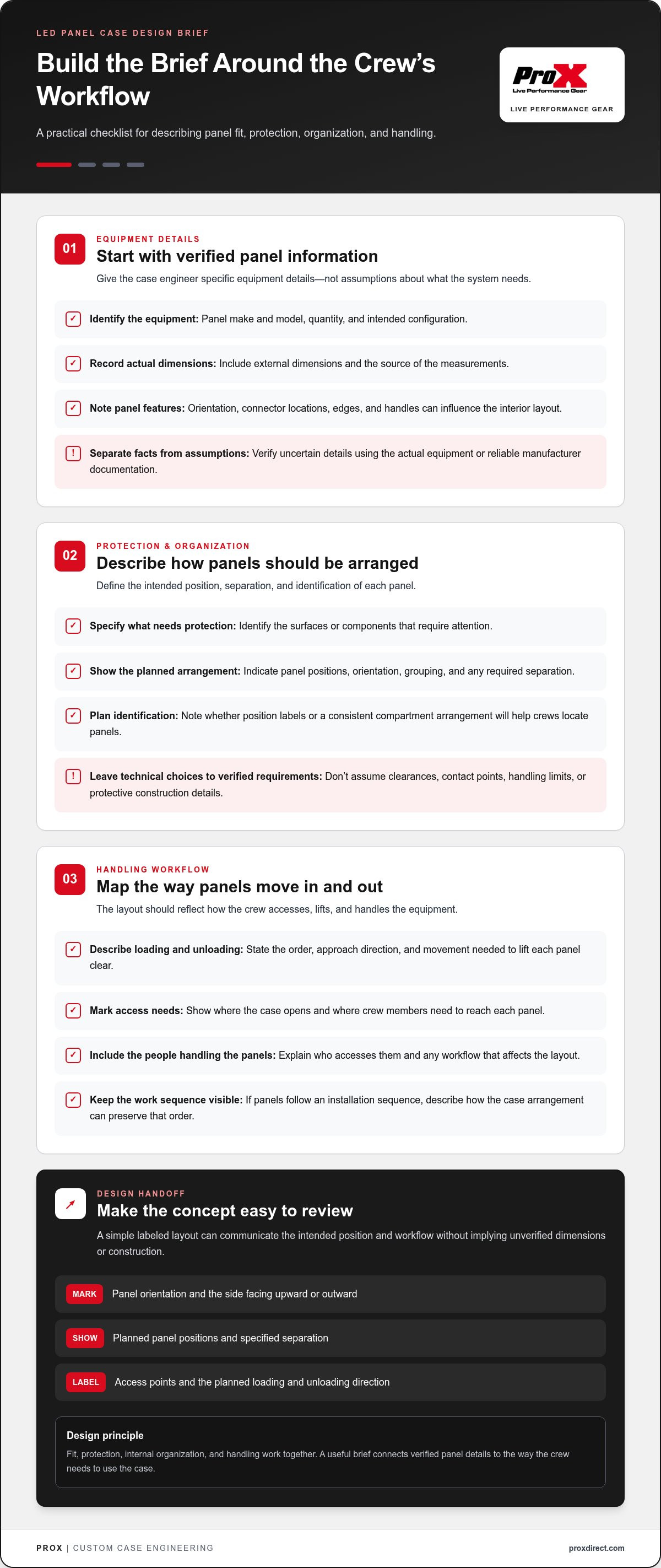
Use this checklist to assemble the brief:
- Panel identification: Record the make, model, and any distinct panel types included in the project.
- Dimensions: Provide verified external measurements for each type, including relevant protruding components. Identify the source of the measurements.
- Quantity and configuration: State how many panels the case needs to accommodate and how they are grouped or arranged.
- Orientation: Describe the intended position of each panel and any orientation requirements relevant to access or separation.
- Supporting documentation: Include available manufacturer documents, drawings, and configuration information. Flag details that still require technical verification.
- Handling sequence: Explain who loads and unloads the panels, the order of access, and how the crew moves them between the case and the work area.
- Organization and transport: Note identification needs, storage context, destination type, and the transport workflow the case must support.
Be precise about the difference between a requirement and a preference. For example, state whether panel positions need to follow a defined removal sequence or whether the crew simply needs clear identification. Mention any access constraints around the case during loading. These operational notes connect the physical arrangement to how the production team works.
System context can also clarify the brief. Consider how the panels fit into the wider display setup, while keeping the case requirements specific to the equipment being transported. Keep unknowns visible so they can be resolved against reliable technical information before they shape the design.
With the information organized, build your LED panel case brief around confirmed equipment details, protection needs, and crew workflow. A clear specification gives custom engineering a practical foundation for a custom flight case for LED video wall panels.
How ProX Custom Case Engineering Moves from Brief to Build
A custom case project starts with a defined equipment need. The brief identifies the panels, their dimensions, protection requirements, and the handling workflow the case must support. ProX uses those project details to establish a design direction. Clear inputs keep the design focused on the equipment and its intended use, rather than assumptions about a typical panel setup.
ProX has engineered performance gear since 1984. Its custom case projects are tailored to equipment dimensions and protection requirements. The brief connects what the production team needs with what engineering must account for in the case design.
How does a custom case project take shape?
The project moves from equipment brief to design direction, then into manufacturing. Each stage builds on the information already established. The design translates the specified equipment and workflow into a case concept and build plan. This is a project-based process, not a promise of a fixed approval sequence or production schedule.
The key stages are:
- Define the requirements: Gather equipment dimensions, panel quantity and configuration, protection needs, and handling priorities. Identify unknowns so they can be resolved rather than treated as confirmed specifications.
- Establish the design direction: Use verified information to determine how the case must accommodate the panels and intended workflow. The design concept should address the project’s requirements without presuming unprovided materials or construction details.
- Translate design into a build plan: Carry the project-specific case concept forward into manufacturing. The build plan reflects the defined equipment and protection requirements, rather than generalized assumptions about LED panels.
For example, a brief describing more than one panel type should make the differences explicit, including which panels share an arrangement and which require distinct accommodation. The engineering direction can then account for the stated configuration and access needs. A focused specification also helps separate essential requirements from preferences, keeping the project discussion practical.
The work crew’s process matters too. Information about how panels are moved, accessed, and organized gives the design context beyond measurements alone. ProX’s custom case engineering brings those operational needs together with equipment details, so the design direction is tied to the actual project.
For a custom flight case for LED video wall panels, the brief provides the foundation, design translates requirements into a case concept, and manufacturing carries that concept into a build. Explore ProX case solutions to review case options for professional equipment and production needs.
Put Your Panel Case Plan into Motion
Use your design brief as the working reference for the next decision. Keep verified equipment information, protection priorities, and crew requirements together so the case concept stays connected to actual production use. If panel configurations or workflows change, update the brief before the design moves forward.
A custom flight case for LED video wall panels is most useful when its design reflects the equipment and the way your team handles it. ProX develops custom case engineering around project dimensions and protection requirements, giving your specifications a clear path into design.
Explore the available options and identify the case direction that fits your operation. Explore ProX case solutions and take the next step toward a case plan built around your panels and production workflow.
Frequently Asked Questions
Can one custom case hold several LED video wall panels?
Yes, a single case can be designed for the panel quantity and arrangement specified for the project. Describe whether the panels will travel in a fixed group or need to be accessed individually, and explain the order crews use during loading and setup. That context helps define the interior layout. Don’t assume panels can be stacked or placed together in a particular way without equipment-specific technical guidance.
What information is needed to design a custom LED panel case?
Provide each panel’s make and model, measured dimensions, quantity, orientation, and details of components that affect its external profile. Add manufacturer documentation or drawings where available, and identify the configuration the case must accommodate. Include how the crew handles, stores, and transports the panels, along with any access or identification requirements. For a custom flight case for LED video wall panels, clearly label uncertain details so they can be verified rather than treated as specifications.
Can a custom case be designed for different LED panel sizes?
Yes. A project can account for different panel sizes when the brief identifies each type and how it will be used. Specify which units travel together and whether crew members need to distinguish one type from another during setup. Provide verified measurements for every panel type. Don’t assume a shared case layout will suit all configurations simply because the panels belong to the same display system.
How should I measure an LED video wall panel for a case?
Measure each panel across its outermost points and record the units used. Include attached connectors, handles, or other parts that remain in place during transport, and note removable components separately. Record the panel’s orientation and identify its make and model alongside the measurements. Manufacturer documentation can help resolve discrepancies. If you can’t verify a dimension, mark it as uncertain and confirm it before it becomes part of the case specification.
Can a custom case include space for LED panel accessories?
Yes, accessories can be included in the project brief for consideration in the case layout. List each item, its dimensions, and whether the crew needs frequent or occasional access. For example, an item used during every setup may need a different access arrangement from one stored for transport only. Describe whether accessories need dedicated organization, but treat compartments and their placement as design requirements, not automatic features.
How does a custom case support faster panel handling?
A case layout can support a consistent handling sequence by making panel positions and access clear to the crew. For instance, a team could use position labels that correspond to its setup plan, if that convention fits the operation. The benefit depends on the workflow and the crew’s use of the case. Describe the current process and desired sequence, but don’t assume a specific reduction in setup time.
How much does a custom flight case for LED panels cost?
Custom project fees are quoted according to engineering, materials, and manufacturing complexity. Panel dimensions and quantity, internal organization, and handling requirements can all affect the project scope, so a generic price range wouldn’t reliably describe a specific build. A detailed equipment and workflow brief gives the project a clearer basis for scoping. Include verified measurements and distinguish required features from preferences to define the case requirements precisely.
Disclaimer
Any trademarks, trade names or brand names appearing herein that do not belong to ProX are the property of their respective owners and/or companies, and such appearance doesn't and shall not constitute or imply endorsement, sponsorship or recommendation by ProX.


