
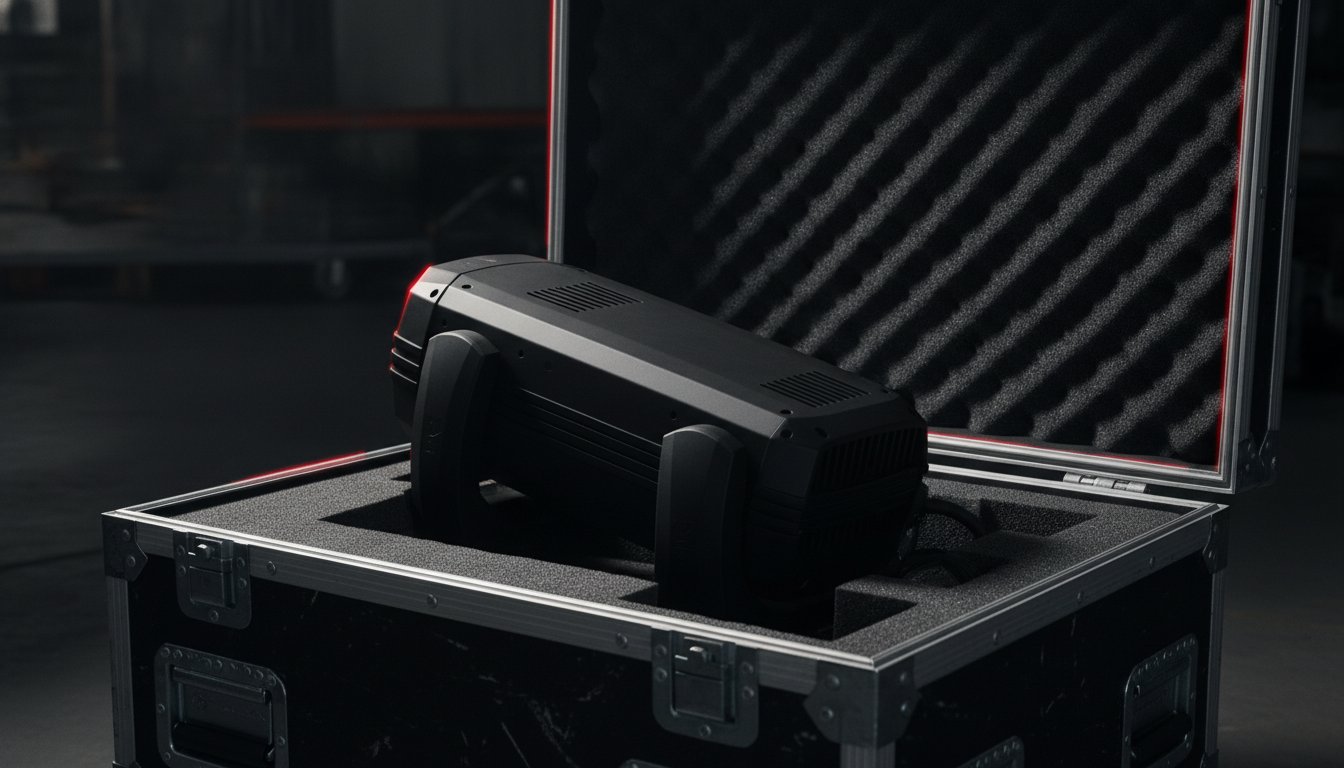
A single misaligned optic or a seized moving head motor is more than a repair bill; it represents a critical failure point that compromises the integrity of an entire production. Professional-grade lighting assets are precision instruments that require rigorous protection to withstand the physical stresses of the industry. Mastering the technical requirements for preventing damage to lighting fixtures is essential for any operator who values long-term equipment reliability and structural safety.
You recognize that the rigors of frequent transport and high-intensity rigging often lead to costly mechanical degradation. It's a common frustration to face scratched lenses or compromised internal components after a standard load-out. This article outlines the specific engineering-grade strategies and logistical protocols necessary to safeguard your inventory during transit, rigging, and storage.
We'll analyze the ATA-300 Category 1 standards for reusable containers and the structural requirements for secure rigging. This checklist provides a methodical framework to help you achieve a zero-failure rate and extend the operational lifespan of your expensive LED and discharge fixtures. By following these industrial standards, your team can ensure efficient setups without the risk of hardware failure.
Key Takeaways
- Analyze the mechanics of vibration fatigue and impact to mitigate the primary causes of internal component failure and optical misalignment.
- Implement ATA-300 standard protective housing with precision-engineered foam inserts to optimize impact absorption and fixture deceleration during transit.
- Utilize rigorous load-bearing calculations and safety cable protocols to maintain structural integrity and prevent secondary damage during complex rigging.
- Establish a methodical pre-show and post-show inspection routine focused on preventing damage to lighting fixtures through early detection of mechanical anomalies.
- Deploy bespoke engineering solutions and reinforced materials tailored to the specific dimensions and weight distributions of high-value moving head units.
Identifying Mechanical and Environmental Risks to Lighting Fixtures
Mechanical impact remains the primary cause of internal component misalignment during transit. When a fixture experiences a sudden kinetic shock, the precision-aligned optical path can shift. Even a minor displacement in the lens array or gobo wheel carriage results in visible focus issues or mechanical jams. A professional strategy for preventing damage to lighting fixtures must account for these high-G events during loading and unloading. Precision requires stability. Without it, the structural integrity of the internal assembly is compromised.
The Hidden Danger of Low-Frequency Vibration
The constant oscillation experienced during long-haul logistics leads to the gradual degradation of internal belt tension and motor alignment. Transport creates harmonic resonance that specifically targets moving head motors and delicate solder joints on the main PCB. This vibration fatigue often goes unnoticed until a fixture fails to calibrate during a high-stakes event. Technicians must ensure that all moving parts are secured with internal lockdowns or stored in specialized lighting cases that dampen these specific frequencies. Rattling components are a precursor to total mechanical failure.
Rigging strain also presents a significant structural risk. Improperly mounting a heavy fixture on stage truss systems can lead to chassis deformation. Over-torquing clamps or failing to balance the load can twist the metal housing, putting unnecessary pressure on the internal pan and tilt motors. Adhering to standards in Theatrical Rigging Safety is necessary to ensure that the fixture's structural integrity remains intact throughout the event duration. Structural deformation is often irreversible and requires expensive housing replacements.
Thermal stress is another critical factor in equipment longevity. Rapid temperature shifts during storage or inadequate cooling during operation can cause material expansion and contraction. This stress leads to cracked lenses or premature diode failure in LED units. Maintaining a consistent environment and ensuring unobstructed airflow are just as vital as physical protection.
Environmental Contaminants in Production
The buildup of fog fluid residue and dust represents a slow but certain threat to fixture functionality. Glycerin-based residues act as a magnet for airborne particles. These particles eventually clog cooling fans and coat sensitive optical elements, leading to overheating and reduced light output. Effective maintenance is a core part of preventing damage to lighting fixtures in demanding production environments.
- Moisture Ingress: Sudden rain during outdoor load-outs can short-circuit non-IP-rated internal electronics and compromise PCB integrity.
- Corrosion: Coastal event sites introduce salt air, which accelerates the oxidation of connectors and structural hardware.
- Residue Accumulation: Heavy use of haze and smoke machines requires frequent cleaning of the internal fans to prevent thermal shutdown.
Protecting your inventory requires recognizing that damage prevention is an ongoing process. It extends from the initial packing phase to the final strike of the rig. Every environmental variable must be managed to ensure the long-term reliability of professional-grade lighting gear.
Engineering-Grade Protection: The Role of Specialized Lighting Cases
ATA-300 Category 1 specification, specifically the 2020.1 revision, serves as the industrial baseline for high-value equipment transport. This standard requires that a container withstand at least 100 round-trip shipments without failure. For production professionals, this engineering-grade housing is the primary method for preventing damage to lighting fixtures during intensive tour cycles. The structural integrity of the shell relies on reinforced plywood panels, often treated with a honeycomb laminate to resist impact and surface abrasion.
Foam Density and Shock Absorption
Internal protection requires a precise understanding of material science. Open-cell foam is often too pliable for heavy moving heads, which leads to "bottoming out" during a sudden drop. Instead, ProX Lighting Cases utilize high-density closed-cell foam. This material provides superior deceleration by absorbing kinetic energy before it reaches the fixture's internal motors. A snug fit is mandatory. Any internal movement allows for secondary impact, which is a primary cause of optical misalignment and mechanical failure.
Case hardware must also meet rigorous mechanical standards. Recessed butterfly latches prevent accidental opening and snagging during loading. Reinforced ball corners provide stacking stability and dissipate shock through the case frame rather than the panels. While physical protection is paramount, thermal management can't be ignored. Professional cases often include ventilation paths to allow for heat dissipation during the post-show cooldown period. Rapid heat entrapment can degrade electronic components, making ventilation a key feature of logistical safety.
Logistical Efficiency via Standardized Dimensions
Safety extends beyond the individual fixture to the entire truck pack. Standardized case footprints ensure that equipment remains locked in place during transit, which eliminates the risk of shifting loads. Utilizing TruckPaX™ Truck Pack Cases allows technicians to maximize cubic volume while maintaining a secure, interlocking load. Caster durability is equally vital. Heavy-duty 4-inch casters with reinforced mounting plates ensure that multi-fixture cases can be moved across uneven surfaces without structural failure.
Adhering to these engineering standards helps maintain compliance with broader safety expectations, such as those outlined in OSHA Lighting Regulations. While OSHA focuses on workplace illumination and electrical hazards, the use of professional housing ensures that fixtures remain in safe, operable condition. Investing in precision-built protective lighting cases is a strategic necessity for maintaining inventory value and ensuring event reliability.
Rigging and Truss Safety: Preventing Structural Damage
Rigging operations involve complex mechanical interactions where precise load-bearing calculations are mandatory. A fixture's weight is only one variable; the dynamic force generated by moving heads during high-speed pan and tilt maneuvers adds significant torque to the mounting structure. Preventing damage to lighting fixtures requires ensuring that the combined static and dynamic load remains well within the safe working load (SWL) of the support system. Over-torquing mounting clamps can lead to hairline fractures in the aluminum housing or the clamp itself, which may compromise the entire assembly during a performance.
Safety cables serve as the final line of defense against catastrophic falls and secondary impact damage. These cables must be rated for the specific weight of the fixture and secured to a structural point on the truss that is independent of the primary mounting clamp. Technicians should conduct a methodical inspection of all mounting hardware before every load-in. Identifying metal fatigue, stripped threads in omega brackets, or bent mounting points prevents hardware failure. Proper orientation is equally critical. Hanging a fixture at an unintended angle puts excessive lateral stress on the internal pan and tilt motors, which often leads to premature gear wear and belt slippage.
Truss Integrity and Fixture Stability
Mounting precision optical instruments requires a stable foundation. High-grade aluminum ProX Truss systems provide the necessary rigidity to minimize structural flex during operation. When a truss segment bows under excessive weight, it can misalign the calibrated paths of beam or laser fixtures. This flex doesn't just affect the visual output; it can also subject the fixture's chassis to torsional stress, potentially cracking internal glass elements or misaligning delicate gobo wheels.
Cable Management and Strain Relief
Mechanical protection must extend to the connectivity ports and data lines. Improper cable management often results in "cable pull," where the weight of the loom restricts the movement of a moving head. This resistance forces the drive motors to work harder, increasing internal heat and risking belt failure. Using proper strain relief for DMX and power cables prevents port damage and maintains the integrity of the connection. Looms should be secured to the trussing using professional-grade ties that provide a secure hold without crushing the cable jackets or the internal copper conductors. A clear, unrestricted range of motion is essential for the mechanical health of any automated fixture.

Comprehensive Maintenance Checklist for Lighting Longevity
Professional equipment longevity depends on a rigorous, repeatable maintenance schedule. Systematic maintenance is the most reliable method for preventing damage to lighting fixtures over their operational lifecycle. Technicians shouldn't treat cleaning as a secondary task; it's a fundamental engineering requirement. A pre-show inspection must include a full diagnostic test of pan and tilt motors, cooling fans, and optical paths to identify mechanical anomalies before they escalate into failures. Listen for bearing noise or grinding gears during the calibration sequence.
Post-show protocols are equally vital. Removing dust and haze residue before casing equipment prevents the accumulation of glycerin-based films that can bake onto internal components. Hardware integrity requires regular verification. Checking external screws and rigging points for loosening is essential, especially after long-haul transit where vibration is constant. This proactive approach is a core component of preventing damage to lighting fixtures in high-turnover touring environments. Consistent firmware management ensures software stability. Keeping internal software updated prevents motor "runaway" errors that can lead to internal mechanical collisions.
Monthly Deep Cleaning Protocol
A monthly deep clean preserves the precision of optical coatings and cooling efficiency. Technicians should use non-abrasive optical cleaners and microfiber cloths to remove lens residue. Avoid circular motions that can trap grit; use straight, light strokes instead. Use low-pressure compressed air to clear heat sinks and internal cooling channels. Dust buildup in these areas is a primary cause of thermal shutdown. Maintaining the integrity of your transport gear is also necessary. You can find ProX Cases Replacement Parts to ensure your protective housing remains fully functional and secure.
Optical and Motor Calibration
Regular calibration prevents motors from "fighting" against incorrect home positions, which reduces belt wear and motor strain. Technicians must check belt tension during these sessions. Loose belts cause positioning errors, while over-tight belts increase friction on motor bearings. Lubricate moving parts only where specified by the manufacturer using approved synthetic lubricants. Preventative motor calibration is the most effective way to avoid mid-show failures. Keep your equipment in peak condition by utilizing high-quality professional lighting cases for every load-out.
ProX Solutions: Engineering Protection for High-Value Fixtures
ProX has served as a reliable backbone for the professional production industry since 1984. The brand's focus remains on functional excellence and engineering precision rather than aesthetic trends. Every case is developed with a deep understanding of the physical demands placed on professional equipment. By utilizing CNC-cut internal structures and high-grade materials, ProX provides a comprehensive range of solutions for preventing damage to lighting fixtures. This meticulous approach ensures that every unit remains within its intended mechanical tolerances.
Bespoke engineering is the core of the ProX catalog. Custom cases are tailored to the exact dimensions of specific moving head models, which eliminates the risk of internal shifting during high-G transport events. The construction utilizes reinforced plywood panels, often 3/8 inch or 1/2 inch thick, combined with rugged honeycomb laminates to resist impact and abrasion. Rugged hardware, including industrial steel ball corners and recessed butterfly latches, reinforces the case's structural integrity. This level of material excellence is necessary for the high-stakes environment of professional touring where equipment failure isn't an option.
Specialized AV and LED Video Protection
Protecting LED video panels presents unique challenges due to the fragility of surface-mount device (SMD) pixels. These components are highly susceptible to impact damage and mechanical stress during transit. ProX addresses these risks through specialized rigging and transport solutions. Utilizing professional LED Video Panel Wall Support systems ensures that panels are held securely without putting pressure on the pixel face. For mobile control stations, AV Broadcasting Cases provide a stable, vibration-dampened environment for sensitive switching and processing hardware.
The ProX Advantage in Professional Production
Engineering precision is the only effective strategy for preventing damage to lighting fixtures over a long-term operational cycle. The combination of material science and logistical standards creates a protective ecosystem for high-value assets. For a deeper analysis of the technical specifications used in these builds, technicians can consult The Ultimate Guide to Flight Cases. This resource details the mechanical assembly and material standards required for professional-grade protection.
Reliability in the field is a result of methodical design and a respect for the practical realities of professional use. ProX remains a partner for technicians who prioritize the integrity of their build and the longevity of their inventory. To secure your equipment for the next production cycle, browse the full ProX catalog for engineering-grade protection solutions.
Optimizing Operational Reliability through Precision Standards
Maintaining the integrity of high-value inventory requires more than just a careful hand. It demands a systematic integration of ATA-300 style rugged construction and disciplined rigging practices. By prioritizing precision housing and consistent maintenance schedules, you create a logistical environment that minimizes mechanical failure. Preventing damage to lighting fixtures isn't a one-time task. It's a commitment to engineering standards that safeguard your investment across every tour cycle.
ProX has been engineering performance gear since 1984. Our solutions are trusted by touring professionals worldwide to withstand the extreme physical demands of the road. Whether you're managing complex moving head arrays or fragile LED panels, the right protection ensures your gear is prepared for the next load-in. Functional excellence is the standard.
Explore Engineering-Grade Lighting Protection at ProX and ensure your production remains a zero-failure environment. Your equipment's longevity is the foundation of your professional reputation.
Frequently Asked Questions
How often should I clean the internal fans of my moving head fixtures?
Internal fans require cleaning every 30 to 90 days depending on the volume of atmospheric effects used. Haze and fog fluids create a sticky residue that traps dust; this leads to thermal overheating and fan motor failure. Using compressed air to clear these channels is a fundamental part of preventing damage to lighting fixtures. Regular maintenance ensures the internal cooling system operates within factory specifications.
Can I use standard plastic bins to transport professional lighting gear?
Standard plastic bins are insufficient for professional production environments. They lack the structural integrity to withstand the G-forces of truck transport and provide zero impact absorption for delicate optics. Professional lighting requires ATA-300 style containers with reinforced plywood and high-density foam. These engineered solutions dissipate kinetic energy that would otherwise shatter lenses or misalign internal motor carriages during the load-out process.
What is the most common cause of motor failure in touring lighting?
Kinetic shock and constant low-frequency vibration during logistics are the primary causes of motor failure. Road vibration gradually loosens belt tension and degrades the precision of pan and tilt assemblies. When a fixture is subjected to a sudden drop without proper housing, the motor shafts can bend or the drive gears can strip. This mechanical stress eventually leads to calibration errors or total motor seizure.
Do I really need custom foam inserts for every lighting fixture?
Custom-cut foam inserts are mandatory for any high-value automated fixture. A generic fit allows the unit to shift inside the case; this creates secondary impact damage during handling. High-density closed-cell foam is engineered to provide specific deceleration rates, which is the most effective method for preventing damage to lighting fixtures. Snug housing protects the precision-aligned optical path from shifting out of calibration.
How do I identify if my truss is overloaded by fixtures?
You must monitor the deflection, or bowing, of the truss and compare it against the manufacturer's Safe Working Load (SWL) charts. Visible sagging indicates that the structural integrity of the aluminum is being compromised. It's essential to calculate both the static weight of the fixtures and the dynamic torque generated by moving heads. Exceeding these limits risks a catastrophic structural failure that destroys the entire rig.
Is it safe to store lighting fixtures in their cases for long periods?
Long-term storage in protective cases is safe provided the environment is climate-controlled and the fixtures are free of moisture. Residual dampness from outdoor events can cause corrosion on PCBs and connectors if sealed in a case for extended periods. Technicians should ensure all equipment is completely dry and clean before long-term storage. Periodic power-up cycles are recommended to maintain capacitor health and motor lubrication.
What should I check on my flight case to ensure it still protects my gear?
Inspect the recessed butterfly latches, caster mounting plates, and internal foam integrity. Latches must provide a secure, airtight seal to prevent environmental contaminants from entering the housing. If the internal foam shows signs of crumbling or permanent compression, it no longer provides the necessary deceleration for the fixture. Replacing worn components with professional parts maintains the case's ability to absorb mechanical shock effectively.
Does using safety cables prevent damage, or is it just for safety?
Safety cables serve both as a life-safety requirement and a method to prevent secondary equipment damage. In the event of a primary clamp failure, the safety cable prevents the fixture from impacting the stage or other gear. This secondary restraint system is the final defense against total equipment loss. Properly rated cables ensure that a mechanical failure at the mounting point doesn't result in a catastrophic fall.
Disclaimer
Any trademarks, trade names or brand names appearing herein that do not belong to ProX are the property of their respective owners and/or companies, and such appearance doesn't and shall not constitute or imply endorsement, sponsorship or recommendation by ProX.


