
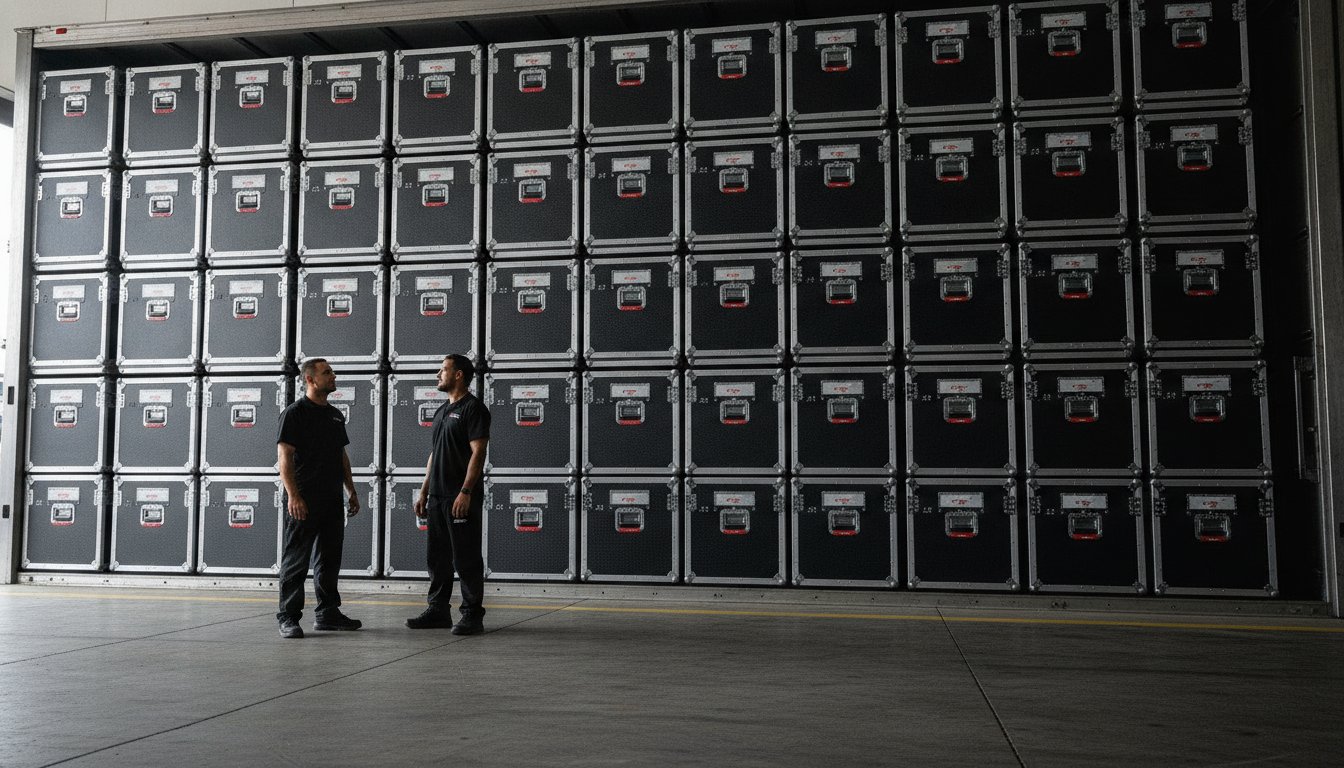
With national average spot rates for dry van trailers reaching up to $2.40 per mile in 2026, every inch of empty space in your trailer is a direct hit to your touring budget. Integrating TruckPaX™ Truck Pack Cases into your logistical workflow addresses the fundamental problem of inconsistent case dimensions that lead to shifting loads and damaged gear. You've likely dealt with the frustration of "transporting air" that turns a standard load-out into a costly, time-consuming ordeal. Logistical efficiency isn't just about how your crew packs; it is a mechanical property of the equipment you use.
This guide explores how engineered dimension standards and rugged construction eliminate wasted volume and protect high-value production gear. You'll discover the dimensional math behind trailer density, the technical anatomy required to meet the ATA 300 Specification, and real-world strategies for optimizing a 53-foot trailer load-out. By the end of this article, you'll understand how to transform your fleet into a modular system that reduces transport overhead and accelerates on-site operations.
Key Takeaways
- Analyze the mechanical properties of a "truck pack" to eliminate wasted trailer volume and lower operational fuel costs.
- Learn how TruckPaX™ Truck Pack Cases use precise 24-inch, 30-inch, and 48-inch widths to create seamless rows in standard logistics environments.
- Identify the technical benefits of Honeycomb Digital™ lamination and impact-resistant hardware for high-frequency touring.
- Explore a 53-foot trailer case study to visualize the strategic layering of utility units for maximum cargo density.
- Determine the ideal configuration of modular sizes to maintain consistency across diverse equipment inventories.
The Logistical Challenge of Professional Live Event Touring
Professional live event touring is a complex logistical operation where profitability is often decided in the back of a 53-foot trailer. The "Truck Pack" concept is more than a packing method; it is a rigorous engineering standard. It requires cases to be manufactured with dimensions that align perfectly with the 90-inch or 96-inch internal widths of standard freight trailers. When equipment is housed in cases that don't adhere to these specific footprints, the result is "transporting air." This industry term describes the costly practice of paying for empty trailer volume that generates zero revenue while increasing fuel consumption and freight frequency. Logistics dictate profit. Every inch counts.
A professional road case serves as a shipping container specifically designed to mitigate the mechanical stresses of transit. However, protection alone is insufficient for high-frequency touring. Reliability depends on how a case integrates into a larger logistical system. Transitioning from generic storage solutions to specialized TruckPaX™ Truck Pack Cases allows production companies to treat their inventory as a modular fleet. This shift ensures that high-value gear is not only protected from physical impact but also contributes to the overall stability and efficiency of the transport environment.
The High Cost of Inefficient Truck Loads
Inefficiency compounds quickly. If a single case design wastes 5% of its potential footprint, that vacancy repeats across dozens of units. In a 53-foot trailer, this cumulative loss can necessitate an entire additional truck for a tour, significantly inflating overhead. With 2026 spot rates for dry van trailers averaging between $2.32 and $2.40 per mile, the financial penalty for poor density is severe. Beyond freight costs, non-standardized stacks are prone to load shifting. Gaps between cases allow for lateral movement during transit, which is the primary cause of hardware failure and exterior damage. Standardizing your inventory with ProX cases ensures that every component of your rig contributes to a cohesive loading strategy, reducing both damage risks and the labor hours required for complex load-outs.
Defining the TruckPaX™ Standard
The TruckPaX™ Truck Pack Cases philosophy centers on modularity and industrial durability. Rather than relying on custom one-off builds that disrupt the stack, this system utilizes a "building block" approach. This fleet-based strategy allows for predictable, repeatable loading patterns regardless of the specific gear being transported. ProX has engineered performance gear for over 40 years, applying decades of material science to these logistical standards. By using a standardized utility case, production managers can calculate truck density with mathematical precision. This removes the guesswork from logistics, allowing crews to focus on technical execution rather than trailer-tetris.
Engineering the TruckPaX™ Dimension Standard
Logistical efficiency begins with the footprint. TruckPaX™ Truck Pack Cases utilize a "Building Block" philosophy rooted in 24-inch, 30-inch, and 48-inch widths. These dimensions aren't arbitrary. They are calculated to interact with the physical constraints of standard freight trailers. In a high-stakes touring environment, these standardized units ensure that every row of cases fits snugly against the trailer walls. This prevents lateral movement without the need for excessive strapping or dunnage. By treating cases as modular units, production managers can predict trailer occupancy before the first piece of gear reaches the loading dock.
Dimensional Math for 96-inch and 102-inch Trailers
Trailer widths are the primary constraint for any tour. While Federal Size Regulations define the exterior limits of commercial vehicles, the internal clearance is what dictates case selection. Most dry van trailers provide between 90 and 96 inches of usable internal width. The 30-inch and 45-inch widths represent the industry "sweet spot" for modular packing. Two 45-inch cases or three 30-inch cases create a flush 90-inch row. Conversely, 24-inch units enable a "four-across" configuration in 96-inch wide containers. This precision eliminates the need for "filler" gear or odd-sized cases to wedge the load. The 30-inch width standard serves as the critical anchor for modern logistical planning.
Modular Stacking and Vertical Integrity
Vertical space is equally vital for maximizing trailer density. Standardized case heights allow crews to create level tiers across the entire width of the trailer. This flat surface provides a stable foundation for secondary layers of equipment, such as smaller utility bins or truss. Uniform footprints also accelerate forklift and ramp operations. Drivers can move multiple cases simultaneously with the confidence that they will align perfectly on the floor.
Maintaining a consistent footprint also helps manage the trailer’s center of gravity. By placing heavy TruckPaX™ Truck Pack Cases at the base in a predictable pattern, you ensure the load remains balanced and compliant with axle weight limits. Implementing these dimensions across your fleet reduces the complexity of load-out. Reviewing the specifications for a 30-inch utility case can help you determine how many rows your current trailer configuration can support. This engineering-first approach transforms packing from a variable skill into a repeatable, industrial process.
Technical Anatomy: The Features of a TruckPaX™ Case
The structural integrity of TruckPaX™ Truck Pack Cases is a result of meticulous material selection. These units are constructed using 3/8-inch or 1/2-inch plywood. This provides a high strength-to-weight ratio essential for long-term durability. To enhance surface resilience, each case features Honeycomb Digital™ lamination. This hexagonal grid pattern is not just aesthetic. It creates a scuff-resistant barrier that protects the plywood core from the abrasive environments of warehouses and loading docks. This engineering approach aligns with the ATA Spec 300 Category I requirements, ensuring the equipment can withstand at least 100 round trips without structural failure.
Hardware components are recessed to maintain a clean exterior profile. This design choice is critical for the "Building Block" philosophy discussed previously. It allows cases to sit flush against one another without protruding latches or handles causing gaps. Impact-resistant ball corners reinforce the chassis, absorbing kinetic energy during accidental collisions. Additionally, integrated caster dishes are built into the lid of every unit. These dishes act as a mechanical lock for the wheels of the case stacked above it. This prevents the top tier from shifting during transit, maintaining the vertical integrity of the entire truck load.
Hardware Engineered for High-Frequency Use
Efficiency in the field depends on the speed of access. Standard utility cases often feature lids that fall shut or require secondary support. TruckPaX™ Truck Pack Cases utilize "Hold-Open" hinges. These stay at a fixed 90-degree angle when opened, allowing technicians to use both hands for gear retrieval. Mobility is handled by 4-inch heavy-duty casters. These larger wheels navigate cable ramps and uneven stage floors more effectively than smaller alternatives. They reduce the physical strain on the crew during long load-ins. You can browse the full ProX Cases range to see how these hardware standards are applied across specialized equipment housings.
Protection and Organization Systems
Internal organization is as important as external protection. The main compartment of a TruckPaX case is designed for high-volume storage, but it often includes a removable utility tray for smaller accessories. This tiered system keeps cables and hardware separate from larger chassis. Adjustable dividers allow for a custom internal layout. These dividers prevent gear collision, which is the leading cause of internal component damage during high-vibration transport. For inventory management, each case includes a Dry Erase Label Insert. This allows crews to update contents or destination info instantly. It eliminates the need for adhesive tape or permanent markers that degrade the case's exterior over time. Clear labeling ensures that the right gear reaches the right stage every time.

Case Study: Optimizing a 53-Foot Trailer Load-Out
A 53-foot trailer provides approximately 3,900 to 4,000 cubic feet of potential cargo volume. In a standard production scenario involving a comprehensive audio, lighting, and truss rig, the logistical objective is to maximize this volume while maintaining load stability. The optimization process begins with the base layer. By utilizing heavy TruckPaX™ Truck Pack Cases as the foundation, crews establish a level, predictable floor across the trailer's width. This base layer supports the weight of specialized equipment housings stacked above, ensuring the center of gravity remains low and the load remains secure during long-haul transit.
Once the base is established, the modularity of the system allows for the seamless integration of specialized cases. Because these units adhere to the 30-inch or 45-inch width standards established in previous sections, they align perfectly with the utility cases below. In a comparative analysis against non-standardized cases, this method eliminates the irregular gaps that typically require secondary bracing or dunnage. This precision results in a tighter, more cohesive pack that utilizes every cubic inch of available trailer width, preventing the "air transport" that inflates freight costs.
The Load-In Workflow: Speed and Precision
Standardized dimensions significantly reduce decision fatigue for stagehands. When every case belongs to a known dimensional family, the loading order becomes intuitive rather than a trial-and-error process. This speed is further enhanced by stackable caster dishes. These dishes lock the wheels of the upper tier into the lid of the lower tier, providing mechanical stability that traditional flat-top cases lack. You can see the TruckPaX™ XS-UTL243036W MK2 for a technical example of a unit designed for this high-density packing environment. Faster load-outs reduce labor hours and ensure the tour stays on its strict logistical schedule.
ROI and Long-Term Logistics Savings
The financial impact of this efficiency is quantifiable over a 12-month tour cycle. Reducing wasted space can decrease the total number of trailer rentals required for a large-scale production. Standardizing your fleet with TruckPaX™ Truck Pack Cases also simplifies inventory audits and insurance valuations, as the equipment resides in a uniform, easily categorized housing system. Industry logistics data indicates that standardized truck-pack dimensions can improve load density by up to 20% compared to mixed-inventory loads. This density translates directly into lower fuel surcharges and reduced transport overhead. To begin standardizing your inventory for maximum efficiency, you should explore the full range of professional utility cases to determine the best fit for your fleet.
Selecting the Right TruckPaX™ Configuration for Your Fleet
A strategic fleet transition begins with a comprehensive audit of your equipment mix. Integrating TruckPaX™ Truck Pack Cases into a production house's inventory isn't an overnight task; it's a methodical process. Most professionals adopt a "Phase-In" approach, replacing aging or non-standardized units as new tours are spec'd. This allows for a gradual alignment with the 30-inch and 45-inch width standards without disrupting current operations. The goal is to reach a point where every case in the warehouse contributes to the modularity of the truck pack, regardless of the specific gear it contains.
Compatibility is a core engineering priority for any professional fleet. These utility units are designed to work alongside specialized ProX cases for lighting, audio, and truss systems. Because the footprint remains consistent across the product line, you can intermix specialized housings with general utility units in the same row. This uniformity is essential for maintaining the level tiers required for secondary loading, as discussed in our previous analysis of trailer density. When your cases share a mechanical DNA, your load-outs become faster and more predictable.
Matching Case Size to Gear Type
Choosing between configurations like the 24x30x30 and the 48x30x36 depends on the density and weight of the gear. The 24-inch wide "quarter-pack" units are ideal for heavy hardware and cable management. They keep individual case weights within safe limits for manual handling while maximizing vertical space. Conversely, the 48-inch "large format" cases are the preferred choice for oversized production elements. These larger units provide the necessary volume for long cable runs or bulky stage components that don't fit in standard bins. You can explore AV Broadcasting Cases to see how specialized technical gear integrates into this modular framework. Proper sizing ensures that your logistics stay efficient and your crew remains productive.
The ProX Dealer Network and Custom Options
Building a professional-grade fleet requires coordination with an authorized dealer. These partners provide the technical expertise needed to spec out a full tour rig based on your specific equipment list and trailer dimensions. They can also assist with custom internal configurations if your gear requires specialized foam inserts or unique divider layouts. To ensure long-term ROI, ProX maintains a comprehensive inventory of replacement parts. This includes casters, latches, and handles, allowing you to maintain the structural integrity of your TruckPaX™ Truck Pack Cases through years of high-frequency use. Investing in a standardized system is a commitment to logistical excellence. You should contact a ProX dealer to optimize your truck pack today and eliminate the hidden costs of inefficient transport.
Advancing Your Professional Touring Logistics
Logistical excellence is achieved through the systematic elimination of variables. By adopting standardized dimensions, production houses transform trailer loading from a subjective skill into a repeatable industrial process. You've analyzed how engineered footprints maximize cargo density and how Honeycomb Digital™ protective lamination ensures the longevity of your chassis. These technical attributes reflect the expertise of a manufacturer that's been engineering cases since 1984. Every specification serves the goal of functional precision in high-stakes environments.
Implementing TruckPaX™ Truck Pack Cases provides your fleet with the structural reliability and modularity required for modern global logistics. This consistency protects your high-value production gear while directly reducing the overhead associated with inefficient transport and wasted trailer volume. As you refine your inventory, prioritize the technical specifications that support faster load-outs and stable trailer stacks. Professional-grade protection is the backbone of every successful tour.
Take the next step in optimizing your tour’s bottom line. View the full TruckPaX™ collection and find a dealer to begin your fleet transition. Your equipment will benefit from the most reliable standard in the industry.
Frequently Asked Questions
What are the standard dimensions for a TruckPaX™ case?
TruckPaX™ Truck Pack Cases utilize standardized widths of 24, 30, and 48 inches. These dimensions are engineered to align with the 90 to 96-inch internal clearances found in standard freight trailers. By utilizing these specific footprints, production crews can create flush rows that utilize the full width of the vehicle. This precision removes the variability often associated with non-standardized equipment housings during a load-out.
How do TruckPaX™ cases improve trailer load density?
These cases improve load density by utilizing modular footprints that eliminate "transporting air." Because the dimensions are calculated to fit standard trailer widths, cases sit flush against each other without leaving gaps. This allows for a tighter pack that can increase cargo density by up to 20% compared to mixed-inventory loads. Higher density directly reduces the total number of trucks needed for a professional tour.
Are TruckPaX™ cases compatible with other ProX specialized cases?
Yes, this system is fully compatible with the broader range of ProX specialized equipment housings. Since the dimensional standards are consistent across the product line, you can integrate lighting, audio, and truss cases into the same modular stack. This uniformity ensures that every tier in the trailer remains level and stable. It simplifies the logistical planning for complex, multi-department production rigs.
What materials are used in the construction of TruckPaX™ utility cases?
Construction features a combination of 3/8-inch or 1/2-inch plywood cores reinforced with Honeycomb Digital™ lamination. This specific lamination provides a scuff-resistant exterior that protects the structural integrity of the plywood during high-frequency transit. The hardware consists of recessed steel ball corners and heavy-duty latches. These materials meet the rigorous ATA Spec 300 Category I standards for long-term durability in professional environments.
Do these cases include dividers and trays for organization?
Most configurations include adjustable internal dividers and removable utility trays for enhanced organization. The dividers allow technicians to customize the interior layout based on the specific dimensions of the gear being transported. Removable trays provide a secondary layer for smaller accessories and cables. This organization prevents internal gear collision and speeds up the inventory audit process during load-ins and load-outs.
Can TruckPaX™ cases be stacked securely during transport?
Secure stacking is a primary engineering feature of the design. Each case is equipped with integrated caster dishes built into the lid, which serve as mechanical locks for the wheels of the unit above it. This stacking mechanism, combined with the recessed hardware, ensures that tiers remain stable during transit. It prevents the load from shifting laterally or longitudinally even during high-vibration transport conditions.
What is the benefit of the caster dishes on the lid?
The primary benefit of caster dishes is the mechanical stabilization of vertical tiers within the trailer. By nesting the 4-inch casters into the reinforced dishes of the case below, the stack becomes a cohesive unit. This eliminates the need for excessive strapping and reduces the risk of equipment damage caused by shifting loads. It also allows for faster forklift operations by maintaining predictable stack alignment.
Are replacement parts available for TruckPaX™ hardware?
ProX provides a comprehensive inventory of replacement parts to extend the operational lifespan of your fleet. This availability includes heavy-duty casters, recessed handles, and spring-loaded latches. Maintaining the hardware ensures that the cases continue to meet original engineering specifications over years of use. It allows production houses to repair rather than replace units that have sustained wear during intensive touring cycles.
Disclaimer
Any trademarks, trade names or brand names appearing herein that do not belong to ProX are the property of their respective owners and/or companies, and such appearance doesn't and shall not constitute or imply endorsement, sponsorship or recommendation by ProX.


