

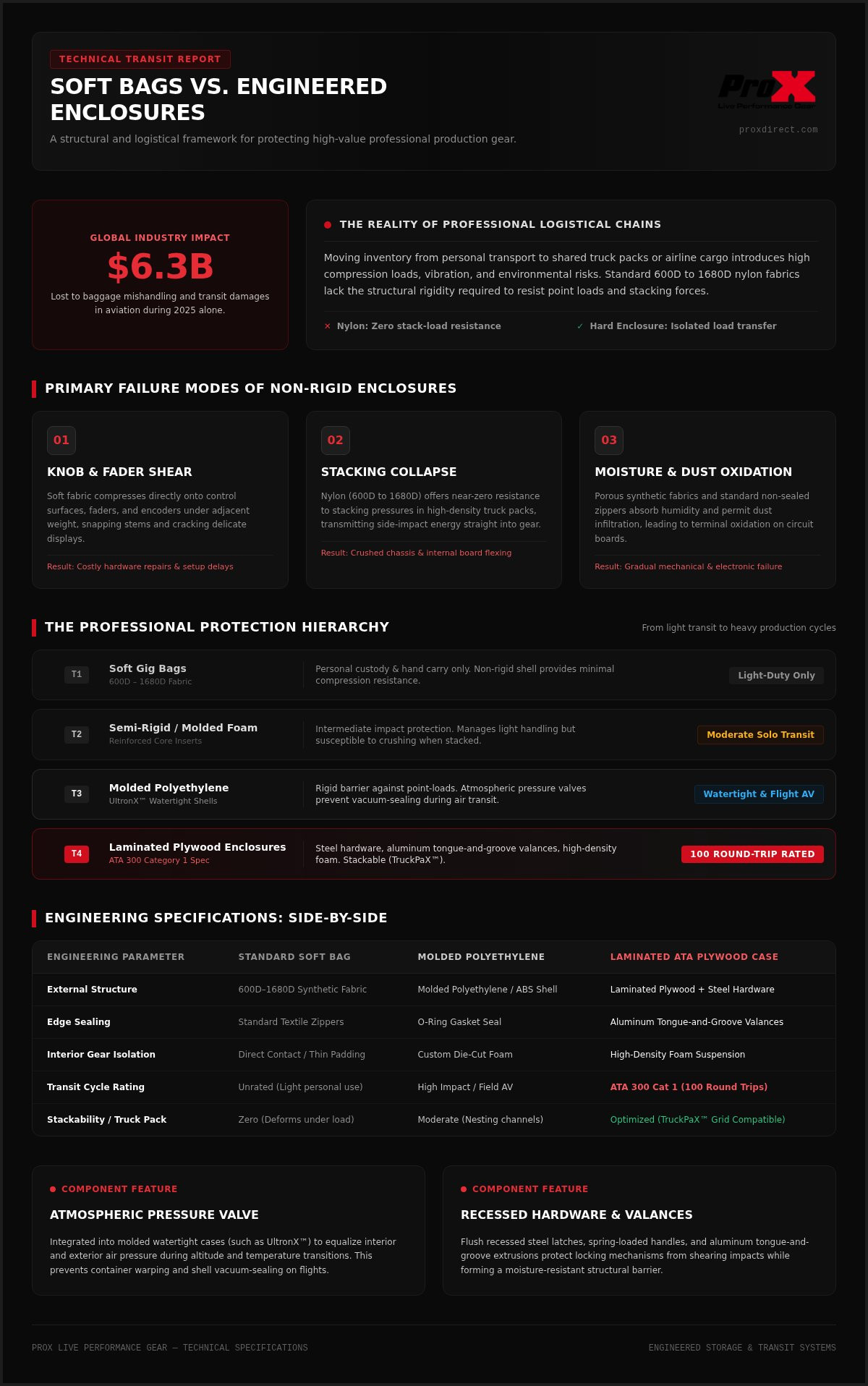
Baggage mishandling and transit damages created a $6.3 billion drain on the aviation industry in 2025. For production professionals, this figure represents more than just a statistic; it reflects the constant risk of equipment failure due to inadequate housing. Most technicians understand that a nylon bag is insufficient when high-value electronics face the rigors of a truck pack or an airline cargo hold. Searching for viable alternatives to soft gig bags becomes a necessity when your inventory moves from personal transport to a professional logistical environment.
You'll discover why professional production environments require more than soft storage and how to select the engineered protection your high-value equipment deserves. This article provides a technical framework for upgrading your storage strategy. We'll identify cases that meet ATA 300 Category 1 standards, ensuring your gear survives 100 round-trip shipping cycles. We'll also examine the structural advantages of laminated plywood and high-density foam interiors. By the end of this guide, you'll understand how to optimize logistical efficiency through stackable storage and moisture-resistant seals, moving beyond basic fabric covers to professional-grade engineered protection.
Key Takeaways
- Soft fabric enclosures lack the structural integrity required for stacking, offering minimal protection against compression or side-impact in shared production environments.
- Upgrading to alternatives to soft gig bags, such as molded polyethylene or laminated plywood enclosures, establishes a rigid external barrier for high-value gear.
- Technical specifications like recessed hardware and aluminum tongue-and-groove valances are critical for maintaining equipment integrity during heavy transit cycles.
- Logistical efficiency is improved by utilizing stackable solutions like TruckPaX™ cases, designed to maximize space and stability within professional truck packs.
- Engineered solutions from Santosom and ZCASE provide precision-fit protection for sensitive consoles, ensuring operational reliability where standard bags fail.
The Limitations of Soft Gig Bags in Professional Production
Soft gig bags are non-rigid fabric enclosures intended primarily for light-duty, personal transport. While these containers are lightweight, they lack the structural integrity necessary for professional logistical chains. In a high-density truck pack, equipment is subjected to stacking pressures and side impacts that fabric cannot mitigate. Research into transit engineering shows that standard 600D to 1680D nylon offers near-zero structural rigidity against point loads. When searching for alternatives to soft gig bags, professionals prioritize materials that resist compression and puncturing.
The mechanical lifespan of fabric enclosures is significantly shorter than that of engineered ProX cases. Zippers, seams, and handles are common points of failure under rigorous touring conditions. Unlike ATA flight cases built with laminated plywood and steel hardware, soft bags degrade quickly when exposed to friction and weight. This degradation isn't just cosmetic; it leads to total enclosure failure, often at the most inconvenient moment during a load-in.
The Vulnerability of High-Value Controls
Control surfaces featuring faders, encoders, and touchscreens require rigid vertical clearance. Soft bags are prone to "knob shear," where external pressure transfers directly to the equipment's knobs and stems. Because fabric compresses under the weight of adjacent gear, it doesn't provide the necessary air gap to protect delicate interfaces. Hard-shell alternatives use high-density foam to suspend the equipment, ensuring that external force is absorbed by the case shell rather than the sensitive electronics. The financial cost of repairing a snapped fader or a cracked display usually outweighs the investment in professional protection.
Environmental Hazards and Material Failure
Environmental factors pose a secondary but equally dangerous threat to gear health. Nylon and other synthetic fabrics are porous; they absorb moisture and allow dust infiltration through non-sealed zippers. Over time, this exposure leads to terminal oxidation on internal circuit boards and mechanical failure of moving parts. Evaluating reliable alternatives to soft gig bags is a critical step in preventing these environmental damages. Professional protection standards dictate that an enclosure must isolate gear from all external physical variables. Sealed hard shells with aluminum valances provide a barrier against humidity and particulates that soft bags simply cannot match. This isolation is essential for maintaining the operational reliability of professional-grade audio and lighting equipment.
Evaluating Professional Alternatives: Protection Hierarchy
Selecting alternatives to soft gig bags involves understanding the hierarchy of protection levels available to production professionals. Semi-rigid and molded foam bags represent an intermediate step. They offer better impact resistance than standard nylon but remain susceptible to crushing forces in stacked environments. For equipment that stays in personal custody but requires more than a fabric skin, these are functional. However, as logistical complexity increases, the transition to molded ABS or polyethylene shells becomes necessary. These materials provide a rigid exterior that prevents point-load penetration while maintaining a manageable weight profile for solo handling. These cases are particularly effective for mobile DJs and field recording technicians who require durability without the mass of traditional timber-based solutions.
Molded Plastic and Watertight Solutions
For sensitive AV components that require isolation from environmental variables, UltronX™ Watertight Cases offer a specialized solution. These containers utilize high-density polyethylene shells that resist deformation under significant impact. A critical feature for gear traveling via air is the integrated atmospheric pressure valve. This component equalizes internal and external pressure during altitude changes, preventing the shell from vacuum-sealing or warping. This level of engineering ensures that digital processors and delicate sensors remain functional regardless of the transit environment. The watertight seals also provide a baseline of protection against moisture infiltration, which is a common cause of terminal oxidation in digital circuitry.
The Plywood Flight Case Standard
The industry standard for heavy-duty touring remains the plywood flight case. Professional flight case protection standards dictate the use of 3/8-inch or 1/2-inch multi-layer laminated plywood to achieve maximum structural durability. This substrate provides the rigidity required to support hundreds of pounds of stacked weight in a truck pack. ProX utilizes a proprietary Honeycomb Digital™ laminate on these surfaces. This hexagonal embossed finish is engineered for scuff and scratch resistance, ensuring the case remains professional in appearance despite the abrasive nature of trailer loading.
Internal protection is equally technical. High-density foam inserts, often composed of 70% to 85% recycled materials, are engineered to decelerate equipment during high-G impacts. This foam density is calculated to isolate gear from kinetic energy without bottoming out during a drop. By combining a rigid outer shell with precise internal cushioning, these cases provide the ultimate alternatives to soft gig bags for high-value inventory. For those managing large-scale inventories, exploring the full range of ProX Cases is the logical step toward ensuring long-term gear survival.
Engineering Comparison: Structural Integrity vs. Portability
Portability is often the primary argument for soft bags, but this convenience comes at a significant cost to structural integrity. In professional production, gear is rarely hand-carried over long distances; it's moved on casters, through freight elevators, or within high-density truck packs. When evaluating alternatives to soft gig bags, the weight-to-protection ratio shifts in favor of rigid materials like plywood or high-impact plastic. While a plywood case is heavier, its ability to withstand hundreds of pounds of vertical pressure makes it the only viable choice for stacked logistics.
Recessed spring-loaded butterfly latches and handles are essential for logistical safety. Protruding hardware on soft bags or entry-level cases is susceptible to shearing when containers slide against each other in a trailer. Recessed designs ensure a flush surface, which allows for tighter packing and reduces the risk of hardware failure during rapid load-ins. This engineering detail differentiates professional transit solutions from consumer-grade storage.
Material Science in Case Construction
Aluminum tongue-and-groove valances provide more than a simple closure; they align the lid and base to create a dust-proof and secure seal. This mechanical alignment is critical for maintaining structural rigidity under vertical loads. Steel ball corners are specifically engineered to deflect impact energy away from the plywood panels and toward the reinforced aluminum edges. This redirection of force prevents the shell from splintering during a corner drop. For a comprehensive breakdown of these technical specifications, consult the Ultimate Guide to Flight Cases.
Impact Absorption and Internal Fit
A snug internal fit prevents component rattling, which is a leading cause of solder joint failure and mechanical fatigue in electronics. Professional alternatives to soft gig bags utilize high-density EVA foam or custom CNC-cut inserts rather than generic pick-and-pluck solutions. This ensures that every fader, knob, and connector is isolated from vibration and chassis movement. Professional protection is defined by its ability to manage kinetic energy during a drop. This management is often necessitated by federal regulations on instrument transit, which establish the standards for gear housed in commercial cargo holds. Rigid enclosures ensure that the deceleration of internal components occurs over a controlled distance within the foam, preventing the equipment chassis from absorbing the full force of a 1-meter impact.
Selecting the Right Alternative for Your Logistics
The transition from personal transport to professional production logistics necessitates a shift in housing strategy. While soft bags may suffice for local travel in a personal vehicle, shared production trucks introduce crushing forces and shifting loads that fabric cannot withstand. Selecting alternatives to soft gig bags is a requirement for any inventory entering a multi-tier logistical chain. In these environments, the primary concerns are vertical load-bearing capacity and the ability to palletize equipment for maximum trailer density.
Professional Truck Pack Efficiency
TruckPaX™ Truck Pack Cases are engineered to standardize dimensions for 90-inch and 96-inch wide trailers. This uniformity eliminates the "dead space" typically created by the irregular shapes and sagging profiles of soft bags. Logistical costs in high-volume event production are tied directly to how efficiently a trailer is filled. Using rigid, stackable enclosures allows for a wall-to-wall and floor-to-ceiling pack, ensuring that every cubic inch of transport space is utilized. This standardization reduces the number of vehicles required for a tour, which directly impacts the operational bottom line.
Maneuverability is a secondary but vital logistical factor. Professional cases equipped with heavy-duty casters reduce physical strain on production crews during long load-ins. Unlike soft bags that require manual lifting, wheeled cases allow a single technician to move multiple units simultaneously. This efficiency is critical during tight changeover windows at festivals or multi-act venues. For non-standard equipment dimensions, custom-engineered solutions ensure that even bespoke consoles receive the same level of logistical compatibility as standard 19-inch rack gear.
Air Freight and Global Logistics
Global touring requires compliance with ATA 300 Category 1 standards. This specification ensures that a transit container can withstand a minimum of 100 round-trip shipping cycles without equipment failure. When gear is surrendered to commercial carriers, it must meet the criteria outlined in federal regulations on instrument transit. These rules dictate that items up to 150 linear inches and 165 lbs are transportable in cargo holds, provided they are housed in impact-rated enclosures. Using rigid alternatives to soft gig bags helps avoid the liability waivers often required by airlines for inadequately packed gear. For specific technical requirements, see the Professional DJ Equipment Case Purchase Guide.
Managing weight is a critical aspect of air logistics to avoid excessive oversize and overweight surcharges. Professional cases balance structural thickness with material science to maintain a manageable tare weight. For a complete overview of logistical solutions, browse the full inventory of ProX Cases to find the ideal match for your touring schedule.
ProX Engineering: Beyond the Standard Case
Standard storage solutions often fail to meet the unique requirements of complex production gear. While general-purpose hardshells are effective alternatives to soft gig bags, certain high-value assets require precision-engineered environments. ProX addresses these needs through specialized lines designed for specific industry sectors, including touring audio, broadcasting, and large-scale lighting installations. These solutions go beyond simple containment, providing an integrated logistical framework for sensitive electronics.
Santosom and ZCASE: Premium Engineering
For touring professionals requiring the highest tier of protection, Santosom Cases represent the pinnacle of European technical design. These enclosures are built to withstand the most demanding global schedules, utilizing advanced assembly techniques and premium materials. When standard dimensions don't apply, ZCASE provides bespoke engineering for high-value consoles and speaker arrays. These ZCASE Custom Build Cases ensure that sensitive control surfaces receive a precision fit that eliminates internal movement. This level of customization is essential for protecting unique equipment that cannot be safely housed in generic containers.
Broadcasting and Lighting Specialization
Specialized equipment like LED video walls requires housing that accounts for fragile pixels and modular components. Utilizing LED Video Panel Wall Support Cases ensures these panels are stored vertically and isolated from vibration. Similarly, mobile production environments require more than storage; they need operational efficiency. ProX engineers comprehensive workstations for AV Broadcasting that allow for rapid deployment of monitors, mixers, and signal processors directly from the case. These units are built with the same industrial authority as standard transit cases but include ergonomic features for field use.
Heavy hardware such as stage truss segments and base plates also requires dedicated solutions. While these items are physically robust, their weight and shape make them difficult to transport safely in soft enclosures. Engineered truss cases provide the structural reinforcement necessary to manage these heavy loads while maintaining compatibility with standard truck pack dimensions. Accessing these solutions through a professional dealer network ensures that technicians receive the engineering support required to maintain a reliable logistical backbone. By selecting precision-built alternatives to soft gig bags, production companies protect their financial investment and ensure operational success on every show.
Securing Your Production Infrastructure
Soft bags are fundamentally insufficient for the crushing forces and environmental hazards inherent in professional logistics. Transitioning to rigid, engineered enclosures ensures that sensitive faders, touchscreens, and internal circuit boards remain isolated from kinetic energy, dust, and moisture. Professional standards like ATA 300 Category 1 provide the structural integrity required for high-volume global touring, while standardized dimensions optimize trailer density and reduce transport overhead.
Selecting the right alternatives to soft gig bags is a strategic investment in the longevity and reliability of your inventory. Since 1984, ProX has prioritized engineering precision and functional excellence, delivering solutions that survive the rigors of the road. Our equipment is trusted by industry leaders like Pioneer DJ and QSC, and we maintain a global dealer network to provide professional support wherever your production travels. You shouldn't leave high-value gear to chance when engineered protection is available. Protecting your gear with precision-built housing ensures that your technical infrastructure remains operational under the most demanding physical conditions.
Browse the complete ProX catalog for professional engineering solutions
Frequently Asked Questions
Why are soft gig bags considered risky for professional touring?
Soft gig bags lack the structural integrity required to withstand the compression and impact forces found in professional transit environments. Statistics from the SITA 2026 report indicate that multi-leg transfers account for 39% of baggage mishandling. In these scenarios, fabric enclosures offer near-zero protection against point loads, often resulting in "knob shear" or cracked control surfaces. For high-value inventory, transitioning to rigid enclosures is a technical requirement for ensuring operational longevity.
What is the difference between a molded plastic case and a plywood flight case?
The primary difference lies in material density and structural application. Molded plastic cases, such as the UltronX™ series, utilize high-density polyethylene for a lightweight but rigid shell suitable for solo handling and moisture resistance. In contrast, plywood flight cases use 3/8-inch or 1/2-inch laminated panels reinforced with aluminum extrusions and steel ball corners. These are the preferred alternatives to soft gig bags for heavy-duty touring and high-density truck packs.
What does it mean for a case to be ATA 300 compliant?
ATA 300 compliance refers to the Air Transport Association Specification 300 Category 1 transit standard. This rigorous certification requires that a reusable container withstand a minimum of 100 round-trip shipping cycles without equipment failure. Testing includes 1-meter drop impacts where interior shock-absorbing foam must deflect no more than 60% of its thickness. This standard ensures that professional gear survives the abrasive and high-impact environment of commercial airline cargo holds.
How do I choose between a hardshell case and a hybrid semi-rigid bag?
Decision-making should be based on your specific logistical chain. Hybrid semi-rigid bags are suitable for local transport in personal vehicles where you maintain constant physical custody. However, if your equipment enters a shared production truck or an air freight system, a hardshell case is mandatory. Rigid shells provide the vertical load-bearing capacity required for stacking; it's a feature that semi-rigid materials cannot match under the pressure of a professional tour.
Can I get a custom-engineered case for non-standard equipment?
ProX provides comprehensive custom case engineering services through our ZCASE line for equipment with non-standard dimensions. These bespoke projects address specific protection requirements for high-value consoles, speaker arrays, and broadcasting gear. Our engineering team designs these cases to ensure a precision internal fit using CNC-cut high-density foam. This customization eliminates internal movement and vibration transmission, providing a level of security that generic storage solutions cannot provide for specialized technical assets.
Why is stackability important for professional production crews?
Stackability is critical for optimizing truck pack density and reducing transport overhead. Standardized dimensions, such as those found in TruckPaX™ cases, allow production crews to utilize every cubic inch of a 90-inch or 96-inch trailer. Irregularly shaped soft bags create dead space and instability within a load. Uniform, rigid cases enable wall-to-wall and floor-to-ceiling packing, which ensures load stability and minimizes the number of vehicles required for a tour.
Are hard cases always heavier than soft bags?
Hard cases possess a higher tare weight than fabric bags, but they offer significantly better protection-to-weight ratios for professional logistics. Modern alternatives to soft gig bags, such as molded polyethylene UltronX™ cases, are engineered to provide rigid protection with minimal mass. The addition of heavy-duty casters on plywood cases often makes them easier for production crews to maneuver than bulky, hand-carried soft bags, which require significant physical lifting during load-ins.
What are the benefits of recessed hardware in professional cases?
Recessed hardware is engineered to ensure a flush external profile, which is vital for logistical safety. Protruding latches and handles on entry-level cases are susceptible to shearing when containers slide against each other in a trailer. Recessed spring-loaded butterfly latches and handles remain protected within the case's structural profile. This design prevents hardware failure during rapid loading cycles and allows for tighter, more stable packing within a professional production environment.
Disclaimer
Any trademarks, trade names or brand names appearing herein that do not belong to ProX are the property of their respective owners and/or companies, and such appearance doesn't and shall not constitute or imply endorsement, sponsorship or recommendation by ProX.


