

A professional flight case is not merely a wooden container; it is a precisely engineered component of your sound reinforcement system. In high-stakes production environments, the distinction between a standard box and a specialized transport solution determines whether your transducers survive the vibration and impact of long-haul logistics. You recognize that equipment failure on the road is an unacceptable variable that threatens both performance and profitability. This speaker flight case buying guide establishes the technical criteria for selecting protection that prioritizes functional excellence and engineering precision over simple aesthetics.
Mastering the logistical requirements of modern touring means looking beyond basic shell construction. We will detail the specifications for high-density CNC-cut internal dampening and the mechanical advantages of standardized truck pack dimensions for maximum trailer efficiency. By focusing on material science and structural capabilities, you can ensure long-term equipment reliability and accelerated load-in cycles. This guide provides a methodical overview of industrial-grade hardware, specialized corner protection, and the integration of Santosom or TruckPaX™ standards for the 2026 production season.
Key Takeaways
- Identify why specialized internal engineering is necessary to protect heavy magnets and delicate drivers from shifting during high-impact transport.
- Evaluate the structural requirements for professional touring, including industry-standard plywood thickness and adherence to ATA-300 Category 1 specifications.
- Understand how zero-tolerance CNC-cut foam, utilizing specific densities of Ester and Polyethylene, provides critical vibration dampening for sensitive audio components.
- Optimize logistical workflow by utilizing the TruckPaX™ philosophy, which aligns case dimensions with standard trailer widths for maximum truck pack efficiency.
- Use this speaker flight case buying guide to determine the specific structural needs of point source versus line array systems to balance equipment safety with portability.
Engineering Protection: Why Speaker-Specific Flight Cases are Essential
Professional audio equipment requires more than a standard shell. This speaker flight case buying guide highlights the necessity of precision-engineered protection for high-performance transducers. Unlike static hardware, speakers are dynamic systems with significant weight concentrated in magnets and sensitive components like voice coils and diaphragms. Kinetic energy during transit translates into mechanical stress. If a case lacks the internal architecture to neutralize this energy, the equipment suffers. Engineering-grade protection is a calculated requirement for any professional tour.
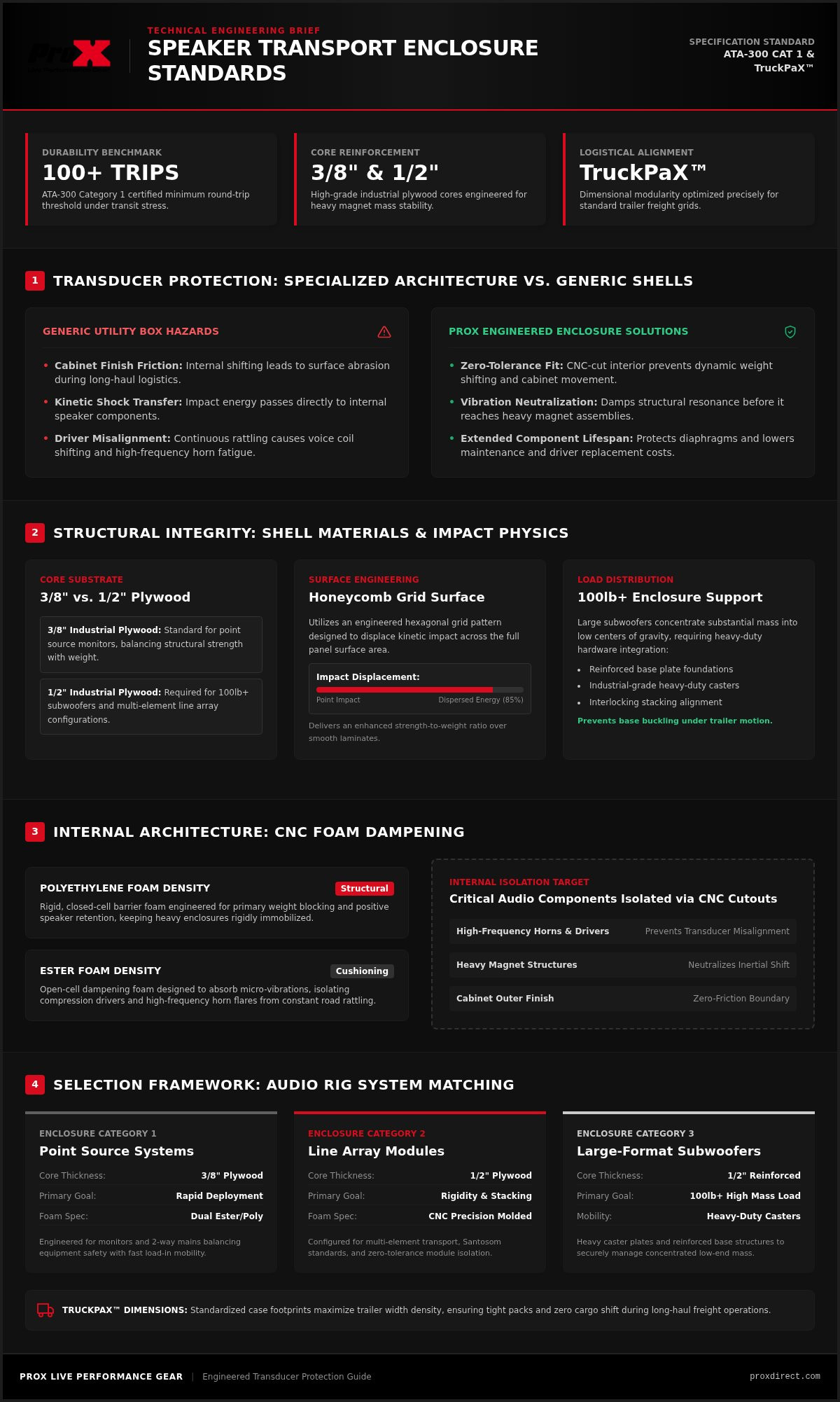
Generic utility cases often fail because they lack the specific dampening required for heavy audio enclosures. Without model-specific internal blocking, a speaker can shift inside the case. This movement causes friction against the cabinet finish and, more critically, transfers impact directly to the internal components. ProX engineers protection solutions that prioritize functional excellence, ensuring that every enclosure remains secure during high-impact logistics. Investing in specialized casing provides a measurable return by extending the equipment lifespan and reducing the frequency of driver replacements.
Protecting the Driver and High-Frequency Horns
High-frequency horns and compression drivers are susceptible to structural vibration. Constant rattling during long-haul transport can lead to transducer misalignment or cone fatigue, compromising the acoustic performance of the system. Structural integrity in the context of audio gear is the capacity of a protective enclosure to maintain its physical form and dampening properties under mechanical stress to prevent damage to internal components. ProX utilizes CNC-cut internal protection to ensure a zero-tolerance fit, isolating the most delicate parts of the speaker from external shocks.
Magnets and Weight Distribution
Large-format subwoofers present unique challenges due to their high mass and low center of gravity. Standard cases may buckle under the weight of a 100lb+ enclosure. Professional solutions require reinforced base plates and heavy-duty casters to manage these loads. You can explore a variety of these engineered solutions in the ProX-Cases category. Proper weight distribution is essential for stacking integrity and trailer safety. Following established road case construction and ATA standards ensures that your transport system meets the rigorous demands of the global production industry.
Evaluating Structural Integrity: Materials and ATA-300 Standards
The structural integrity of a transport enclosure is defined by its ability to withstand repeated mechanical stress during global transit. In this speaker flight case buying guide, we prioritize the Air Transport Association (ATA) 300 Category 1 specification. This designation represents the highest tier of protection, certifying that a case can withstand a minimum of 100 round-trip shipments. Professional audio providers must look for this standard to ensure their loudspeakers remain operational across multiple tour seasons without the risk of structural failure.
Material selection begins with the core paneling. While entry-level options use thinner materials, industrial standards dictate 3/8" or 1/2" plywood. The 1/2" thickness is typically reserved for large-format subwoofers and line array elements where the mass of the internal components requires maximum rigidity. These panels are often finished with high-pressure laminates that provide a barrier against moisture and abrasion, ensuring the wood core remains stable in varying climates.
Laminate Technology and Impact Displacement
Modern case construction has evolved beyond simple plywood surfaces. Honeycomb laminates utilize a hexagonal grid pattern to disperse kinetic energy across the surface area of the panel rather than allowing it to penetrate through to the equipment. This architecture provides a superior weight-to-strength ratio compared to traditional smooth surfaces. By utilizing these advanced composites, manufacturers can reduce the overall weight of the case without compromising structural safety. For those seeking the highest tier of engineering, the Santosom Cases pillar offers detailed insights into elite material standards for professional touring.
Industrial Hardware and Riveting
The durability of a case is often determined by its hardware. Recessed butterfly latches and spring-loaded handles are essential for preventing damage during tight truck packs. These components should be constructed from zinc-plated steel to resist corrosion. Steel ball corners serve as the primary impact points, redirecting force away from the panel joints. Proper hardware placement also supports safe handling and ergonomics guidelines for heavy equipment, reducing the risk of injury during manual load-ins.
Assembly techniques are equally critical. High-grade aluminum extrusions must be secured with double-riveted construction to prevent the frame from shearing under load. Heavy-duty speaker enclosures require industrial riveting spaced every 3 inches along the aluminum extrusions to maintain panel tension under load. For comprehensive protection that meets these industrial requirements, you can browse the full range of ProX-Cases.
Internal Architecture: Custom Foam and Vibration Dampening
Internal architecture is the primary defense against the micro-vibrations that degrade transducer performance over time. While the external shell provides impact resistance, the interior dampening system manages the kinetic energy transferred during transit. This speaker flight case buying guide emphasizes that foam selection is a critical engineering decision, not a secondary detail. Professional-grade cases utilize specific foam densities to neutralize movement and isolate sensitive components like high-frequency diaphragms and heavy magnet structures.
Density is the most important metric in internal protection. Polyethylene foam is a dense, closed-cell material used for the primary blocking of heavy speaker cabinets. Its high load-bearing capacity prevents the enclosure from bottoming out against the plywood wall during a drop. In contrast, Ester foam is an open-cell polyurethane used for lighter components. It provides superior vibration absorption for delicate electronics and high-frequency horns. CNC-cut internal protection ensures a zero-tolerance fit, eliminating the gaps found in generic pick-and-pluck foam that lead to equipment shifting and eventual hardware failure.
For systems that utilize integrated power modules, internal architecture must also account for shock-mount rack systems. These systems use internal rubber isolators to decouple the amplifier rack from the outer case shell. This dual-layer protection is essential for line array elements or active point-source speakers that carry sensitive internal circuitry alongside heavy drivers.
Foam Chemistry and Equipment Safety
The chemical composition of dampening materials can affect the longevity of speaker finishes. Low-grade foams may off-gas or react with cabinet coatings, leading to permanent discoloration or "foam melt." Utilizing high-quality, non-reactive closed-cell foam is essential for long-term storage. Closed-cell structures also prevent moisture absorption, which is critical when transporting gear through humid or coastal environments. You can see examples of these zero-tolerance fits in our Speaker & Subwoofer Cases, where the internal geometry is designed to match the specific dimensions of the enclosure.
Managing Heat in Active Speaker Cases
Active speakers with integrated Class-D amplifiers and cooling fins require specialized internal cavities. Designing for convection cooling allows heat to dissipate quickly during fast turnarounds between shows. It's vital that the internal design avoids foam-to-grille contact on high-output monitors. Pressure against the grille can cause it to deflect into the driver during transit, or trap heat against the transducer during cooling cycles. Strategic air gaps within the CNC-cut foam maintain structural support while facilitating necessary airflow for thermal management.
Optimizing Tour Logistics: Truck Pack Efficiency and Handling
Logistical optimization is as critical as structural integrity in a professional production environment. This speaker flight case buying guide emphasizes that the efficiency of your load-in and load-out cycles depends on how well your transport system integrates with standard trailer dimensions. A chaotic truck pack leads to wasted space and increased transit damage due to equipment shifting. Standardizing your inventory around specific logistical footprints ensures a secure, high-density pack that remains stable during long-haul transport.
Stacking integrity is achieved through the integration of deep-recessed caster dishes. These components allow cases to lock into one another vertically, preventing lateral movement during sudden stops or turns. When calculating the total load-out for logistics planning, you must account for the cumulative weight of stacked enclosures. High-density stacking requires cases with reinforced internal frames to prevent the bottom units from compressing under the weight of the array above. Effective weight management is a prerequisite for trailer safety and prevents axle overloads.
Maneuverability is facilitated by ergonomic handle placement and high-grade caster selection. Recessed spring-loaded handles should be positioned at natural lifting points to satisfy industrial safety requirements. A standard 4-inch heavy-duty industrial caster is typically engineered to support weight loads between 300 and 500 pounds, providing the necessary load-bearing capacity for heavy subwoofer enclosures. You can find these high-capacity transport solutions by exploring the full range of ProX-Cases.
Standardizing for the 90-inch Truck Width
The 90-inch trailer width is the standard for North American logistics. The TruckPaX™ philosophy utilizes case footprints that are multiples of this dimension, such as 22.5 inches or 30 inches, to eliminate gaps in the truck pack. This "Tetris" effect ensures that cases are braced against one another, which significantly reduces the risk of kinetic damage. Maximizing truck density also has a direct economic impact by reducing the number of vehicles required for national tours. For a deeper technical analysis, consult the TruckPaX™ Cases pillar.
Caster Selection and Terrain Challenges
Caster performance is often the difference between a smooth load-in and a mechanical failure. Non-marring blue wheels are the industry preference for high-end corporate venues and theaters because they leave no residue on sensitive flooring. For delicate electronics or active speaker modules, shock-absorbing casters utilize specialized compounds to dampen high-frequency vibrations from rough pavement or cobblestones. These industrial-grade wheels ensure that the precision alignment of your audio components remains intact from the warehouse to the stage.
The Selection Framework: Matching Your Audio Rig to the Right Case
Selecting the appropriate enclosure requires a technical assessment of the speaker's form factor and deployment method. Point source speakers often benefit from dual-speaker configurations to balance weight across four casters, while line array elements require specialized internal architecture to accommodate integrated rigging hardware. This speaker flight case buying guide categorizes solutions based on the physical demands of different audio architectures, ensuring that the transport solution matches the engineering of the transducer.
Dual speaker cases are the industrial standard for point source cabinets. They provide a stable center of gravity and allow for the integration of cable storage and stand compartments, creating a unified workstation approach. This method reduces the total case count and ensures that all deployment hardware is immediately available during load-in. For smaller deployments where portability is the priority, single speaker cases offer greater maneuverability but require more careful planning to maintain truck pack density. The choice between these configurations depends on the available transport volume and the size of the production crew.
Before finalizing your order, evaluate your inventory against this five-point technical checklist:
- Does the internal foam density accommodate the specific transducer mass to prevent bottoming out?
- Are the external dimensions compatible with standardized 90-inch truck pack footprints?
- Does the case design include dedicated compartments for integrated rigging or cabling?
- Are all latches and handles recessed to prevent mechanical shearing during high-density loading?
- Does the case facilitate the specific deployment style required for your rigging frames?
Line Array Rigging and Protection
Line array elements require specific structural support to manage the weight of integrated rigging hardware. Casing these units with the rigging attached reduces the time required for assembly on site. Pull-over style cases are essential for large-format arrays, allowing the shell to be removed vertically while the speakers remain on their transport dollies or rigging frames. This minimizes manual lifting and protects the precision-engineered pins and frames from lateral impact. For unique arrays or bespoke protection needs, the ZCASE Custom Build Cases pillar details advanced engineering solutions for high-value production gear.
Subwoofer Logistics and Ground Stacking
Protecting the rear I/O panels and integrated power modules is a primary requirement for active subwoofers. These components are often recessed but remain vulnerable to impact during ground stacking in crowded warehouses. Professional cases should feature reinforced rear barriers and strategic air gaps to isolate the electronics from external pressure while maintaining thermal stability. Efficiently managing the footprint of these heavy units is essential for maintaining an organized and safe production environment. To find the correct fit for your specific subwoofer models, you can Browse the full ProX Speaker Case collection here.
Securing Your Audio Inventory for the 2026 Touring Season
Precision engineering is the primary variable that guarantees the survival of your audio inventory in high-stakes production environments. This speaker flight case buying guide has detailed the technical necessity of ATA-300 Category 1 standards and the logistical advantages of TruckPaX™ standardization. By prioritizing structural integrity and zero-tolerance internal dampening, you eliminate the risk of mechanical failure and transducer misalignment during transit. These engineering choices directly impact the longevity of your drivers and the efficiency of your load-in cycles.
ProX has been engineering performance gear since 1984, providing a reliable backbone for the global production industry. Whether you require standardized transport solutions or specialized ZCASE custom build projects for unique line arrays, our equipment is built for functional excellence. Our extensive global dealer network ensures easy fulfillment and technical support across all major production markets. It's a calculated investment in your professional reputation and tour profitability. We invite you to Explore the Full ProX Speaker Case Catalog to find the exact transport solution for your specific rig. Your equipment deserves the highest level of industrial protection available.
Frequently Asked Questions
What is the difference between ATA-300 and standard utility cases?
ATA-300 Category 1 specifications require a case to withstand a minimum of 100 round-trip shipments, ensuring the highest tier of structural integrity for international logistics. Standard utility cases often lack this certification and are typically constructed with thinner plywood and non-recessed hardware. This speaker flight case buying guide notes that utility boxes provide basic organization but don't offer the impact displacement or verified testing protocols necessary for protecting high-value audio transducers during high-impact transit.
How do I measure my speakers for a custom-engineered flight case?
Accurate measurements must include the absolute height, width, and depth of the speaker enclosure, accounting for all protrusions such as handles, rigging pins, and input panels. Our custom case engineering services utilize these dimensions to design zero-tolerance CNC-cut internal protection. Providing the total weight of the speaker is also essential, as this data point determines the specific density of the dampening foam required to prevent the unit from bottoming out during a drop.
Are caster wheels included in the standard weight of a speaker case?
Caster wheels are typically included in the final shipping weight of a professional speaker case, but individual hardware specifications should always be verified. A set of four 4-inch industrial casters adds significant mass to the enclosure. Understanding the total weight is critical for logistical planning and calculating trailer axle loads. This speaker flight case buying guide recommends reviewing the technical data sheet for each model to ensure your load-out stays within safe handling limits.
Can I stack different brands of cases if they have standardized dimensions?
Stacking different brands is possible if the cases utilize standardized logistical footprints, such as the TruckPaX™ system, and feature compatible caster dishes. Standardization ensures that the wheels of the upper case align precisely with the recesses on the lid of the lower case. This vertical stability is essential for preventing lateral shifting during transport. However, always verify that the load-bearing capacity of the bottom case can support the cumulative weight of the stack.
What is the best foam density for protecting heavy subwoofers?
Heavy subwoofers require high-density, closed-cell Polyethylene foam for primary internal blocking. This material provides the structural rigidity necessary to support enclosures that often exceed 100 pounds, preventing the speaker from shifting against the plywood walls. For delicate internal electronics, a secondary layer of open-cell Ester foam may be used for vibration dampening. This combination of materials ensures that both the external cabinet and the internal voice coils remain secure during long-haul logistics.
How do I maintain my flight case hardware for long-term touring?
Long-term maintenance involves regular inspection of all mechanical components, including recessed butterfly latches and spring-loaded handles. Zinc-plated steel hardware should be kept clean and occasionally lubricated with a dry silicone spray to prevent oxidation and ensure smooth operation. Check all aluminum extrusions for loose rivets; if the frame shows signs of shearing, utilize ProX Cases replacement parts to restore structural integrity. Cleaning casters of debris prevents flat spots and maintains easy maneuverability.
Do I need a separate case for speaker stands and cables?
Utilizing a workstation approach allows you to integrate cable storage and stand compartments directly into the speaker case, which streamlines the load-in process. This configuration ensures that all necessary deployment hardware remains with the transducers. However, for large-format arrays or heavy subwoofers, separate utility cases for stands and cabling may be preferable to keep individual case weights manageable. The decision should be based on your crew size and the ergonomic requirements of your specific tour.
What are the benefits of Santosom cases for international touring?
Santosom cases offer elite engineering and material standards specifically designed for the rigors of international touring. These cases utilize advanced honeycomb laminates and precision assembly techniques that provide a superior weight-to-strength ratio. This partnership ensures that professional production companies have access to bespoke protection solutions that meet the highest global standards. Utilizing Santosom enclosures minimizes the risk of equipment damage during multi-modal transport, where gear is frequently handled by various logistical providers across different continents.
Disclaimer
Any trademarks, trade names or brand names appearing herein that do not belong to ProX are the property of their respective owners and/or companies, and such appearance doesn't and shall not constitute or imply endorsement, sponsorship or recommendation by ProX.


