

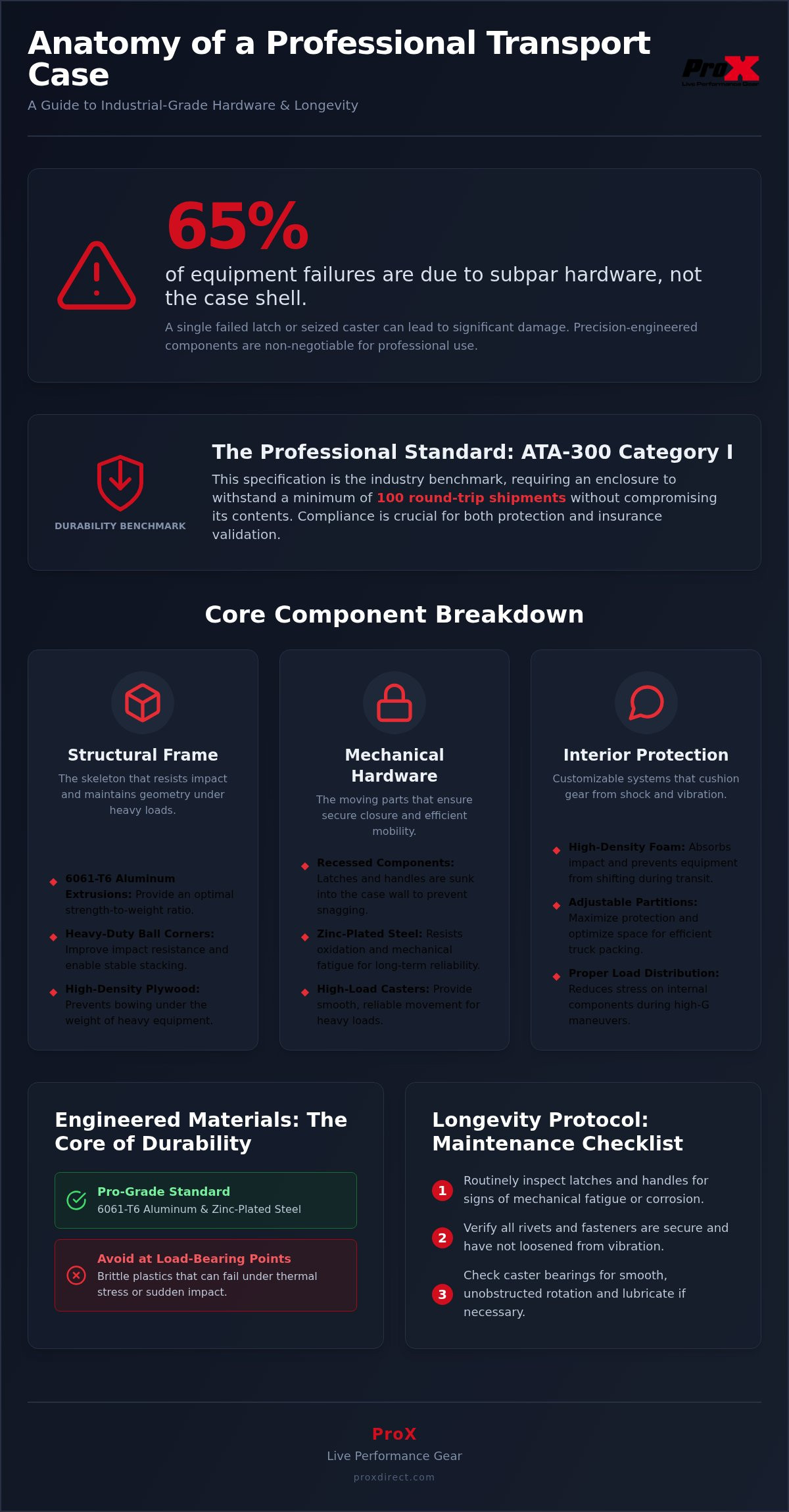
Did you know that approximately 65% of equipment failures in professional production are attributed to subpar hardware rather than the case shell itself? This figure highlights a critical vulnerability in many logistics chains, where a single failed latch or seized caster can lead to significant equipment damage. This comprehensive flight case accessories guide focuses on the engineering precision required to maintain operational continuity and move gear safely through high-stakes environments without mechanical failure.
You likely understand that the physical demands of international transit require more than just a sturdy box. You need a system that meets the ATA-300 Category I standard, ensuring your equipment can withstand a minimum of 100 round-trip shipments. This guide promises to help you master the technical specifications of industrial-grade hardware to ensure compliance and professional protection. We'll provide a methodical overview of essential components, from 6061-T6 aluminum extrusions to zinc-plated steel components, and outline maintenance protocols to extend the service life of your existing inventory. By the end of this article, you'll be able to optimize your logistical efficiency through better hardware selection and rigorous engineering standards.
Key Takeaways
- Understand the technical requirements of ATA-300 Category I compliance to ensure your transport cases withstand the rigors of a minimum of 100 round-trip shipments.
- Evaluate the structural benefits of 6061-T6 aluminum extrusions and heavy-duty ball corners for improved impact resistance and stacking stability in professional environments.
- Consult this flight case accessories guide to select recessed mechanical components and high-load casters that prioritize snag-free movement and logistical efficiency.
- Learn to implement a methodical maintenance schedule that identifies mechanical fatigue in latches and bearings to extend the service life of your equipment fleet.
- Master interior management techniques using high-density foam and adjustable partitions to maximize protection and optimize space during truck packing.
Understanding Engineering Standards for Professional Case Hardware
Professional logistics demand more than a wooden box. The engineering behind mechanical accessories determines whether sensitive gear survives international transit or suffers catastrophic failure. ATA-300 Category I is the benchmark for professional touring protection. This standard requires the enclosure to survive at least 100 round-trip shipments without compromising the contents. In this flight case accessories guide, we examine how mechanical precision prevents hardware failure during transit. If a latch shears or a rivet pulls through, the entire structural envelope is compromised. High-precision hardware is also a critical factor in insurance claims. Insurance adjusters often look for compliance with recognized Flight Case Construction Standards when evaluating damage. Using substandard components can lead to claim denials if the hardware is deemed insufficient for the weight of the cargo.
Mechanical Integrity and Load Distribution
Hardware doesn't just hold the case together; it manages kinetic energy. When a case hits the ground, the impact force must be distributed across the structural extrusions and reinforced corners. If the hardware is misaligned or of inferior grade, the energy concentrates at a single point. This concentration causes the plywood to splinter or the frame to buckle. High-strength extrusions act as the skeleton of the build. They ensure the shell maintains its shape under extreme pressure from stacked inventory in a truck or cargo hold. For a deeper look at the foundational engineering of these systems, see The Ultimate Guide to Flight Cases: Engineering Protection for Professional Gear. Proper load distribution also reduces the stress on internal foam, which prevents the equipment from shifting during high-G maneuvers.
Material Science in Hardware Engineering
The choice of materials is a deliberate engineering decision based on the physics of transport. Zinc-plated steel is the industry standard for recessed latches and handles because it resists oxidation and mechanical fatigue. In high-humidity environments, this plating prevents the corrosion of mechanical components that leads to seized locks or brittle joints. Structural extrusions typically utilize 6061-T6 aluminum. This alloy provides an optimal strength-to-weight ratio, ensuring the case remains manageable without sacrificing rigidity. Professional-grade builds avoid brittle plastics at load-bearing points. Plastic handles or corners often fail under thermal stress or sudden impact. Metal components are superior because they can deform slightly while maintaining their grip on the equipment. This ductility prevents the brittle fractures common in consumer-grade storage solutions, a key distinction emphasized in any professional flight case accessories guide.
Structural Integrity: Selecting High-Strength Extrusions and Corners
The structural skeleton of a transport enclosure determines its ability to maintain geometry under heavy load. While the previous section established the importance of engineering standards, this flight case accessories guide now details the specific hardware required to achieve that rigidity. The integration of high-strength extrusions and corner hardware is what separates industrial-grade builds from consumer storage. These components must adhere to the ATA 300 Specification to ensure the case remains functional after repeated mechanical stress. Beyond the frame, the choice of laminate panels is critical. High-density 1/2-inch plywood is the standard for heavy equipment to prevent bowing; this material is often reinforced with ABS or aluminum skins to provide impact resistance and moisture protection. Optimizing these dimensions for standardized logistical footprints ensures that cases pack efficiently in standard 90-inch or 96-inch trailers.
Extrusion Specifications for Heavy-Duty Use
Aluminum extrusions provide the primary structural reinforcement for plywood panels. For professional applications, a wall thickness of 1.5mm to 2mm is required to prevent the metal from crimping under vertical pressure. Tongue-and-groove extrusions are essential for lid alignment, creating a physical interlock that prevents the case from shearing during lateral impacts. In larger utility cases, double-angle extrusions provide maximum joint reinforcement by gripping the plywood from both sides. This design distributes the weight of the cargo more evenly across the frame. Engineers can source these structural components through the ProX Cases category to ensure compatibility with industrial assembly standards.
Corner Hardware and Stacking Mechanics
Corner hardware serves as the primary point of impact absorption. Heavy-duty steel ball corners are engineered with a specific radius to deflect kinetic energy away from the structural joints. Unlike flat corners, the rounded profile of a ball corner allows the case to slide during a drop, reducing the sudden deceleration that causes internal gear damage. For professional logistics, these corners often integrate stacking cups. These recessed components allow multiple cases to lock together, preventing shifting during transit. Implementing these features is a core focus of TruckPaX™ Truck Pack Cases: Engineering Logistical Efficiency for Professional Touring. To maintain the integrity of your fleet, you can explore professional hardware solutions that meet these rigorous specifications. Following a precise flight case accessories guide ensures that every corner and extrusion contributes to the overall durability of the build.
Mechanical Components: Secure Closures and Mobility Solutions
Mechanical components are the most frequently engaged parts of a transport system. While the shell provides the physical barrier, the latches and casters provide the operational functionality. This flight case accessories guide emphasizes that a case is only as effective as its moving parts. Recessed hardware prevents mechanical shearing by ensuring that no components protrude beyond the case profile during high-density truck loading. This design is validated through rigorous ATA 300 Compliance Testing, which subjects hardware to repeated impacts and vibrations to ensure closure integrity under extreme conditions.
Latches and Secure Fastening Systems
Butterfly latches are the industrial standard for secure closures. Their mechanical advantage allows for high-tension compression between the lid and the base, which is necessary to maintain a moisture-resistant seal. These latches must be recessed into the plywood to avoid damage from adjacent cases in a truck pack. For high-value electronics, integrating padlockable hasps provides an extra layer of security against unauthorized access during international transit. Regular maintenance is essential. Technicians should inspect moving parts for signs of mechanical fatigue or oxidation, especially in humid environments where salt air can cause latch seizures.
Mobility and Load-Bearing Casters
Mobility solutions must be selected based on the total dynamic weight of the cargo. A common error is calculating only the static load capacity. Dynamic weight limits account for the forces exerted on the casters when the case hits a threshold or ramp. Industry professionals prefer 4-inch blue polyurethane wheels for their durability and floor protection. Polyurethane provides a balance between shock absorption and rollability, unlike hard rubber which can flat-spot under heavy loads. This material science ensures the case moves smoothly across varying surfaces without degrading.
High-utilization fleets require 360-degree swivel bearings for maneuverability in tight backstage areas. Integrated braking systems are mandatory for safety on sloped ramps. For heavy amplifier racks or lighting consoles, selecting reinforced caster plates is necessary to distribute the load across a larger surface area of the plywood base. This prevents the bolts from pulling through the wood during high-impact maneuvers. You can find these heavy-duty components and other ProX Cases replacement parts to maintain your fleet's mobility standards and ensure long-term reliability.
Specialized Accessories for Production and Logistical Efficiency
Interior management is as critical as external hardware for professional gear protection. This flight case accessories guide identifies that internal organization directly impacts logistical speed and equipment safety. High-density polyethylene foam provides superior shock absorption for heavy chassis, while adjustable partition systems allow for the reconfiguration of internal space as inventory changes. For electronic management, rack rail standards must be chosen based on the mounting requirements of the gear. Threaded rails, typically utilizing 10-32 screws, are the standard for amplifier and audio processing racks. Conversely, square hole rails using cage nuts provide more flexibility for networking and IT-style integration. For secure cable management, engineers integrate hook and loop fasteners into the internal walls to prevent cable strain without the residue associated with adhesive tapes.
Specialized hardware is particularly vital for AV-Broadcasting Cases. These builds often require complex internal mounting systems to support monitors and control surfaces. Utilizing the correct replacement parts ensures that these high-value systems remain operational through years of heavy use. You can source these technical components through the ProX Cases dealer network to maintain your production standards.
Broadcast and Workstation Accessories
Workstation lids often incorporate gas-strut technology to ensure controlled opening and closing of heavy monitor panels. This prevents sudden drops that could shatter LED screens or injure operators. Mobile workstations also require integrated VESA mounts for secure display attachment and pull-out keyboard trays for ergonomic operation in the field. Thermal management is another engineering priority for high-heat electronics. Venting accessories and fan-mount panels are necessary to facilitate airflow and prevent thermal throttling of servers and switchers during outdoor productions.
Truss and Staging Hardware Logistics
Professional production environments place extreme mechanical stress on transport enclosures. A rigorous maintenance schedule is necessary for high-utilization production fleets to prevent field failures during international transit. This flight case accessories guide recommends a full mechanical audit every six months or immediately following major tours. During these inspections, technicians must identify mechanical fatigue in latches and caster bearings before they reach the point of catastrophic failure. Retrofitting older cases with modern, high-performance hardware can significantly extend the operational life of a fleet, often providing a more cost-effective solution than full enclosure replacement. Sourcing authentic ProX Cases Replacement Parts through the authorized dealer network ensures that all components meet the original engineering specifications for load ratings and material composition.
Step-by-Step Hardware Inspection
Maintenance begins with a methodical cleaning of all recessed mechanical parts. Compressed air and non-corrosive lubricants should be applied to latch pivots and caster swivel bearings to ensure smooth operation and prevent oxidation. Structural integrity depends heavily on rivet performance. Technicians should check for loose or sheared rivets that indicate excessive vibration or panel shifting. If a structural seam is misaligned, it often suggests a deeper plywood failure or frame distortion. Knowing when to repair vs. when to decommission a case is a critical safety decision. If the structural extrusions are warped or the plywood exhibits delamination at load-bearing points, the case should be removed from service to protect the internal gear and personnel.
Optimizing Fleet Longevity
Standardizing hardware across an entire inventory simplifies spare parts management. By using uniform latches, corners, and casters, production houses can maintain a smaller, more efficient inventory of components. This approach reduces the logistical complexity of field repairs and ensures compatibility across different case types. The ROI of high-quality hardware is realized through a significant reduction in equipment repair costs and the prevention of transit-related damage. When a case maintains its structural envelope, the probability of internal gear damage decreases. For those managing high-value inventory, exploring Santosom Cases: Engineering Excellence for Touring Pros provides insight into how premium builds utilize high-grade accessories to achieve multi-year reliability. Following a comprehensive flight case accessories guide ensures that maintenance remains a proactive engineering task rather than a reactive fix.
Engineering Longevity into Your Production Logistics
Maintaining a professional transport fleet requires a commitment to engineering precision and material science. As established in this flight case accessories guide, the resilience of your gear depends on the mechanical integrity of its components. From selecting 6061-T6 aluminum extrusions to ensuring ATA-300 Category I compliance, every hardware choice impacts the safety of your high-value inventory. Standardizing your hardware and implementing a rigorous maintenance schedule allows you to extend the service life of your cases while reducing the risk of equipment failure during international transit.
ProX has been engineering performance gear since 1984, providing the industry with reliable, industrial-grade solutions. Whether you need to retrofit an existing fleet or build new specialized enclosures, our global dealer network offers the professional support and replacement parts necessary to keep your operations moving. Explore the full catalog of ProX Engineering-Grade Case Accessories to find hardware that meets your technical specifications. By prioritizing functional excellence today, you ensure that your gear remains protected through years of demanding use.
To ensure your gear is handled with the same level of care as its engineering, you can visit ShipXpress for professional shipping and packing services.
Frequently Asked Questions
What are the benefits of using recessed hardware on touring cases?
Recessed hardware prevents mechanical shearing during high-density truck loading and transit. By mounting latches and handles within the plywood profile, components don't protrude or snag on adjacent cases or straps. This design minimizes impact damage and ensures a more efficient logistical footprint. It's a fundamental requirement for maintaining the structural envelope during high-stakes transport where friction and close-proximity impacts are frequent throughout the journey.
How do I calculate the load rating needed for my case casters?
Calculate the dynamic load rating by dividing the total weight of the loaded case by three, rather than four. Even on a four-wheel case, uneven floors often result in only three wheels bearing the weight at any given moment. This flight case accessories guide recommends using 4-inch polyurethane wheels with a rating exceeding your maximum gross weight to ensure smooth rolling and prevent flat-spotting under long-term static pressure.
What is the difference between zinc-plated and chrome-plated case hardware?
Zinc-plated steel is the industrial standard for professional accessories because it offers superior resistance to oxidation and mechanical fatigue. While chrome plating provides a high-gloss aesthetic, it's more prone to chipping and flaking under impact. Zinc provides a sacrificial layer that protects the underlying steel from corrosion, making it more suitable for the high-humidity and high-impact environments typical of professional production, global logistics, and outdoor staging.
Can I upgrade my existing cases to meet ATA-300 standards?
Upgrading is possible by replacing consumer-grade components with industrial hardware that meets the ATA-300 Category I specification. This involves retrofitting cases with recessed butterfly latches, heavy-duty ball corners, and 6061-T6 aluminum extrusions. However, the plywood shell must also meet density requirements. Professional-grade replacement parts allow you to reinforce existing enclosures, provided the original structural seams remain intact and capable of distributing kinetic energy during rigorous drop tests.
How often should I lubricate the latches and handles on my cases?
Lubricate moving mechanical parts every six months or after a major touring cycle. High-utilization fleets require regular application of non-corrosive lubricants to the pivot points of butterfly latches and the internal springs of recessed handles. This prevents latch seizures and ensures smooth operation in diverse climates. Regular maintenance also allows technicians to inspect for mechanical fatigue or rivet failure, which are common precursors to catastrophic hardware failure during international transport.
What type of foam is best for protecting sensitive electronics inside a case?
High-density polyethylene (PE) foam is preferred for supporting heavy electronics due to its closed-cell structure and superior shock absorption. Unlike softer open-cell foams, PE foam doesn't bottom out under heavy impact and maintains its shape over time. For more delicate components, a combination of PE foam for structural support and ester foam for surface protection is often utilized to balance vibration dampening with firm equipment positioning within the case.
Why is steel preferred over aluminum for case corners?
Steel is utilized for corners because its high tensile strength and ductility allow it to absorb and deflect kinetic energy better than aluminum. Aluminum components are more prone to brittle fractures upon sudden impact. Heavy-duty zinc-plated steel ball corners are engineered to deform slightly rather than shattering, which protects the case's structural joints. This material choice is critical for meeting the impact requirements established in any professional flight case accessories guide.
How can I identify if my case hardware needs replacement?
Identify hardware failure by checking for seized mechanical joints, sheared rivets, or warped extrusions. If a butterfly latch no longer provides a compression seal, or if a caster swivel bearing grinds during movement, the component has reached its operational limit. Structural misalignment usually indicates that the hardware has suffered mechanical fatigue. Replacing these parts immediately with authentic components is necessary to ensure the continued safety and compliance of your entire transport fleet.
Disclaimer
Any trademarks, trade names or brand names appearing herein that do not belong to ProX are the property of their respective owners and/or companies, and such appearance doesn't and shall not constitute or imply endorsement, sponsorship or recommendation by ProX.


