
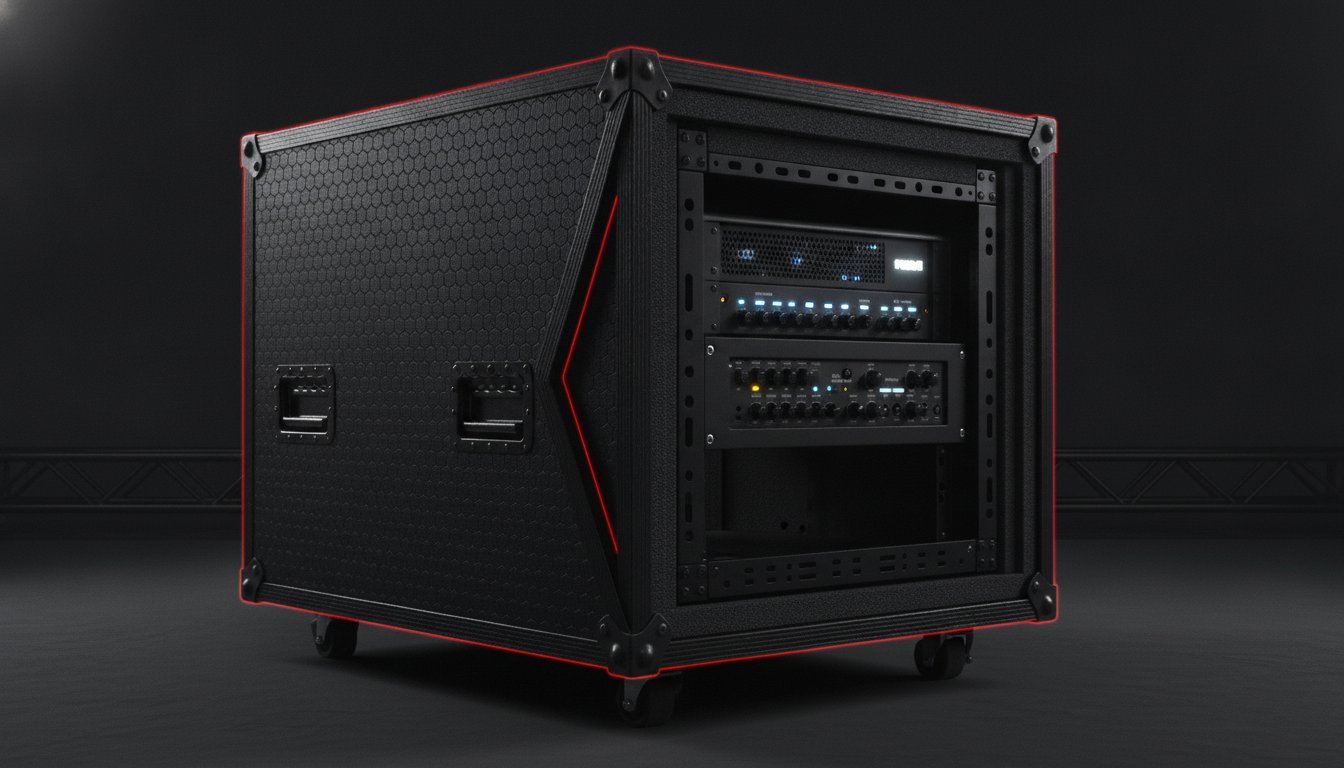
A standard plywood shell is not a comprehensive protection strategy; it is merely a container that often masks the destructive forces of kinetic energy and internal thermal buildup. For the touring professional, the integrity of amp and effects rack cases is measured by mechanical isolation and heat dissipation rather than simple outer thickness. You already know that a single structural failure or a thermal shutdown during a high-intensity set can compromise an entire production. It's a calculated risk that no seasoned engineer is willing to take when thousands of dollars in specialized processors are on the line.
This guide provides the technical framework required to master the specifications of professional rack systems. You'll learn how to evaluate the structural capabilities of your gear to ensure it survives the rigors of global logistics. We will analyze the engineering behind dual shock-mount systems, the necessity of EIA-310-D compliance, and how standardized dimensions like TruckPaX™ architecture optimize your truck-pack efficiency. From managing cable clutter to ensuring long-term hardware survival, this overview establishes the industry standard for equipment safety and operational reliability.
Key Takeaways
- Analyze the mechanical demands of the touring lifecycle to identify how engineered enclosures protect internal components from high-frequency vibration and impact.
- Decode technical specifications, including EIA-310-D standards and rack unit dimensions, to select the ideal depth for your specific amp and effects rack cases.
- Evaluate the structural advantages of dual shock-mount engineering, utilizing floating internal frames to dissipate kinetic energy before it reaches equipment mounting ears.
- Implement advanced thermal management and cable integration techniques to prevent heat-trap effects and ensure consistent performance during high-intensity operation.
- Streamline logistics by selecting cases with appropriate caster-board strength and standardized footprints for secure, efficient truck-pack configurations.
The Mechanical Demands on Amp and Effects Rack Cases in Live Production
A rack case is a standardized enclosure designed to isolate sensitive electronics from mechanical shock and environmental hazards. These systems provide a rigid structural frame that adheres to the 19-inch rack standard, ensuring that diverse hardware from different manufacturers can be secured within a single, mobile unit. For the touring professional, these cases are the primary defense against the punishing reality of the touring lifecycle. This cycle includes constant low-frequency vibration during long-haul transit, rapid humidity shifts, and the high-impact forces of stagehand handling during load-in and load-out.
Standard utility cases often fail because they prioritize shell thickness over kinetic energy management. While a thick plywood exterior prevents punctures, it does little to mitigate the G-force impact on internal solder joints and delicate circuitry. When a case lacks proper internal damping, the energy from a drop travels directly through the mounting rails and into the equipment chassis. The high cost of equipment failure extends far beyond the price of a replacement part. It encompasses show-stopping downtime, lost labor hours, and potential damage to a production’s professional reputation. Investing in high-quality amp and effects rack cases is a logistical necessity for maintaining operational continuity.
Identifying High-Risk Components in Rack Gear
Analog amplifiers often contain heavy power transformers that create significant leverage against the equipment mounting ears. Under the stress of constant vibration, this weight can cause metal fatigue, leading to sheared rack ears or warped chassis frames. Digital processors present different vulnerabilities. Delicate LCD screens and internal ribbon cables are susceptible to jarring forces that can dislodge connections or crack glass substrates. Engineering-grade cases account for these risks by using materials that absorb vibration before it reaches the internal components. You can browse specialized protection options in the ProX Cases catalog to find solutions tailored to these specific hardware needs.
The Role of ATA-300 Standards in Professional Protection
The ATA-300 specification is the industry benchmark for reusable shipping containers, with Category I representing the highest level of durability. To meet the ATA-300 Category I requirement, a case must maintain its structural and functional integrity through a minimum of 100 round-trip shipments. Professional-grade hardware includes recessed latches and spring-loaded handles designed to sit flush with the case surface. This design prevents snags and shearing when cases are tightly packed into a truck. High-tensile steel ball corners and aluminum valances further reinforce the structure, ensuring the enclosure remains square and secure despite years of heavy use.
Decoding Rack Case Specifications: Depth, Rack Units, and Standards
Engineering a reliable rack system begins with a precise understanding of the Rack Unit (U), the vertical measurement standard of 1.75 inches for 19-inch wide equipment. While height is standardized, depth varies significantly based on the hardware's internal architecture and cooling requirements. Modern amp and effects rack cases must accommodate a wide range of form factors, from legacy analog powerhouses to shallow digital signal processors. Selecting an enclosure with incorrect dimensions leads to wasted truck space or, more critically, inadequate clearance for cable connectors and ventilation.
The industry is currently navigating a depth dilemma. Traditional power amplifiers often require 19 to 24 inches of depth to accommodate massive heat sinks and rear-panel connectivity. Conversely, modern digital modelers and processors from brands like Fractal Audio, Kemper, and Neural DSP have shifted the market toward 7-inch and 10-inch shallow formats. Utilizing a standard 19-inch deep case for these units creates excessive dead space and complicates cable management. Standardizing your inventory around specific depth categories improves the efficiency of TruckPaX™ Truck Pack Cases, allowing for a uniform footprint that simplifies logistics and load-in procedures.
Determining the Correct Depth for Your Rig
- 7-inch deep cases: These are engineered for wireless microphone receivers, network switches, and shallow digital modelers. They minimize the physical footprint and are ideal for front-of-house or side-stage effects racks.
- 14 to 19-inch deep cases: This remains the industry standard for most professional power amplifiers and server-based audio units. It provides sufficient room for standard XLR and Speakon connectors without stressing the cable housing.
- 24-inch deep cases: High-output touring amplifiers often feature deep chassis designs that require these extended enclosures. These models frequently include "slam door" technology to keep the rack footprint compact during performance.
Rack Rail Engineering and Thread Standards
The choice between tapped rails and cage nut systems is a matter of long-term maintenance. Tapped rails offer immediate convenience but can become unusable if a thread is stripped during a high-pressure setup. Cage nut systems allow for the replacement of individual mounting points, ensuring the case remains functional even after years of heavy use. For units occupying 3U or 4U of space, rear rack rails are essential to prevent chassis torque and mounting ear fatigue. Dual-rail systems are non-negotiable for touring amplifiers to distribute heavy weight across four points of contact. You can evaluate various rail configurations and depth options by reviewing the ProX Cases technical catalog.
Shock Mount Engineering vs. Standard Rack Protection
Mechanical isolation through dual-case engineering represents the most effective strategy for mitigating kinetic energy transfer to sensitive electronics. While standard enclosures secure equipment to a fixed rail, shock-mount amp and effects rack cases utilize a "case-within-a-case" architecture. This design features a floating internal steel frame suspended by high-density polyethylene or rubber buffers. When an external impact occurs, the outer shell deforms or deflects the force while the internal frame moves independently. This process absorbs the G-force before it reaches the equipment chassis. This system is essential for hardware with high mass-to-volume ratios, such as multi-channel power amplifiers or vintage tube-driven processors.
The decision to utilize shock-mount protection involves a logistical trade-off between weight and equipment longevity. A dual-case system is inherently heavier and possesses a larger external footprint than a standard rack. However, the logistical effort is justified when housing mission-critical digital processors or heavy analog rigs that face frequent long-haul transport. To mitigate space constraints, the Slam Door advantage allows for the case lids to be retracted into the sides of the enclosure. This eliminates the need for lid storage in cramped backstage environments. It maintains a clear workspace during high-pressure changeovers and reduces the risk of lost hardware.
The Physics of Vibration Isolation
High-density foam buffers are not merely padding. They are precision-engineered damping interfaces that convert mechanical energy into thermal energy. In a hard-mounted configuration, micro-vibrations from truck engines and road surfaces travel directly through the mounting ears. This constant oscillation leads to microscopic fractures in solder joints and the loosening of internal ribbon cables. Shock-mount designs provide a measurable reduction in G-force transmission. They often absorb up to 80% of the impact energy that would otherwise cause immediate hardware failure or intermittent signal loss during a performance.
Material Science: Ply vs. Polyurea Coatings
Traditional professional cases utilize 3/8-inch or 1/2-inch plywood for its excellent strength-to-weight ratio and natural damping properties. While plywood remains the industry standard, modern advancements like the BLAQ Polyurea coating offer superior environmental resistance. This industrial-grade finish provides a seamless, waterproof barrier that is significantly more impact-resistant than traditional ABS laminates. For those requiring the highest level of manufacturing precision, Santosom Cases represent the pinnacle of CNC-machined engineering. These systems integrate precision-cut foam and reinforced hardware to ensure maximum structural integrity across global touring cycles.

Thermal Management and Cable Integration for Professional Racks
High-density power amplifiers and signal processors generate substantial thermal energy that must be dissipated to prevent thermal throttling or hardware failure. In enclosed amp and effects rack cases, the "Heat Trap" effect occurs when stagnant air absorbs heat from chassis surfaces, raising the internal ambient temperature beyond manufacturer-specified limits. This is particularly critical for Class D amplifiers and digital modelers that rely on internal sensors to manage performance. Efficient thermal management requires a combination of active and passive cooling strategies to maintain a stable operational environment throughout the duration of a production.
Integrating power distribution units (PDUs) within the rack enclosure streamlines the setup and strike process while reducing cable clutter. A centralized power source allows for pre-wired internal connections, leaving only a single main power input for the technician to manage at the venue. This approach increases efficiency and protects signal integrity by allowing for the deliberate physical separation of power and signal lines. Cable management ports must be utilized to facilitate these runs without compromising the case seal during transport or storage.
Optimizing Airflow within the Rack
Maintaining a vertical "chimney effect" is essential in high-density stacks. Utilizing vented rack panels at the bottom and top of the unit encourages natural convection, where cool air enters the base and warm air exits the top. Engineering a 1U gap between high-heat components, such as tube-driven power stages, provides a necessary buffer for radiant heat dissipation. During high-intensity performances, removing both the front and rear doors is a standard operational procedure to ensure maximum airflow across rear-mounted heat sinks and exhaust fans. This practice prevents the accumulation of hot air pockets that can lead to unexpected equipment shutdowns.
Cable Infrastructure and Protection
Signal integrity depends on the mechanical security of the interconnects. Implementing strain relief for XLR, Speakon, and power cables prevents port damage caused by the weight of cable looms or accidental tension during transport. For maintaining system uptime, technicians often utilize internal rack drawers to store ProX Cases Replacement Parts, such as extra rack screws, cage nuts, and casters. Organizing 12-gauge speaker wire and signal looms into dedicated paths ensures rapid deployment and simplifies troubleshooting in low-light environments. To ensure your rig remains operational under extreme conditions, select the appropriate thermal-management accessories from the ProX Cases inventory.
Selecting Professional Rack Solutions for Rigorous Touring
Selecting amp and effects rack cases requires an objective assessment of the total system mass and the logistical environment. Economy-grade cases often prioritize a low purchase price over structural durability. This is an insufficient strategy for professional touring where a single caster failure can lead to catastrophic equipment damage. You must calculate the combined weight of your amplifiers, processors, and power distribution units to determine the necessary caster-board strength. A standard 4-inch caster set with a reinforced plywood base is the baseline for heavy amplifier racks. Utilizing the technical data found in this Professional Amplifier Rack Case Guide ensures that your procurement decisions are based on engineering realities rather than aesthetic preferences.
Logistical efficiency is another critical factor in case selection. The inclusion of stackable wheel cups is a non-negotiable feature for secure truck loading. These cups allow cases to be double-stacked without the risk of shifting during transit, maximizing the vertical space in a standard trailer. When standard enclosures don't align with a specific hardware footprint, custom engineering becomes necessary to maintain the 19-inch rack standard without sacrificing protection. This meticulous approach to selection prevents the long-term costs associated with hardware fatigue and emergency field repairs.
The ProX Engineering Advantage
ProX hardware is engineered for industrial-grade resilience. The use of Honeycomb Digital™ laminate provides a unique hexagonal surface pattern that resists scuffs and scratches while adding a layer of structural rigidity. Reinforced steel ball corners protect the enclosure from high-impact collisions during load-in. For mobile production teams, Mixer & Rack Combo Cases offer a versatile platform that integrates control surfaces with processing hardware. ProX avoids the generic "one-size-fits-all" approach by offering precision-engineered depths that match the actual requirements of modern digital and analog gear. This ensures that every unit is secured with maximum stability and minimal wasted space.
Final Checklist for Rack Case Procurement
Before finalizing a purchase, conduct a thorough technical review of your requirements. This checklist ensures that your chosen solution meets professional standards:
- Verify internal depth: Measure the distance from the front rail to the rear rail, accounting for the protrusion of XLR and Speakon connectors.
- Confirm weight capacity: Ensure the casters and spring-loaded handles are rated for the total weight of a fully loaded amplifier rack.
- Select appropriate finish: Choose between the industrial BLAQ polyurea coating for extreme impact resistance or the classic Silver finish for standard touring environments.
- Analyze rail standards: Confirm the use of heavy-duty tapped rails or cage nut systems based on your maintenance preferences.
To ensure your gear remains operational under the most demanding conditions, browse the full ProX Amp & Effects Rack Case catalog to find your precision fit.
Securing Operational Continuity in Global Production
Professional production environments demand a shift from passive storage to active mechanical protection. Establishing a standardized inventory of amp and effects rack cases ensures that sensitive internal circuitry remains isolated from the destructive forces of kinetic impact and thermal buildup. By prioritizing dual shock-mount engineering and precise depth specifications, you eliminate the variables that lead to hardware fatigue and logistical bottlenecks. ProX has been manufacturing performance gear since 1984. Our systems are utilized by major brands like Pioneer DJ and QSC, reflecting a commitment to functional excellence and engineering precision.
With a global dealer network for professional support, we provide the structural backbone required for rigorous touring schedules. Implementing these technical standards allows you to focus on the production while the enclosure handles the physical demands of transport. It's a calculated approach to equipment safety that pays dividends in long-term hardware survival and reduced maintenance costs. Explore ProX Engineering-Grade Rack Solutions to secure your system's integrity across every stage. Your gear's reliability is the foundation of every successful performance.
Frequently Asked Questions
What is the difference between an effects rack and an amp rack?
The primary distinctions are chassis depth and load-bearing capacity. Effects racks are typically engineered with a shallow depth of 7 to 14 inches to accommodate signal processors and wireless receivers. In contrast, amp and effects rack cases designed for power amplifiers feature depths of 19 to 24 inches and reinforced caster boards to support the significant weight of large power transformers.
Do I need a shock-mount rack case for my digital effects processor?
Mechanical isolation is highly recommended for digital processors during global touring. While digital gear lacks heavy transformers, its internal ribbon cables and LCD screens are vulnerable to high-frequency vibrations and impact shocks. A shock-mount system utilizes a floating internal frame to absorb these forces, significantly extending the operational lifespan of delicate digital circuitry in high-vibration environments.
How do I measure the correct depth for my rack case?
Measure the distance from the front mounting ear to the furthest rear protrusion, including heat sinks or fixed cables. You must then add at least 2 to 3 inches of clearance to accommodate XLR or Speakon connectors and ensure proper airflow. Selecting a case with standardized depth options allows for better logistical planning and ensures your gear fits securely without stressing rear-panel ports.
Can I stack different types of rack cases in a truck pack?
Stacking is safe and efficient if the enclosures utilize standardized footprints and stackable wheel cups. Professional systems like TruckPaX™ cases are engineered with uniform dimensions to ensure stability during transit. This standardization prevents shifting in the trailer and optimizes the use of vertical space, regardless of whether you are stacking amplifier racks or shallow processing units.
What are Slam Doors and why are they useful for touring?
Slam Doors are retractable panels that slide into the sides of the rack enclosure when opened. They are essential for touring because they eliminate the need to store separate lids in cramped backstage areas or narrow hallways. This design reduces the risk of lost hardware and speeds up the setup process by keeping the workspace clear of obstructions during high-pressure changeovers.
How do I ensure proper ventilation for my amplifiers inside a rack case?
Proper thermal management requires a combination of vented rack panels and deliberate spacing. You should leave at least 1U of open space between high-output amplifiers to facilitate radiant heat dissipation. Always remove both the front and rear doors during operation to allow for maximum airflow across internal heat sinks, which prevents thermal throttling and unexpected hardware shutdowns during a performance.
Is 3/8 inch plywood enough for international air travel?
Professional 3/8 inch plywood is the industry standard for ATA-300 Category I containers intended for international transit. This material provides an optimal balance between structural rigidity and weight management. When combined with reinforced steel ball corners and aluminum valances, it offers the necessary protection to survive the 100 round-trip shipments required by the ATA-300 durability standard.
What is the weight limit for a standard 12U amp rack case?
The weight capacity depends primarily on the rating of the casters and the thickness of the caster board. A professional-grade 12U rack equipped with 4-inch industrial wheels and a reinforced plywood base can typically support between 250 and 400 pounds. It's critical to verify that the total mass of your power amplifiers and PDUs does not exceed the manufacturer's specified load limit for the handles and wheels.
Disclaimer
Any trademarks, trade names or brand names appearing herein that do not belong to ProX are the property of their respective owners and/or companies, and such appearance doesn't and shall not constitute or imply endorsement, sponsorship or recommendation by ProX.


