
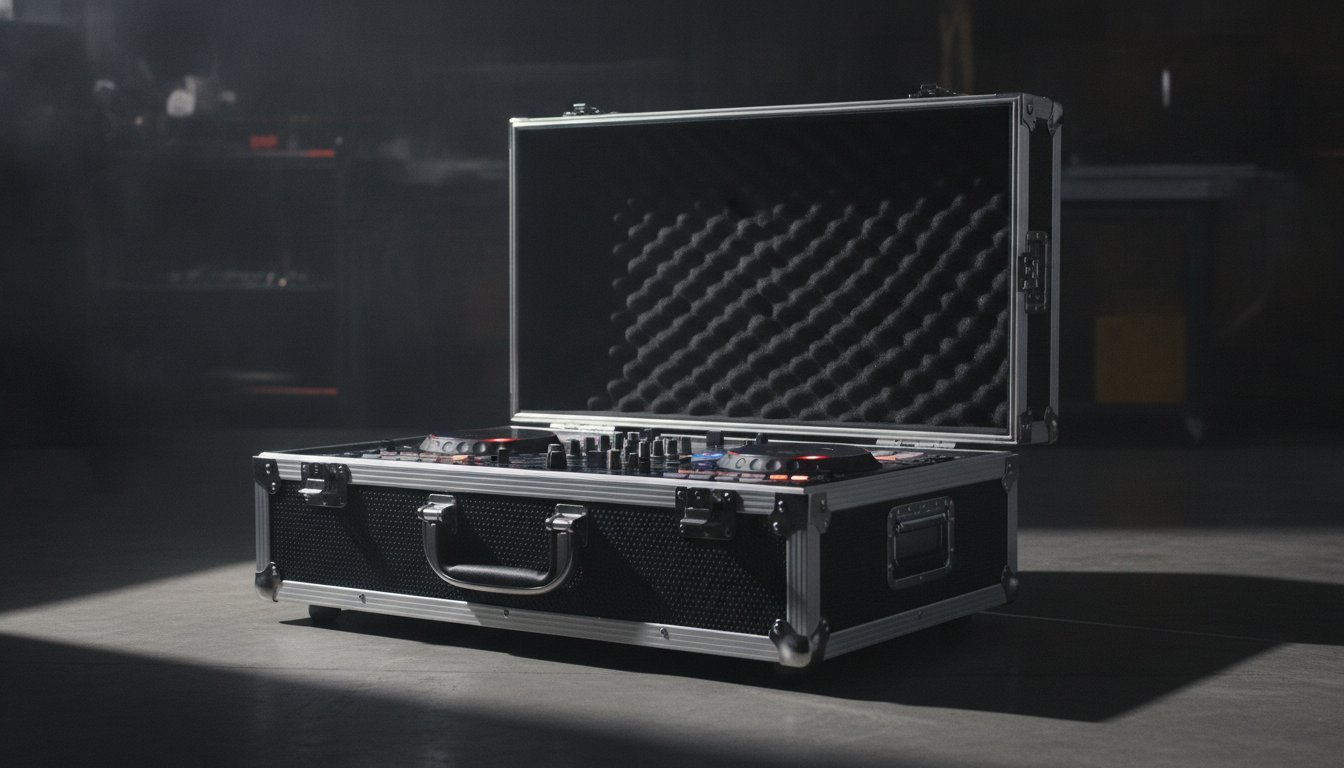
An estimated 65% of gear failures are attributed to subpar hardware, yet many professionals still rely on generic housing for high-value components. You know that in high-stakes production environments, equipment failure is not an option. Whether it's equipment damage from poor internal foam fit or wasted truck space due to non-standardized case dimensions, the hidden costs of inadequate protection are substantial. You need a solution that functions as a reliable backbone for your tour schedule.
This guide demonstrates how precision engineering and high-grade materials transform a custom DJ flight case from a simple box into an essential logistical asset for professional touring. We'll explore how bespoke designs provide a glove-like fit for specific gear while maintaining compatibility with global shipping and TruckPaX modular standards. You'll learn about the structural capabilities of ATA 300 Revision 2020.1 specifications and how meticulous assembly ensures long-term durability for the most rigorous logistical demands. This technical overview covers everything from material science to ergonomic handle placement for optimized touring workflow.
Key Takeaways
- Understand why bespoke mechanical enclosures outperform universal fits by protecting sensitive faders and touchscreens through zero-point movement engineering.
- Evaluate the structural integrity of a custom DJ flight case against ATA 300 Category 1 standards to ensure durability for over 100 round trips.
- Identify the specific shock-absorption benefits of high-density polyurethane and polyethylene foam when creating internal cradles for sensitive hardware.
- Optimize touring logistics by standardizing outer case dimensions for TruckPaX compatibility to reduce wasted truck space and logistical overhead.
- Streamline the bespoke build process by utilizing authorized dealer portals to define precise dimensions and environmental requirements for your equipment.
The Necessity of Custom Engineering for Professional DJ Gear
A professional custom DJ flight case isn't a mere storage container. It's a bespoke mechanical enclosure designed to mitigate specific kinetic forces during transit. While off-the-shelf options provide a generic perimeter, they often fail to account for the unique weight distribution and fragile surface elements of modern performance hardware. High-value gear requires engineering-grade protection that scales with the complexity of the internal components. When you invest in professional-grade controllers or mixers, the protective housing must be viewed as a technical extension of the gear itself.
Internal movement is the primary cause of equipment failure. When a device isn't perfectly seated, every vibration or jolt during transport translates into mechanical stress. Over time, these micro-impacts result in solder joint fractures and chassis misalignment. A precision-engineered custom DJ flight case eliminates these risks by ensuring the equipment remains static regardless of the external environment.
Beyond Universal Fits: Why Precision Matters
Physics dictates that any unoccupied space within a case acts as an acceleration chamber during impact. Even a 1mm gap allows a component to gain momentum before striking the internal padding, which leads to cumulative structural fatigue. Universal cases rely on compressible foam to fill these gaps, but this material degrades under the constant pressure of heavy internal power supplies and metal frames. Bespoke engineering is the elimination of mechanical tolerances. By removing the possibility of shifting, the case and the gear become a single, rigid structural unit. This unity ensures that kinetic energy is dissipated through the external shell rather than the sensitive electronics inside.
Identifying High-Value Equipment Vulnerabilities
Modern DJ equipment features specialized interface components that are highly susceptible to pressure and friction. Motorized platters and high-resolution touchscreens require dedicated clearance zones to prevent contact with the lid. A standard flight case often uses generic egg-crate foam that can press against delicate faders or encoders, leading to bent shafts or unresponsive sensors. Technical designs prioritize these high-risk areas through strategic material placement.
Custom engineering allows for the integration of specialized protective features:
- Precision-cut foam cradles that support the chassis while leaving knobs and sliders completely suspended.
- Reinforced internal partitions that isolate heavy power cables and accessories from the main unit to prevent surface scratching.
- Strategic clearance for ventilation paths to ensure heat dissipation if the gear remains in the case during operation.
Protecting these specific vulnerabilities is the difference between a successful load-in and a catastrophic technical failure on site. Professional production demands a level of reliability that only a precision-engineered enclosure can provide.
Technical Standards: ATA 300 and Material Integrity
For a custom DJ flight case to survive the rigors of global logistics, it must adhere to the Air Transport Association (A4A) ATA 300 Specification. The current Revision 2020.1 defines Category I as the highest tier of durability. This standard requires a container to remain fully functional through at least 100 round trips. This isn't a marketing claim; it's a rigorous engineering benchmark that dictates every material selection and assembly method. When equipment failures are so often linked to subpar hardware, adhering to these technical specifications is the only way to ensure professional reliability.
The structural foundation of a professional case relies on high-density plywood. Industry standards dictate a thickness of 3/8 inch for most DJ setups, while 1/2 inch is utilized for massive mixer consoles or heavy rack configurations. This material provides the necessary shear strength to resist warping and crushing under the weight of stacked pallets. Achieving this level of durability requires more than just thick wood. It demands precision assembly that maintains the integrity of the protective shell throughout its service life.
Plywood Density and Laminated Protection
Structural integrity is maintained through CNC-precision cutting, which ensures that every panel fits with zero-tolerance accuracy. This precision prevents the structural shifting that leads to joint failure. To enhance the plywood's natural resilience, a "Honeycomb Digital" laminate is applied. This hexagonal surface pattern creates a scratch-resistant barrier that handles the friction of frequent loading and unloading. Beyond aesthetics, these laminates provide essential heat resistance and thermal stability for gear stored in non-climate-controlled environments. For a deeper look at these specifications, consult our resource on Engineering Excellence for Touring Pros.
Heavy-Duty Hardware: Latches, Corners, and Handles
Hardware is the primary point of failure in many transport scenarios. Professional builds utilize recessed hardware that sits flush with the plywood surface to prevent components from being sheared off during automated sorting. Steel ball corners are a non-negotiable feature. They are engineered to deflect kinetic energy during a drop, moving the impact force away from the wood panels and into the reinforced aluminum extrusions. This design is critical when protecting your instrument or sensitive audio electronics from physical shock.
Industrial-grade butterfly latches are equally vital. These components use a tension-lock mechanism that remains secure even under extreme vibration. Ergonomic handle placement is another technical consideration. Handles must be positioned based on the case's center of gravity to ensure balanced lifting by production crews, which reduces the risk of accidental drops. If you are planning a new tour, you can browse our standard and custom build cases to see these engineering standards in practice.
Designing Your Custom Layout: Internal Architecture
Internal protection is an exercise in controlled deceleration. While the outer shell absorbs the initial impact, the internal architecture of a custom DJ flight case manages the energy transferred to the equipment. This requires a calculated approach to foam density and spatial organization. A well-engineered interior ensures zero-point movement. It prevents gear from shifting during high-G events like truck loading or air turbulence. Total stability is the goal.
A professional layout also accounts for the operational lifecycle of the gear. Engineers must balance the need for tight mechanical tolerances with the practicalities of setup and teardown. This involves creating "cradles" that support the chassis at its strongest structural points. These cradles leave sensitive areas like faders, knobs, and touchscreens completely suspended. By isolating the equipment from the case walls, the design creates a buffer zone that dissipates kinetic energy before it reaches the electronics.
High-Density Foam Fabrication and Shock Absorption
Foam selection is based on the weight and fragility of the hardware. Professional touring applications require closed-cell polyethylene foam because it maintains its structural memory under heavy loads. It doesn't compress permanently like low-grade alternatives. This material is engineered to reduce G-forces during a drop from standard loading heights to a level the equipment's internal solder joints can withstand. "Pick and pluck" foam is insufficient for these needs. It lacks the density required for heavy DJ controllers and tends to disintegrate over time. Precision CNC-milled foam ensures a permanent, exact fit that matches the specific weight distribution of your mixer or media player.
Integrated Cable Management and Ventilation
Efficiency on stage depends on how well the case handles connectivity. Custom designs often incorporate "doghouse" sections. These are rear compartments that conceal and protect cable looms and power bricks. This feature allows for a cleaner workspace and prevents accidental cable disconnects during a performance. Beyond organization, thermal management is a critical requirement. High-performance mixers and media players generate significant heat. Engineers must incorporate ventilation paths or specialized airflow gaps into the foam layout. This prevents thermal throttling or component failure during extended sets. For complex setups involving multiple screens and interfaces, utilizing specialized AV Broadcasting Cases as a baseline can provide the necessary depth for advanced cooling and cable routing.
Modular internal dividers offer another layer of utility. These allow you to adjust the internal layout as your equipment evolves. By using high-density partitions, you can create dedicated zones for external hard drives, headphones, or backup interfaces without compromising the safety of the primary controller. This methodical approach to internal design ensures that every cubic inch of the case serves a protective or functional purpose.

Logistical Optimization for Touring Professionals
Logistics represent one of the highest recurring costs in professional production. A custom DJ flight case that ignores external dimensions contributes to "dead space" in a truck pack, which directly increases shipping overhead. Engineering for logistical efficiency means designing cases that conform to modular standards. When every case in a rig is designed to fit a specific grid, you maximize the volume of the transport vehicle and reduce the number of trucks required for a tour. Uniformity is the key to efficiency.
Stability during transit is another critical factor. Professional builds incorporate stacking caster dishes and precision wheel wells. These features allow cases to be securely tiered, preventing lateral shifting during transport. This structural interlocking is essential for maintaining the safety of both the equipment and the crew during loading and unloading. By optimizing the weight-to-strength ratio through material science, manufacturers can reduce the overall mass of the rig without compromising protection, leading to lower fuel consumption and easier manual handling.
Truck Pack Efficiency and Modular Dimensions
Standardizing outer dimensions ensures TruckPaX™ Logistical Efficiency across your entire inventory. Modular case sizing allows loading crews to treat the truck interior like a grid, which streamlines the packing process and ensures a tighter, safer load. This precision offers several advantages:
- Elimination of Load Shifting: Tight packs prevent cases from sliding during transit.
- Optimized Cubic Volume: Using every inch of truck height and width reduces shipping costs.
- Warehouse Organization: Uniform dimensions allow for efficient vertical stacking in storage facilities.
If you need to optimize your inventory for the road, you can request a quote for modular truck-pack cases.
Rapid Deployment and Setup Efficiency
A well-engineered case does more than transport gear; it facilitates performance. Designing a custom DJ flight case for rapid deployment often involves creating integrated workstations that remain in the case during use. This approach is exemplified by ZCASE designs, which are engineered to slash setup times for headlining acts by allowing for near-instant deployment of complex controller and mixer configurations. These systems are often designed to be compatible with Stage Truss systems, allowing for seamless integration into larger stage sets. When the case serves as the stand, you eliminate the need for additional furniture, further reducing the logistical load and complexity of the tour.
Navigating the Custom Build Process with ProX
The procurement of a precision-engineered custom DJ flight case follows a methodical development cycle to ensure total compatibility with your hardware. Unlike off-the-shelf purchases, a bespoke build begins with a technical assessment through our authorized dealer portal. This network serves as the primary gateway for initiating custom quotes, allowing professionals to define the exact parameters of their logistical needs. Each project is treated as a unique mechanical assembly challenge where the objective is the complete elimination of equipment risk during transport.
During the consultation phase, our engineering teams analyze the physical dimensions and weight distribution of the gear. This data is used to generate internal architecture plans that account for every fader, knob, and connection point. We also evaluate the environmental requirements of the tour, such as potential exposure to high humidity or extreme temperature fluctuations, to select the appropriate laminate and adhesive specifications. This thorough approach ensures that the final enclosure functions as a reliable backbone for your production rig.
Engineering Consultations for Bespoke Projects
A successful build relies on the accuracy of the initial data. We encourage clients to provide official technical drawings or high-precision equipment specifications to minimize mechanical tolerances. This stage also allows for the selection of specialized hardware, such as heavy-duty casters or custom-milled internal partitions. For high-value production gear that requires the highest tier of deployment speed and protection, we often recommend ZCASE Custom Build Cases, which are engineered in Poland to meet rigorous international standards.
Professional Manufacturing and Global Support
The manufacturing phase leverages our partnerships with ZCASE and Santosom to deliver enclosures that meet or exceed ATA 300 Revision 2020.1 Category I requirements. Each unit undergoes final quality control and structural testing to verify that the recessed hardware and internal foam cradles perform as specified. This commitment to functional excellence is backed by a global dealer network that provides logistical support and access to replacement parts for long-term maintenance. ProX has been engineering performance gear since 1984, establishing a legacy of technical superiority in the professional production industry. By choosing a partner with over four decades of manufacturing expertise, you ensure that your gear is protected by the most reliable custom DJ flight case solutions available today.
Securing Your Production Assets for Global Touring
Professional production environments demand absolute equipment reliability. A custom DJ flight case functions as a critical technical asset that ensures your gear arrives in peak operational condition regardless of the transport environment. By adhering to ATA 300 Category 1 standards and utilizing TruckPaX modular dimensions, you eliminate the mechanical risks and logistical inefficiencies common in professional touring. These engineering choices directly impact your bottom line by reducing equipment failure and optimizing truck space. It's a strategic investment in your technical infrastructure.
ProX has been engineering performance gear since 1984. Through strategic partnerships with ZCASE and Santosom, we provide the industrial-grade solutions required for high-stakes production. These bespoke builds prioritize structural integrity, thermal management, and rapid deployment over aesthetic trends. You can rely on our meticulous assembly and deep understanding of material science to protect your investment throughout its service life. Your equipment doesn't just need a box; it needs a precision-engineered enclosure.
Consult with a ProX Dealer for Custom Engineering Solutions to begin your bespoke build today.
Frequently Asked Questions
What is the difference between a custom case and a universal case?
A custom DJ flight case provides a precision-engineered fit tailored to the exact mechanical dimensions of specific hardware, whereas a universal case relies on generic perimeters and compressible foam. This bespoke approach eliminates mechanical tolerances that lead to internal shifting. Universal fits often leave gaps that allow equipment to gain momentum during impact, which increases the risk of structural fatigue and component failure over time.
How do I measure my DJ equipment for a custom build?
Accuracy in measurement is critical for ensuring zero-point movement within the enclosure. You should utilize digital calipers or refer to the manufacturer's technical drawings to obtain the maximum width, depth, and height of the chassis. It's essential to include the height of the tallest knobs, faders, and feet in your calculations. Providing these precise specifications to the engineering team prevents the small gaps that lead to transit damage.
Are custom DJ cases worth the investment for local performers?
The investment is justified by the significant reduction in equipment repair costs and technical downtime. Since an estimated 65% of gear failures are attributed to subpar hardware, a bespoke enclosure acts as a long-term insurance policy for your assets. Even for local transport, the frequent loading and unloading from personal vehicles places mechanical stress on sensitive electronics. A professional-grade case ensures the longevity of your performance gear.
What materials are used in professional-grade custom cases?
Professional-grade cases utilize 3/8 inch or 1/2 inch high-density plywood reinforced with aluminum extrusions. The exterior is typically finished with a scratch-resistant honeycomb laminate for thermal stability and aesthetic durability. Critical impact points are protected by steel ball corners, which deflect kinetic energy away from the wood. Internal surfaces are lined with closed-cell polyethylene foam, selected for its ability to maintain structural memory under heavy loads.
Can a custom case accommodate multiple pieces of equipment?
Multi-component configurations are a standard feature of bespoke engineering. Designers can incorporate internal partitions to isolate mixers, media players, and accessories within a single enclosure. This often includes integrated doghouse sections for cable management and power supply concealment. Such layouts ensure that all components remain static while providing a streamlined workflow for rapid deployment at the venue without requiring additional stands or furniture.
How does custom high-density foam protect against high-impact drops?
High-density foam facilitates controlled deceleration by absorbing the kinetic energy of an impact. Unlike soft foam alternatives, closed-cell polyethylene does not bottom out or lose its shape under the weight of heavy DJ controllers. It's engineered to reduce G-forces to a level that the equipment's internal solder joints and circuit boards can safely withstand. This technical protection is vital during high-impact drops or the vibrations associated with air turbulence.
What is the ATA 300 Category 1 standard for flight cases?
The ATA 300 Category 1 specification is a rigorous technical standard established by the Air Transport Association. It requires a shipping container to remain fully functional through a minimum of 100 round trips. This standard dictates the use of recessed hardware, specific plywood densities, and impact-resistant assembly methods. Adhering to this revision ensures that the custom DJ flight case meets the highest global requirements for professional air and ground transport.
How does a custom case improve truck pack efficiency?
Custom engineering allows for the standardization of outer dimensions to match TruckPaX modular grid requirements. This eliminates dead space within the transport vehicle, which directly reduces shipping overhead and fuel consumption. Uniform case sizes allow loading crews to stack equipment securely using integrated caster dishes. This organized approach maximizes cubic volume and ensures a tighter, safer load during transit by preventing lateral shifting in the truck.
Disclaimer
Any trademarks, trade names or brand names appearing herein that do not belong to ProX are the property of their respective owners and/or companies, and such appearance doesn't and shall not constitute or imply endorsement, sponsorship or recommendation by ProX.


