
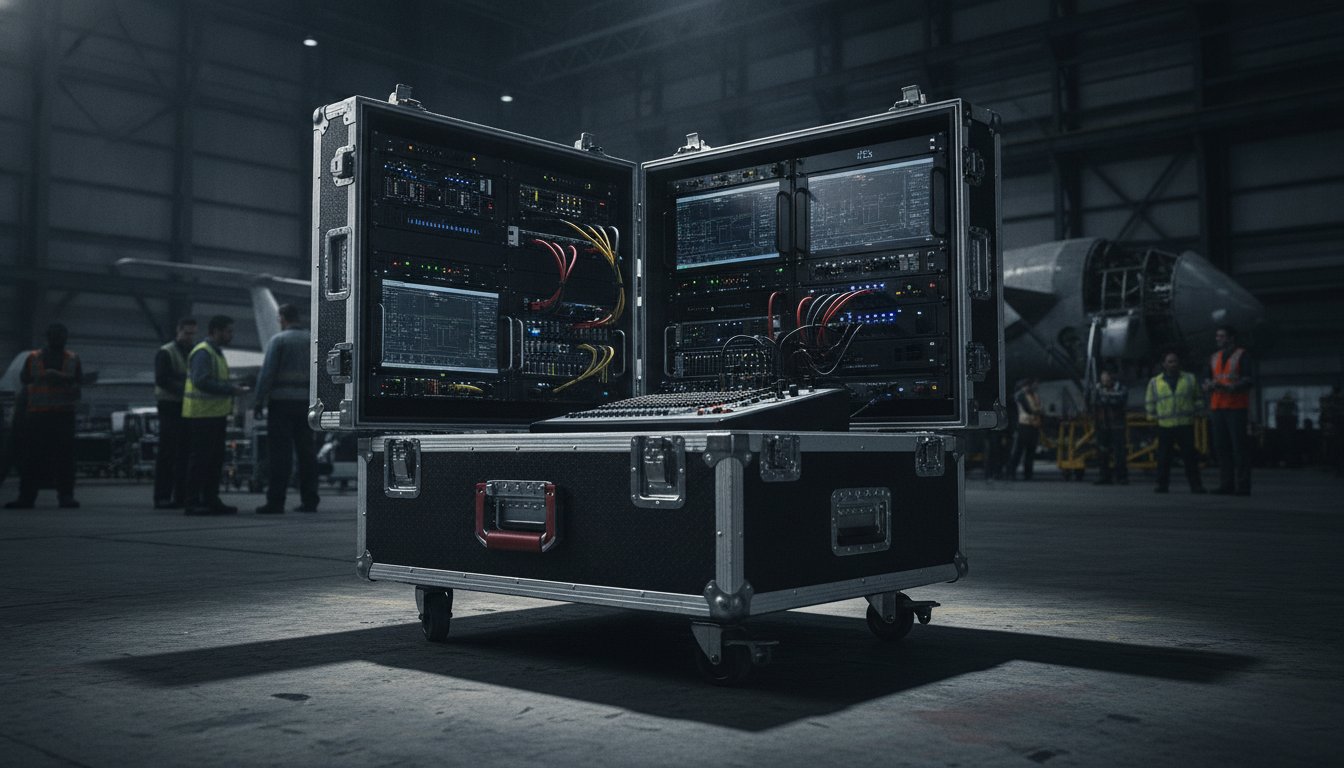
Industry surveys indicate that 72% of production professionals prioritize structural durability above all other factors when selecting hardware kits. This data reflects the reality of a global logistics environment where air cargo volume is expected to grow by 26% in 2026, alongside a record 5.2 billion passengers traveling by air. In these sectors, professional Flight Case Workstations are critical engineering hubs, not simple transport containers. Failure is not an option when minor structural issues lead to equipment damage or delayed setups.
This guide delivers the technical specifications and ergonomic configurations required to deploy high-performance mobile units in professional environments. You will learn how to master the integration of heavy-duty hardware and internal rack systems while adhering to ATA 300 Revision 2020.1 standards for maximum equipment protection. We provide a methodical analysis of material science and mechanical assembly to ensure your mobile command center survives years of rigorous use. Our review covers everything from weight-rated drawer slides to the logistical benefits of standardized dimensions for optimized truck packing.
Key Takeaways
- Identify the transition from passive equipment storage to active production hubs by configuring integrated workstation environments for broadcast and AV.
- Master the mechanical assembly and material science required to specify Flight Case Workstations that meet ATA 300 standards for international touring durability.
- Maximize internal density through the precise integration of 19-inch rack units and modular drawer systems for organized hardware management.
- Improve logistical workflows by utilizing standardized dimensions that optimize truck packing density and accelerate on-site deployment speed.
- Evaluate specialized engineering solutions, including ZCASE and Santosom configurations, to meet complex technical requirements for custom production builds.
Defining the Professional Mobile Workstation Hub
In the high-stakes environment of professional touring and broadcast, the traditional concept of equipment transport has undergone a significant engineering evolution. Modern production demands have transitioned from the use of simple protective boxes to the implementation of integrated production environments. These systems, known as Flight Case Workstations, function as mobile command centers that remain active throughout the duration of an event. They're no longer just containers for transit; they're the primary interface for technical operations. This shift reflects a need for immediate technical availability in environments where every minute of downtime impacts the bottom line.
A professional workstation hub is characterized by three core engineering components: high-density storage, integrated rack space, and deployable work surfaces. High-density storage usually consists of modular drawer systems designed to withstand heavy structural loads. Integrated rack space allows for the permanent mounting of 19-inch hardware, ensuring that delicate electronics remain patched and protected. Deployable surfaces, such as fold-out tables or lid-mounted desks, provide the physical footprint necessary for consoles, laptops, and test equipment. A workstation hub is an engineered enclosure designed for immediate operational deployment.
Beyond Simple Storage: The Production Command Center
While a traditional Road case serves as a durable vessel for disorganized inventory, a workstation hub organizes tools and electronics into a logical, high-density layout. This organization is a strategic requirement for touring crews who must reduce setup and teardown times to meet tight schedules. Unlike standard utility trunks that require manual unloading, workstations are "active" cases. This means equipment is powered and operated while still housed within the enclosure. By maintaining internal cable paths and power distribution, these hubs eliminate the repetitive labor of reconnecting complex systems at every new venue.
Identifying Core Use Cases in Touring and Broadcast
The technical requirements for a workstation vary significantly based on the operator's role. Lighting directors (LDs) require hubs that can support heavy control consoles and multiple monitors, often with specialized drawers for spare lamps and gels. Front-of-house (FOH) and monitor engineers prioritize rack space for outboard processing and signal distribution. In the broadcast sector, the demands are even more specialized. Professionals in this field utilize AV Broadcasting Cases to manage mobile editing suites and complex signal management workflows. These Flight Case Workstations must provide superior ventilation and cable management to support high-heat equipment like video switchers and servers. Whether it's a monitor tech's tool station or a broadcast engineer's signal hub, the goal remains the same: maximum operational efficiency in a mobile format.
Structural Integrity and Material Science in Case Engineering
The structural integrity of Flight Case Workstations depends on the mechanical synergy between the panel material and the aluminum skeleton. Engineering a workstation hub requires a deep understanding of load-bearing physics, specifically how static and dynamic forces distribute across the frame. In professional production, weight must be transferred through the extrusions and hardware rather than the panel faces. This prevents "racking," a condition where the case deforms under stress, potentially causing internal rack rails to misalign or drawer slides to bind. For global deployment, construction must adhere to the ATA 300 Category I standard, which mandates that an enclosure withstand a minimum of 100 round trips without structural failure.
Reinforced aluminum extrusions act as the backbone of the assembly. These components are typically manufactured from high-grade alloys like 6063-T5, providing the necessary rigidity to maintain case geometry under vertical compression. Mobility is equally critical, and caster selection directly impacts equipment safety. Industrial-grade four-inch or five-inch casters with reinforced mounting plates are standard. These wheels must feature high-grade polyurethane treads to provide shock absorption on uneven surfaces, protecting sensitive internal components from high-frequency vibrations during transit.
Plywood vs. Composite Panels: Durability Analysis
Professional-grade birch plywood remains the industry standard for high-impact environments. Usually specified in 3/8-inch or 1/2-inch thicknesses, birch offers superior screw-holding strength and natural energy absorption. Modern alternatives include lightweight honeycomb composite panels. These composites significantly reduce the tare weight of the shipment, which is a vital consideration for air freight logistics. However, while honeycomb panels offer excellent rigidity, they have different puncture resistance characteristics compared to traditional timber. The engineering standards used in Santosom Cases exemplify how these materials are selected based on the specific mechanical demands of the tour.
Heavy-Duty Hardware and Reinforced Extrusions
Hardware selection is a matter of functional survival. Recessed butterfly latches are mandatory; they sit flush with the case surface to prevent shearing during automated sorting or truck loading. Spring-loaded handles must be rated for the total loaded weight of the workstation to prevent grip failure. Ball corners serve as a sacrificial crumple zone, absorbing kinetic energy from drops and preventing it from reaching the internal rack frame. Inside the case, drawer slides must be industrial-grade. High-density workstations often utilize full-extension slides with weight ratings of 150 lbs or more to support heavy toolsets, cable looms, or power distribution units. Professionals seeking these high-specification components can explore the full range of engineered case solutions to ensure their builds meet these rigorous standards.
Optimizing Internal Layouts for High-Density Workflows
Engineering the interior of Flight Case Workstations requires a calculated balance between component density and operational accessibility. The industry standard 19-inch rack unit (U) serves as the primary modular building block for these systems. Designers must calculate the total vertical rack space needed for outboard gear, power conditioners, and signal processors before finalizing the case dimensions. A rack-heavy design is essential for broadcast and audio engineers who rely on permanent equipment patches. Conversely, a drawer-heavy configuration favors technicians who manage extensive inventories of tools, adapters, and spare parts. Integrating these systems into a single enclosure reduces the physical footprint on stage or in a production truck, which is a critical factor in touring logistics.
High-density layouts must also account for dynamic stresses during transit. Adhering to standards like MIL-STD-648D Design Criteria for Shipping Containers ensures that the internal chassis can withstand the shock and vibration encountered in global logistics. This engineering approach prevents the rack rails from shearing under the weight of heavy amplifiers or servers. It's a technical necessity to ensure the internal frame remains square, allowing drawers and rack equipment to function without mechanical interference after thousands of miles of travel.
Drawer Systems and Rack Mount Integration
Effective organization starts with the center of gravity. Technicians should place heavy items like power distribution units and cable looms in the lowest drawers. This prevents the case from becoming top-heavy and tipping during rapid deployment on uneven surfaces. Custom foam inserts provide precision protection for sensitive test equipment and tools, preventing lateral movement that leads to internal damage. For projects requiring highly specialized internal architectures, ZCASE Custom Build Cases offer bespoke layouts that maximize every cubic inch of the enclosure while maintaining structural integrity.
Ergonomic Fold-Out Work Surfaces and Monitor Mounts
Field ergonomics are a primary driver of production efficiency. The optimal height for a standing workstation is typically between 36 and 42 inches, while seated heights should align with standard 28-to-30-inch desk levels. Many Flight Case Workstations utilize lid-mounted tables that lock into the side of the case, creating a rigid work surface without the need for external furniture. Stability is paramount; these surfaces must support the weight of control consoles or laptops without flexing. Additionally, the integration of VESA mounts allows for the secure installation of broadcast monitors. These mounts should be recessed or folding to ensure the screen is protected when the case is closed for transport, eliminating the need for separate monitor trunks.

Logistical Efficiency and On-Site Deployment Strategies
The operational success of a tour often depends on the logistical footprint of the equipment. Flight Case Workstations are more than technical hubs; they're standardized units that must integrate into a complex truck pack. Inconsistent dimensions lead to "dead space" in a trailer, which increases transportation costs and allows for dangerous cargo shifting. By designing workstations with footprints that are multiples of standard truck widths, typically 90 to 96 inches internally, production managers ensure maximum density. This technical alignment allows for a "first-off, last-on" loading strategy. Because these workstations house the essential tools and infrastructure needed to begin a setup, they're the final items loaded into the truck, ensuring they're immediately accessible upon arrival at the venue dock.
Truck Pack Optimization for Production Crews
Standardized dimensions are the foundation of efficient logistics. Utilizing a system like TruckPaX™ Truck Pack Cases allows crews to calculate load-ins with mathematical precision. When workstation footprints are uniform, it eliminates the need for complex bracing or custom shoring. This uniformity reduces the mechanical stress placed on the case walls during transit, as the load is distributed evenly across the stack. Precise truck packs also minimize the risk of lateral impact, which is the primary cause of extrusion deformation and hardware failure in high-density touring environments.
Maintenance and Long-Term Reliability Standards
Maintaining the structural integrity of a workstation requires a methodical inspection schedule. Technicians should lubricate recessed latches and spring-loaded handles with a dry silicone spray every six months to prevent oxidation and mechanical binding. It's also necessary to inspect all rivets and aluminum extrusions for signs of stress fractures or shearing. Even the highest grade of birch plywood can experience slight compression over multiple tour cycles, requiring the tightening of internal rack bolts. If a component shows signs of fatigue, utilizing ProX Cases Replacement Parts can extend the service life of the enclosure by years, maintaining the professional standard of the fleet. To ensure your logistics remain uninterrupted, you can browse our full inventory of engineered cases to find the right fit for your next tour.
Before initiating a major tour leg, follow this verification guide to ensure case integrity:
- Caster Inspection: Verify that all four bolts on each caster plate are torqued correctly and that the swivel bearings are free of debris.
- Hardware Functionality: Cycle every butterfly latch to ensure it draws the lid tight against the hybrid extrusion's gasket.
- Structural Squareness: Use a carpenter's square to check the internal rack frame; any deviation indicates a compromise in the outer shell's geometry.
- Drawer Slide Stability: Fully extend all drawers to check for lateral play or mounting screw loosening.
ProX Engineering: Professional Grade Workstation Solutions
ProX serves as the critical bridge between standardized logistical utility and high-end custom engineering. Since 1984, the focus has remained on functional excellence and the delivery of technical solutions that withstand the rigors of the global touring circuit. Professional Flight Case Workstations from ProX aren't merely assembled; they're engineered using industrial-grade hardware and high-density materials that prioritize structural integrity over aesthetic trends. This authoritative approach to manufacturing ensures that every enclosure serves as a reliable backbone for the industry, protecting sensitive electronics from the mechanical stresses of transit and operation. Engineering precision is the ultimate form of protection, providing a predictable and stable environment for high-value production gear regardless of the logistical challenges involved.
The durability of these systems stems from a meticulous material selection and assembly process. By utilizing professional-grade birch plywood reinforced with 6063-T5 aluminum alloys, ProX creates a rigid exoskeleton for every workstation. This construction method prevents structural deformation and ensures that internal rack rails remain square over thousands of miles of travel. Partnerships with major brands like Pioneer DJ and Roland reinforce our position as an authoritative manufacturer for custom-built production hubs. Every rivet and extrusion is placed with the understanding that equipment failure is not an option in professional production environments.
Custom Case Engineering for Bespoke Production Needs
When standard configurations don't meet the specific requirements of a complex production, the collaborative design process for bespoke workstation projects begins. This process involves technical consultation to integrate specialized electronics, active cooling systems, and complex power distribution units directly into the case chassis. Through partnerships with ZCASE in Poland, ProX provides access to advanced engineering capabilities that allow for the creation of unique production hubs. These custom builds are designed to accommodate specific hardware footprints while maintaining the logistical benefits of standardized truck packing. Professionals can browse the full ProX Cases catalog to evaluate the baseline specifications available for their custom configurations.
Integrating AV Broadcasting Solutions with ProX Hardware
The synergy between ProX hardware and modern broadcast requirements is evident in the specialized design of our mobile units. High-density workstations are frequently deployed alongside LED Video Panel Wall Support systems to create comprehensive mobile production environments. These setups require precise cable management and thermal regulation to support continuous operation in high-stakes environments. Whether you're deploying specialized AV Broadcasting Cases for signal management or a custom-built ZCASE hub for a touring FOH position, the engineering standards remain consistent. To ensure your next deployment meets these rigorous technical standards, contact an authorized dealer to start spec’ing your next professional workstation.
Deploying High-Performance Production Hubs
Success in 2026 production environments requires a shift from passive storage to active engineering. By prioritizing ATA 300-style engineering and standardized footprints, crews ensure their equipment survives the projected growth in global logistics demand. High-density Flight Case Workstations provide the necessary structural integrity to maintain operational continuity during rigorous tour cycles. These systems transform disorganized inventory into a streamlined, high-performance command center where every component has a dedicated, protected position. It's a technical necessity for any professional operation.
ProX remains a dedicated partner in this technical evolution. We offer everything from standardized utility builds to custom ZCASE design services for bespoke requirements. Our global dealer network support ensures that professional technicians have immediate access to the hardware and replacement parts required for long-term fleet maintenance. Reliability is the foundation of every build we manufacture. We don't just build boxes; we engineer the backbone of your production.
Take the next step in optimizing your mobile production infrastructure. Explore Engineered Workstation Solutions at ProX and build a hub that meets the highest industrial standards. Your gear deserves the protection of precision engineering.
Frequently Asked Questions
How do I determine the correct rack unit (U) count for my workstation?
Determine the U count by summing the vertical heights of all 19-inch rack-mounted equipment, adding at least 1U of spacer room for every 4U of active gear to ensure thermal dissipation. Each rack unit is standardized at 1.75 inches. For complex Flight Case Workstations, it's necessary to account for the depth of cable looms and rear-mounted power distribution units within the internal chassis. Precise calculations prevent mechanical interference and ensure the internal frame remains square during transit.
What is the weight limit for standard professional drawer slides?
Professional-grade drawer slides in these workstations are typically rated for dynamic loads between 100 and 150 lbs. Heavy-duty configurations utilize full-extension ball-bearing slides that allow for complete access to the drawer interior without compromising structural integrity. It's vital to distribute weight evenly across the drawer surface to prevent slide deformation. If your application requires higher capacities, specialized engineering options can provide slides rated for heavier payloads, ensuring long-term reliability on the road.
Are plywood workstations better than honeycomb composite versions?
Birch plywood is the preferred material for high-impact touring due to its superior energy absorption and screw-holding strength. Plywood panels, typically 3/8-inch or 1/2-inch thick, offer excellent puncture resistance and structural rigidity. Honeycomb composite panels are an alternative for air freight applications where reducing tare weight is a priority. While composites offer weight savings, they don't always provide the same level of impact resistance as traditional timber in high-density production environments.
How do I maintain my workstation casters for long-term touring?
Caster maintenance requires a methodical inspection of the polyurethane tread and swivel bearings every six months. Clear any debris or carpet fibers from the axles and apply a dry silicone lubricant to the bearings to prevent mechanical binding. Ensure that all four mounting bolts on the caster plate are torqued correctly to the case floor. Regular inspections prevent high-frequency vibrations from reaching sensitive electronics and ensure the workstation remains mobile on uneven venue surfaces.
Can I integrate a monitor mount into a standard flight case lid?
Integrating a VESA mount into the lid is a standard configuration for broadcast and monitor workstations. This requires the use of reinforced mounting plates and heavy-duty hinges capable of supporting the static weight of the display. Ensure the lid depth is sufficient to accommodate the monitor's profile when the case is closed. This engineering approach eliminates the need for separate monitor trunks and accelerates on-site deployment by keeping the display permanently patched to the internal hardware.
What is the benefit of standardized dimensions for truck packing?
Standardized dimensions allow for a truck pack strategy where case footprints are calculated as fractions of a standard trailer's interior width. This eliminates dead space and prevents the shifting of cargo during transport, which is a primary cause of equipment damage. By using Flight Case Workstations with uniform dimensions, production managers can maximize trailer density and reduce transportation costs. This logistical alignment ensures a more stable load and faster load-in times at the venue dock.
How do I ensure my workstation meets international shipping standards?
Compliance with ATA 300 Revision 2020.1 standards is the primary requirement for international shipping. This specification ensures the enclosure is engineered to withstand at least 100 round trips in commercial air transit. Verify that the build utilizes recessed hardware, reinforced ball corners, and hybrid aluminum extrusions. Meeting these criteria confirms that the workstation hub provides the maximum level of protection for high-value electronics in global logistical environments where handling conditions are unpredictable.
What should I look for in heavy-duty drawer construction?
Heavy-duty drawer construction requires full-extension, ball-bearing slides and reinforced bottom panels to support dense toolsets. Look for drawers secured with high-grade rivets to an internal chassis rather than the outer case walls. This design ensures that the weight load is transferred directly to the caster plates. Additionally, modular drawer systems should feature locking mechanisms to prevent accidental opening during transit. High-quality foam inserts can be added to provide precision protection for sensitive components.
Disclaimer
Any trademarks, trade names or brand names appearing herein that do not belong to ProX are the property of their respective owners and/or companies, and such appearance doesn't and shall not constitute or imply endorsement, sponsorship or recommendation by ProX.


