
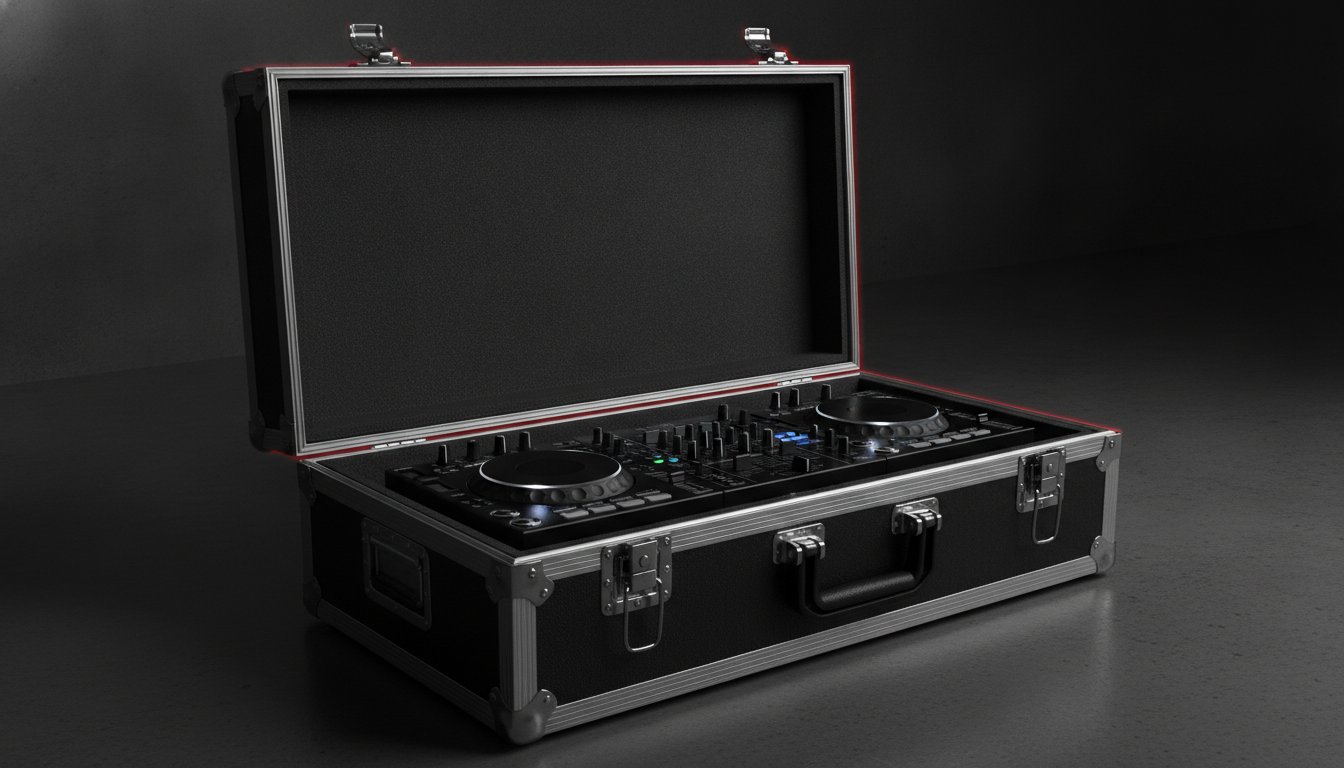
What if the primary failure point in your professional workflow isn't a software glitch or a power surge, but the physical degradation of your equipment during transit? You already know that high-stakes production environments demand more than just a storage box. They require a precision-engineered Pioneer DJ case that eliminates the risks of poorly fitting universal solutions and chaotic cable management. A mismatch between your controller and its housing doesn't just invite damage; it compromises your setup speed and logistical reliability on site.
This guide will show you how to select engineered protection that optimizes logistical efficiency and ensures the long-term structural integrity of your Pioneer hardware. We'll examine the technical specifications of model-specific builds, the impact of material science on weight-to-durability ratios, and the logistical advantages of advanced technologies like ZCASE Flip-Ready systems. By focusing on industrial-grade standards rather than consumer-level aesthetics, you'll gain the technical insight needed to secure your investment for the 2026 tour season and beyond.
Key Takeaways
- Understand the role of a professional case as a mechanical shield designed to mitigate kinetic energy and protect high-value electronics from structural failure.
- Learn to evaluate critical material specifications, including the structural integrity of 3/8" or 1/2" plywood construction and Honeycomb Digital™ surface protection.
- Identify why a model-specific Pioneer DJ case is essential for securing sensitive faders and platters against the mechanical risks inherent in universal-fit alternatives.
- Explore integrated features such as sliding laptop shelves and 1U rackspace options that optimize booth space and significantly reduce setup times at professional venues.
- Discover the long-term logistical advantages of adhering to ATA 300-style engineering standards and utilizing specialized ZCASE Flip-Ready technology.
Why Professional Pioneer DJ Gear Demands Engineered Protection
Professional DJ equipment represents a significant capital investment. A high-performance Pioneer DJ case serves as a mechanical shield, specifically designed to dissipate kinetic energy during transit. Unlike consumer-grade storage bags that only provide surface-level abrasion resistance, an industrial case utilizes rigid materials to isolate internal components from external force. This structural integrity is vital because the micro-circuitry and mechanical assemblies in flagship controllers are sensitive to high-frequency vibrations and sudden deceleration. A precision-engineered case ensures that the physical energy of an impact is absorbed by the outer shell and internal foam rather than the sensitive internal components of the gear.
Professional environments expose gear to more than just physical drops. Impact is the most obvious risk, but vibration during long-haul transport can loosen internal solder joints or ribbon cables over time. Moisture and thermal fluctuations also pose serious threats. A properly engineered case creates a controlled environment, mitigating the risk of condensation forming on cold metal surfaces when moving from a transport truck into a heated venue. These environmental stressors are often overlooked but can lead to catastrophic failure during a performance. Professional protection is a requirement, not an accessory.
The Financial Logic of High-Grade Protection
Replacing a damaged Opus Quad or DDJ-FLX10 involves more than just the initial purchase price. It includes the cost of downtime, lost revenue, and expedited shipping for replacement parts. Investing in professional protection offers a clear ROI by extending equipment lifespan and maintaining a high resale value. For a deeper analysis of these variables, review our guide on Understanding Flight Case Price vs. Long-Term Value. High-grade cases act as insurance against the volatility of the production industry. They ensure your equipment remains a liquid asset rather than a liability.
Touring vs. Local Gigs: Assessing Your Risk Profile
Your transport method determines your protection requirements. Local DJs using personal vehicles may prioritize weight, but professional production companies utilize commercial truck packs where equipment is stacked multiple units high. This environment demands standardized dimensions for logistical efficiency. The Anatomy of a Professional Pioneer DJ Case often follows ATA 300-style engineering standards, which specify that the housing must withstand at least 100 trips. This level of durability ensures that your gear remains operational regardless of the handling intensity. Standardized sizing also allows for predictable truck packing, which is essential for large-scale logistics. When you're dealing with a Pioneer DJ case, the priority is functional excellence and engineering precision.
The Anatomy of a Professional Pioneer DJ Case
A professional Pioneer DJ case is defined by its mechanical assembly and material science. While consumer alternatives often rely on molded plastic or thin EVA shells, industrial-grade protection utilizes high-density plywood. Most professional builds use 3/8" or 1/2" plywood panels. Plywood remains the industry standard because of its superior impact absorption; it flexes slightly under stress without cracking, unlike rigid plastics. This structural foundation is essential for maintaining the alignment of the internal chassis when the case is subjected to external pressure.
Mechanical integrity also depends on the quality of the integrated hardware. Recessed butterfly latches ensure that locking mechanisms aren't sheared off during loading or while moving through narrow venue corridors. Spring-action handles provide ergonomic utility while remaining flush with the case exterior to prevent snagging. Heavy-duty steel ball corners act as the primary impact points, redirecting kinetic force away from the wooden panels and internal electronics. This level of engineered protection is what separates a professional housing from a simple storage bin.
Structural Materials and Surface Engineering
The exterior lamination is critical for long-term durability in high-traffic environments. ProX utilizes a specific Honeycomb Digital™ surface design that features a hexagonal grid pattern to minimize the visibility of scratches and scuffs. This surface engineering provides a grip-friendly texture while maintaining a professional industrial aesthetic. Laminated plywood surfaces also offer superior resistance to moisture and common industrial cleaning agents compared to raw or painted finishes. The result is a shell that maintains its structural and visual integrity over hundreds of logistical cycles.
Internal Fitment and Shock Absorption
The interior of a Pioneer DJ case must be as precise as the exterior is rugged. High-density foam is custom-cut to the exact dimensions of specific controllers like the Opus Quad or DDJ-FLX10. This precision prevents internal movement that leads to knob shearing or fader damage during transit. Professional designs also incorporate specific voids for cable management and ventilation to prevent thermal buildup during extended use. You can Browse ProX Cases to see these technical specifications in practice.
When selecting gear, prioritize the technical specifications of the build over the initial price point to ensure your equipment survives the rigors of professional use. Explore the full range of industrial-grade DJ cases to find the right fit for your specific setup.
Model-Specific Engineering: Custom-Fit vs. Universal Cases
Universal cases rely on adjustable foam inserts that often fail to provide uniform support across the entire equipment chassis. For complex controllers like the Pioneer Opus Quad or DDJ-FLX10, an imprecise fit allows the unit to shift during transit. This movement creates lateral stress on sensitive faders and platters, which are the most frequent points of mechanical failure. A dedicated Pioneer DJ case replaces generic padding with high-density, custom-cut foam that mirrors the exact topography of the hardware. This ensures that the weight of the unit is distributed evenly across its base, preventing pressure points on delicate user interfaces.
Pick-and-pluck foam is a temporary solution that inevitably degrades with repeated use. As the foam segments tear, the equipment loses its secure seat, increasing the risk of knob shearing. Custom-engineered interiors maintain their structural profile over years of high-frequency use. While these bespoke solutions may result in a slightly larger footprint or increased weight compared to a soft bag, the tradeoff is the absolute elimination of equipment drift within the shell. Stability is the primary metric of success for any professional housing.
Cases for the Pioneer DDJ and XDJ Series
The DDJ-REV7 requires specialized internal bracing to protect its motorized platters from external pressure. These platters contain delicate motor assemblies that cannot tolerate the shifting common in universal cases. For larger units like the XDJ-XZ, the engineering focus shifts to weight distribution and mobility. These controllers demand cases with integrated low-profile wheels and reinforced handles to manage the high mass of the combined rig. For a comprehensive look at these specific requirements, consult the Professional DJ Equipment Case Purchase Guide.
The ZCASE and Santosom Difference
High-value production rigs often require a level of precision that exceeds standard manufacturing. Santosom and ZCASE represent the pinnacle of European engineering for the professional DJ industry. These partners focus on bespoke builds that integrate the controller into a larger workstation environment. This approach is particularly effective for touring setups where setup time and equipment safety are equally prioritized. Santosom cases provide an industrial-grade alternative for those who demand maximum durability. You can find more information on these specialized solutions in our article on ZCASE Custom Build Cases.

Optimizing Workflow: Features That Speed Up Your Setup
Efficiency in the booth is as critical as protection during transit. A professional Pioneer DJ case functions as a mobile workstation, allowing for rapid deployment in high-pressure environments. Integrated sliding laptop shelves eliminate the need for external stands, which often compromise stability or consume valuable workspace in cramped DJ booths. These shelves utilize heavy-duty sliding tracks designed for high-cycle reliability; they ensure that your computer remains secure and at an ergonomic height throughout the performance.
Cable management is another area where engineering precision impacts workflow. Professional cases incorporate dedicated cable access holes and internal routing channels to keep signal and power lines organized. This reduces setup time and minimizes the risk of accidental disconnection. Many advanced designs also include 1U rackspace integration below the controller area. This space allows for the permanent installation of power conditioners, wireless microphone receivers, or drive racks. This creates a self-contained ecosystem that requires only a single power connection to go live.
Mobile DJ deployment has been further revolutionized by Flip Ready Cases Made by ZCASE in Poland. This technology allows a single technician to transition a heavy console from a vertical transport position to a horizontal performance state in seconds. By integrating the stand and the case into a single mechanical unit, the physical strain of setup is significantly reduced. This is a primary example of how engineering can solve the practical realities of professional use.
Integrated Performance Features
The transition from transport to performance must be seamless. High-grip rubber feet are essential for preventing equipment drift, especially when performing on glass or polished surfaces. These feet are mechanically fastened to the plywood base to withstand the lateral forces of aggressive mixing. Additionally, adequate airflow is a technical requirement for modern Pioneer hardware. Engineered cases maintain specific clearance around ventilation ports to prevent thermal throttling during extended sets in high-temperature venues.
Logistics and Maneuverability
Managing the physical mass of a full-scale controller rig requires specific mechanical assistance. Low-profile, high-grade wheels are integrated into the design of larger cases to facilitate one-person transport without sacrificing stackability. Standardizing case heights across your inventory also ensures that your equipment sits at a consistent, ergonomic level once placed on a table or stand. For those managing large-scale production inventories, understanding TruckPaX™ Truck Pack Cases is essential for optimizing logistical throughput and vehicle space.
Logistical speed is a competitive advantage in the professional production industry. To upgrade your current deployment speed, explore our full inventory of high-performance Pioneer DJ cases today.
Selecting Your Next Pioneer DJ Case: The ProX Advantage
Selecting a Pioneer DJ case is an engineering decision that directly impacts the operational lifespan of your hardware. While consumer-level bags and soft shells offer lower initial costs, they lack the mechanical assembly required to withstand the kinetic stresses of professional logistics. Engineering precision outweighs cost savings by mitigating the high probability of equipment failure during transport. ProX maintains a steady focus on technical superiority, utilizing material science and standardized design to ensure your gear remains a liquid asset rather than a liability on the road.
The ProX commitment to ATA 300-style standards ensures that each case is built for high-frequency use. These specifications dictate that the housing must survive at least 100 transport cycles while maintaining structural integrity. By prioritizing 3/8" or 1/2" plywood construction and reinforced steel hardware, ProX provides a reliable backbone for the production industry. This methodical approach to manufacturing allows professionals to focus on performance, knowing their equipment is secured within a precision-engineered environment.
Custom Engineering and Bespoke Solutions
For specialized production rigs that exceed standard configurations, ProX collaborates with ZCASE to deliver bespoke mobile command centers and workstations. These units are engineered in Poland and represent the pinnacle of custom-fit technology. The process for ordering these custom-engineered flight cases involves detailed technical consultation to ensure every component of your rig is integrated with millimeter precision. For those operating in the media and transmission sectors, our specialized AV Broadcasting Cases offer the same level of industrial-grade protection for high-value video equipment.
Maintenance and Long-Term Reliability
Operational reliability is sustained through the availability of genuine ProX Cases Replacement Parts, which allow for the long-term maintenance of latches, handles, and wheels. Unlike non-serviceable consumer products, an industrial case is a modular tool designed for a multi-year service life. We encourage professionals to find a local dealer for a hands-on evaluation of our material specifications and hardware grades. Before finalizing your next equipment upgrade, utilize this technical checklist:
- Verify Model-Specific Fitment: Ensure the high-density foam is custom-cut for your specific Pioneer controller to prevent internal movement.
- Inspect Hardware Integration: Confirm the use of recessed butterfly latches and steel ball corners for maximum impact redirection.
- Assess Logistical Efficiency: Evaluate the case dimensions for truck pack compatibility and the inclusion of low-profile wheels for mobility.
- Confirm Material Thickness: Ensure the use of professional-grade plywood (3/8" or 1/2") rather than thin plastic or composite alternatives.
Invest in protection that matches the caliber of your performance gear. View the full Pioneer DJ Case Catalog at ProX to secure your professional workflow for 2026 and beyond.
Securing Your Technical Infrastructure for the 2026 Season
Professional production requires a shift in perspective from viewing cases as accessories to recognizing them as essential mechanical shields. The structural integrity provided by 3/8" or 1/2" plywood and ATA 300-style compliant designs ensures that your equipment remains operational throughout its intended service life. By utilizing a model-specific Pioneer DJ case, you eliminate the mechanical risks of equipment drift and internal component stress. ProX has been manufacturing performance gear since 1984, delivering the engineering precision needed to protect high-value controllers and mixers in high-stakes environments.
The integration of custom-fit foam for all major Pioneer models and advanced logistical features like ZCASE technology allows for a more efficient professional workflow. These technical standards provide a reliable backbone for your touring or mobile setup, ensuring that your gear is protected against impact, vibration, and thermal fluctuations. Take the next step in securing your professional investment by reviewing our comprehensive technical specifications.
Explore the Full Line of Engineered Pioneer DJ Cases
We remain committed to providing the industrial-grade solutions your production demands. Secure your gear with confidence and focus on delivering a flawless performance.
Frequently Asked Questions
Is a hard case better than a soft bag for my Pioneer DJ controller?
Hard cases provide superior mechanical protection compared to soft bags. While soft bags offer lightweight portability, they fail to protect sensitive electronics from kinetic energy and compression. A professional Pioneer DJ case utilizes 3/8" or 1/2" plywood to isolate the controller from external forces. This structural foundation is essential for high-stakes production environments where equipment failure isn't an option.
What does ATA 300-style protection mean for a DJ case?
ATA 300-style engineering refers to a set of standards ensuring a case can withstand a minimum of 100 logistical cycles. This specification covers the structural integrity of the shell and the durability of the integrated hardware. It ensures the housing remains operational under the rigors of commercial transport. Cases built to these standards prioritize functional excellence and engineering precision over consumer aesthetics.
Will a universal case fit my Pioneer DDJ-FLX10 properly?
Universal cases typically fail to provide the precision fit required for the Pioneer DDJ-FLX10. These generic solutions often allow for equipment drift, which places lateral stress on sensitive faders and platters. A model-specific Pioneer DJ case uses high-density foam cut to the exact dimensions of the hardware. This prevents movement during transit and protects the unit from mechanical failures common in universal-fit alternatives.
How do I maintain my flight case to ensure it lasts for years?
Maintenance involves regular inspection of mechanical components and surface cleaning. Ensure that recessed butterfly latches and spring-action handles remain free of debris and operate smoothly. Utilize genuine ProX replacement parts to address worn wheels or hardware. Clean the Honeycomb Digital™ surface with mild industrial agents to maintain the grip-friendly texture and professional visual appearance of the case over its multi-year service life.
Can I perform with my controller still inside the ProX case?
ProX cases function as mobile workstations, allowing for performance with the controller still inside the base. This configuration saves booth space and reduces setup time. These designs incorporate specific clearance for ventilation to prevent thermal buildup in the hardware. Integrated laptop shelves and cable access holes further optimize the performance environment, allowing for a self-contained setup that is ready for immediate deployment.
Why is plywood used in professional cases instead of plastic?
Plywood is the industry standard because of its superior impact absorption and weight-to-durability ratio. Unlike rigid plastics that may crack under sudden deceleration, 3/8" or 1/2" plywood panels flex slightly to dissipate kinetic energy. This material provides the necessary structural rigidity to support heavy equipment while remaining serviceable. It's the most reliable material for protecting high-value electronics in professional logistical environments.
What features should I look for to speed up my setup time?
Look for features that integrate the equipment into a functional ecosystem, such as sliding laptop shelves and 1U rackspaces. These components transform a storage shell into a complete workstation, significantly reducing on-site assembly time. Dedicated cable routing channels also prevent chaotic wiring. Additionally, consider ZCASE Flip-Ready technology if you require a single-person deployment system for heavy console setups in high-pressure environments.
Are wheels necessary for a Pioneer XDJ-XZ case?
Wheels are a technical requirement for cases housing high-mass units like the XDJ-XZ. Maneuvering a full-scale controller rig without mechanical assistance increases the risk of drops and technician fatigue. Low-profile, high-grade wheels allow for efficient transport through venues while maintaining the stackability needed for commercial truck packs. This mobility feature is essential for maintaining logistical throughput in professional production workflows.
Disclaimer
Any trademarks, trade names or brand names appearing herein that do not belong to ProX are the property of their respective owners and/or companies, and such appearance doesn't and shall not constitute or imply endorsement, sponsorship or recommendation by ProX.


