

A single hardware failure during a global tour is more than a technical glitch; it's a logistical catastrophe that can derail an entire production schedule. You recognize that the margin for error in international transport is non-existent. When high-value gear moves between air cargo holds and 96-inch wide trailers, the physical stress on delicate electronics remains constant. Investing in pro music cases isn't about aesthetics. It's about deploying engineered assets that function as the reliable backbone of your professional production.
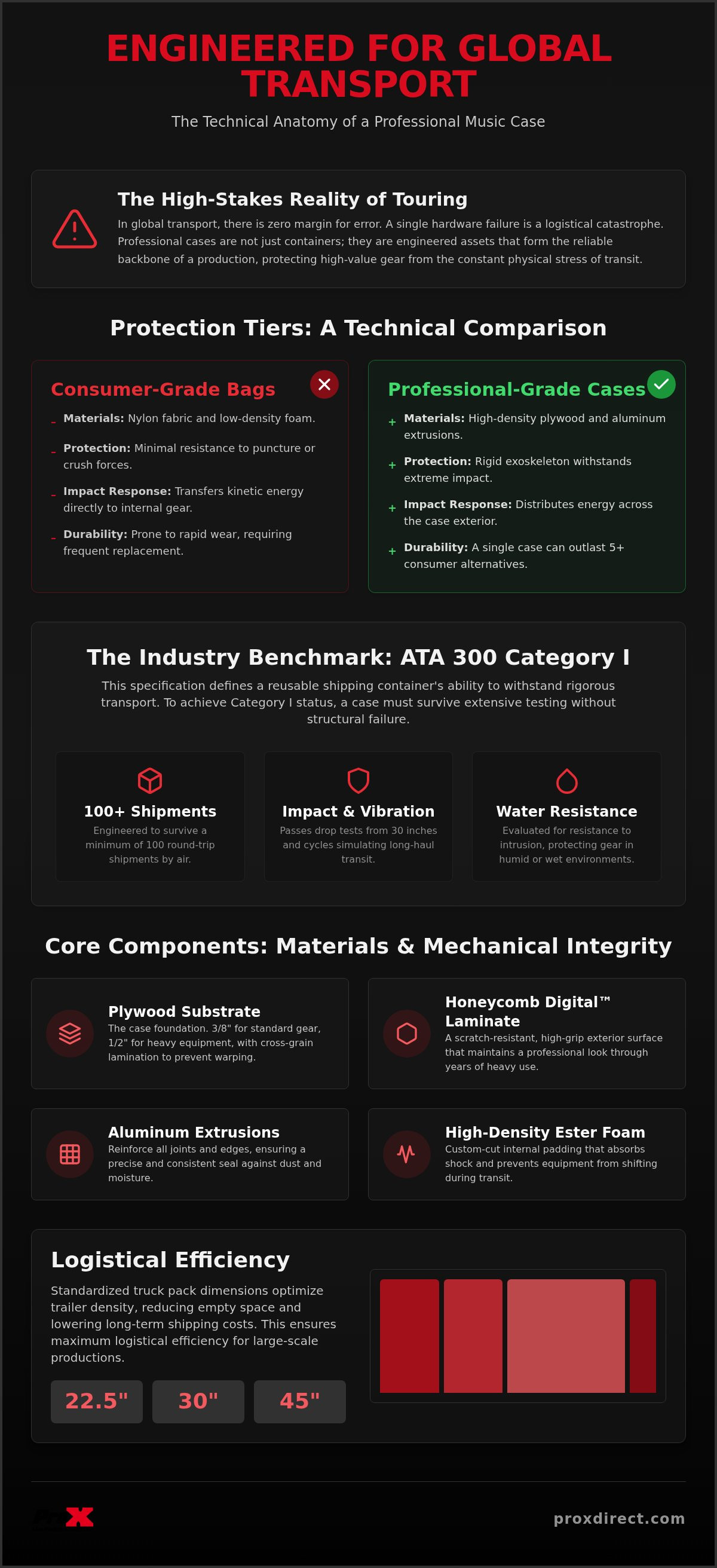
This article details how professional-grade protection safeguards your inventory through precision engineering and industrial-grade materials. You'll learn how to achieve zero-failure transport by utilizing cases built to ATA 300 Category I standards. These containers are engineered to withstand a minimum of 100 round-trip shipments. We'll also examine the impact of 2026 IATA lithium battery regulations on transport protocols and how standardized truck pack dimensions of 22.5, 30, and 45 inches optimize trailer density for maximum logistical efficiency.
Key Takeaways
- Understand the technical specifications of ATA 300 Category 1 certification and why it serves as the baseline for reusable shipping containers in high-stakes touring.
- Evaluate the structural integrity of pro music cases through high-grade plywood substrates and Honeycomb Digital™ laminates designed for impact resistance.
- Learn how standardized truck pack dimensions of 22.5, 30, and 45 inches optimize trailer space and reduce long-term logistical costs for global production.
- Discover how specialized case configurations, including integrated workstations and pedalboards, streamline setup times while maintaining maximum equipment security.
- Explore the operational advantages of engineered designs from Santosom and ZCASE to ensure zero-failure performance across multiple tour cycles.
Defining Pro Music Cases: Why Engineering-Grade Protection Matters
Professional music cases aren't just storage units; they're high-impact enclosures engineered to specific mechanical standards. In the high-stakes environment of 2026 global touring, the distinction between a standard container and a professional asset is defined by structural integrity. These cases serve as the primary defense against mechanical shock, vibration, and thermal stress during transit. As logistics become more complex, the demand for durable pro music cases has shifted from a luxury to an operational necessity.
Modern touring involves tighter turnarounds and more frequent hand-offs between third-party carriers. Every time a case is loaded onto a plane or a truck, it faces potential damage from improper handling. Industrial-grade protection mitigates these risks through standardized hardware and reinforced corners. These cases also manage thermal stress. Sensitive electronics often fail if they're exposed to the rapid temperature fluctuations common in cargo holds. Professional cases provide a controlled internal environment that stabilizes gear against these external variables.
Gig Bags vs. Professional Engineering
The functional gap between consumer-grade gig bags and industrial-grade protection is vast. Gig bags rely on nylon and low-density foam, which offer minimal resistance to puncture or crush forces. Professional engineering utilizes high-density plywood and aluminum extrusions to create a rigid exoskeleton. This design ensures that kinetic energy from an impact is distributed across the case exterior rather than being transferred to the delicate internal components. While the initial investment is higher, the long-term ROI is undeniable. A single engineered case from the ProX-Cases line typically outlasts five consumer alternatives across multiple tour cycles.
Understanding ATA 300 Category 1 Standards
Reliability in international transport is measured by the ATA 300 specification. To achieve Category 1 status, a container must survive a minimum of 100 round-trip air shipments without structural failure. This benchmark involves rigorous testing protocols. These include drop tests from 30 inches, vibration cycles that simulate long-haul trucking, and water resistance evaluations. ProX has manufactured equipment to meet and exceed these industrial benchmarks since 1984. By integrating designs from Santosom and ZCASE, the focus remains on providing a technical solution that eliminates the risk of hardware failure in high-humidity or extreme temperature environments.
The Anatomy of a Professional Case: Materials and Mechanical Integrity
The mechanical integrity of pro music cases depends entirely on the selection of industrial-grade materials. Unlike consumer alternatives that prioritize low weight and lower costs, professional enclosures are designed to maintain structural geometry under extreme pressure. Every component, from the timber substrate to the alloy extrusions, must work as a unified system to absorb kinetic energy and protect internal payloads during the rigors of global transit.
Structural Components and Plywood Grades
The foundation of any high-performance case is the plywood substrate. For standard gear, 3/8-inch plywood provides an ideal balance of weight and rigidity. For heavier equipment like power amplifiers or large-format consoles, 1/2-inch plywood is the required standard for maximum load-bearing capacity. These panels use cross-grain lamination; this process bonds multiple layers of wood with alternating grain directions to prevent warping and structural failure in high-humidity environments. The Honeycomb Digital™ surface provides a scratch-resistant, high-grip exterior that maintains its professional appearance through years of heavy use.
Aluminum extrusions reinforce these plywood panels at every joint. These alloy frames ensure that the lid and base achieve precise alignment every time the case is closed. This alignment is critical for maintaining a consistent seal against dust and moisture. Inside the case, high-density ester foam is custom-cut to the exact dimensions of your hardware. This ensures that the equipment remains stationary during transit, preventing internal components from shifting or sustaining mechanical damage. If you're looking to secure your inventory, you can explore the full range of engineered cases to find the right specification for your needs.
Industrial Hardware: Latches, Handles, and Casters
The hardware used in professional builds must withstand the physical demands of global logistics. Recessed butterfly latches are the industry standard because they sit flush with the case surface. This design prevents the latches from snagging on other cases or trailer walls during loading and unloading. Spring-loaded handles are another essential feature. They offer an ergonomic grip for heavy lifting and retract automatically to maintain a clean profile for efficient truck packing.
Mobility is managed by 4-inch industrial casters. These wheels are designed to handle heavy loads while rolling smoothly over stage cables and uneven venue surfaces. Reliable mobility is a safety requirement, especially when navigating the logistics described in the official U.S. travel regulations for professional equipment. Using high-strength casters with integrated brakes ensures that your gear stays exactly where it's placed during transport and setup, reducing the risk of accidental movement in high-traffic production environments.
Specialized Configurations: From Pedalboards to Custom Instrument Housing
Universal fitments are often insufficient for professional production environments. High-performance signal chains and vintage instruments require specialized pro music cases that integrate protection with operational utility. These configurations go beyond simple containment; they function as active components of the performance setup. By designing cases for specific hardware categories, engineers can address the unique mechanical vulnerabilities and setup requirements of different gear types.
Pedalboard Case Engineering and ZCASE Integration
Standard enclosures often require extensive setup time once the lid is removed. ZCASE integration solves this by utilizing a low-profile base design that allows the equipment to remain in the case during use. This is critical for pedalboard configurations where complex signal paths must remain undisturbed. Organized cable routing solutions ensure that power and signal lines are secured during transit. You can explore specialized pedalboard cases designed specifically for guitar and bass setups that require this level of technical organization. These designs eliminate the need for constant re-patching, which reduces the risk of connector failure over long tour cycles.
Bespoke Engineering for High-Value Assets
When universal fits fail, bespoke engineering becomes necessary. High-value vintage instruments or rare woodwinds require custom-engineered foam inserts that match their exact physical geometry. Santosom-grade precision ensures that these assets are suspended in a way that minimizes mechanical stress. This level of protection is vital when navigating the logistical requirements of the final rule on musical instruments issued by the Department of Transportation. For those managing high-value production gear, you can learn about ZCASE Custom Build Cases to secure your most critical assets. Custom housing provides several advantages for professional musicians:
- Precision Foam Milling: CNC-cut interiors distribute pressure evenly across the instrument's strongest structural points.
- Moisture Control: Specialized linings help stabilize internal humidity levels for sensitive wooden instruments.
- Multi-Device Storage: Modular interiors allow for the storage of multiple related devices, such as a main instrument and its backup, within a single footprint.
Keyboard workstations represent another leap in specialized engineering. These units combine transport security with rapid setup functionality. Many feature integrated stands or sliding shelves that allow a single technician to deploy a multi-tiered setup in minutes. This efficiency directly impacts truck pack density. By consolidating multiple pieces of gear into a single logistical footprint, production teams reduce the physical labor required for load-in and load-out while ensuring that every piece of gear remains protected within its dedicated housing.
Logistics and Mobility: Optimizing for Global Touring Environments
Logistical efficiency in professional production is measured by how effectively gear utilizes available trailer volume. While the structural integrity of pro music cases ensures equipment survival, their external dimensions dictate the profitability of a tour. Every cubic inch of "dead space" in a shipping container or semi-trailer represents a lost financial opportunity. Engineering cases for logistical optimization allows production managers to maximize truck pack density, reducing the number of vehicles required for transport and lowering overall shipping costs. For production teams that also need to buy moving boxes online UK for general supplies or merchandise, planning for this additional volume is essential for a seamless load-out.
Standardizing the Logistical Footprint
Professional trucking in North America and Europe relies on standardized trailer widths, typically 90 or 96 inches. To accommodate these dimensions, the industry has adopted a "truck pack" philosophy based on 22.5-inch and 45-inch increments. These specific footprints allow cases to be tiled across the width of a trailer with zero wasted space. You can review our guide on TruckPaX™ Truck Pack Cases to understand how these dimensions facilitate rapid loading and unloading. By utilizing a standardized footprint, you eliminate the need for complex logistical puzzles during load-out, ensuring a consistent and repeatable pack for every city on the itinerary.
Handling and Transit Safety
The physics of stacking is a critical consideration for large-scale inventory management. Professional cases feature integrated caster dishes and interlocking designs that allow multiple units to be stacked vertically without the risk of shifting. This verticality is essential for maximizing trailer height, but it requires precise weight distribution to prevent the bottom case from sustaining structural damage. High-density plywood substrates, as discussed in previous sections, provide the necessary crush resistance to support thousands of pounds of stacked equipment.
Mobility remains the most common point of failure in high-volume environments. Industrial-grade casters must roll smoothly across varied surfaces, from concrete loading docks to carpeted venue hallways. A single failed wheel can delay an entire production schedule. To maintain operational flow, all ProX Cases are designed for logistical efficiency, utilizing reinforced caster boards and heavy-duty hardware that withstands the lateral forces of frequent loading. For production teams managing hundreds of assets, these cases also incorporate recessed labeling areas to facilitate barcode tracking and inventory management. This ensures that every piece of gear is accounted for during international customs transitions and multi-venue tours.
If you need to optimize your current transport strategy, view the full range of logistics-optimized cases to ensure your gear is protected and your trailer space is fully utilized.
Choosing ProX: Engineering Reliability for High-Performance Production
Selecting a manufacturer for equipment protection is a decision that impacts the long-term ROI of your production inventory. ProX has specialized in manufacturing performance gear since 1984, providing a foundation of industrial expertise that informs every product in our catalog. Our approach to pro music cases prioritizes functional excellence and engineering precision over superficial aesthetics. By maintaining a focus on technical specifications and material science, we ensure that every enclosure meets the rigorous demands of 2026 global touring environments.
Santosom and ZCASE: The Pinnacle of Protection
Our exclusive partnerships with Santosom and ZCASE allow production professionals to access the world’s most advanced touring case designs. Santosom has long been the preferred choice for elite European touring professionals who require precision-engineered solutions for high-density truck packs. ZCASE, manufactured in Poland, introduces specialized innovations such as Flip Ready designs and integrated workstations that streamline complex technical setups. These brands represent the highest tier of case engineering by combining proprietary mechanical assembly techniques with the highest grades of industrial materials available on the global market.
Finding the Right Professional Solution
Navigating our comprehensive catalog requires an understanding of your specific logistical and environmental needs. Whether you are housing a large-format mixing console or a delicate vintage instrument, the choice of plywood thickness, foam density, and hardware configuration is critical to the longevity of your gear. For those requiring a deeper technical dive into material standards and construction methods, you should consult The Ultimate Guide to Flight Cases. This resource provides the data necessary to make informed decisions regarding your fleet's protective standards and structural requirements.
Securing the correct solution often involves working with our extensive authorized dealer network. These professionals provide the technical support and local availability required for large-scale deployments or custom engineering projects. Our commitment to innovation is driven by continuous testing and refinement based on direct feedback from touring technicians and production managers. This feedback loop ensures that our designs evolve alongside the changing realities of international logistics and airline regulations. If your tour schedule is ever threatened by flight disruptions, Airflix offers legal assistance for passenger rights; read more about protecting your travel interests. By choosing an engineered solution from ProX, you are investing in a legacy of reliability that has supported the professional production industry for over 40 years.
Securing Your Production Infrastructure for Future Tour Cycles
The physical demands of 2026 global touring require a shift from reactive equipment replacement to proactive engineering. By utilizing pro music cases built to ATA 300 Category 1 standards, you eliminate the risk of mechanical failure during high-stakes transport. Standardizing your inventory around specific truck pack dimensions optimizes trailer density and simplifies complex load-outs. Precision remains the priority. It's the only way to ensure zero-failure performance across multiple tour cycles.
Since 1984, ProX has provided the technical expertise necessary to protect high-value audio, lighting, and performance gear. Our exclusive access to ZCASE and Santosom technology ensures your production assets benefit from the most advanced structural designs available. With a global dealer network ready to support your technical needs, you can maintain operational continuity across every venue on your itinerary. Don't leave your critical hardware to chance when engineered reliability is an option.
Explore the Complete ProX Case Catalog to identify the specific protective solutions required for your next production cycle. Build your inventory on a foundation of engineering precision and logistical efficiency.
Frequently Asked Questions
What is the difference between a gig bag and a professional music case?
A gig bag provides soft-shell protection using nylon and low-density foam, whereas a professional music case utilizes a rigid plywood and aluminum exoskeleton. Pro music cases are engineered to withstand the mechanical shock and crushing forces found in international cargo environments. This structural difference ensures that kinetic energy is distributed across the case exterior rather than being transferred to sensitive internal components or electronics.
Are ProX cases ATA 300 Category 1 rated?
ProX engineers its professional-grade enclosures to meet or exceed ATA 300 Category 1 specifications. This industrial standard requires a container to withstand a minimum of 100 round-trip shipments without structural failure. Testing protocols include rigorous drop, vibration, and water resistance evaluations. By adhering to these benchmarks, we ensure that your gear remains protected across multiple international tour cycles and complex logistical hand-offs.
Can I get a custom foam interior for my specific instrument?
Bespoke foam interiors are available through our ZCASE Custom Build Cases program. This service utilizes CNC milling to create high-density foam inserts that match the exact physical geometry of your instrument or electronics. Custom engineering is essential for high-value vintage gear or non-standard hardware dimensions where universal fitments fail to provide adequate stabilization. This ensures zero-failure transport by eliminating internal movement during transit.
What materials are used in the construction of ProX professional cases?
Construction utilizes high-grade 3/8-inch or 1/2-inch plywood substrates reinforced with aluminum extrusions at every joint. These materials provide the necessary structural rigidity and impact resistance for heavy-lift environments. The exteriors are finished with Honeycomb Digital™ laminate, while interiors feature custom-cut high-density ester foam. Hardware components include recessed butterfly latches and spring-loaded handles to ensure a clean logistical profile and secure closure alignment.
How do standardized case dimensions help with touring logistics?
Standardized dimensions of 22.5, 30, and 45 inches are engineered to optimize truck pack density in 90-inch and 96-inch wide trailers. This "truck pack" philosophy eliminates dead space, which directly reduces shipping costs and maximizes tour profitability. By using standardized footprints like those found in the TruckPaX™ line, production managers can achieve a consistent and repeatable load-out across varied global touring environments.
What is the Honeycomb Digital™ laminate used for?
Honeycomb Digital™ laminate provides a scratch-resistant, high-grip surface that protects the plywood substrate from abrasion and impact. The hexagonal pattern creates a durable exterior that maintains its professional appearance even after years of industrial use. This specialized laminate also aids in handling by providing a non-slip surface, which is critical when stacking or moving heavy pro music cases in high-humidity or extreme temperature environments.
Where can I purchase ProX cases and accessories?
You can purchase our full range of cases and accessories through an extensive network of authorized professional dealers. These dealers are trained to provide technical support and assist with custom engineering projects for complex production needs. Global availability is a priority, ensuring that touring professionals can access replacement units or additional inventory regardless of their geographic location. This network serves as the backbone for professional production support.
Do you offer replacement parts for case maintenance?
We provide a comprehensive inventory of ProX Cases Replacement Parts to ensure the long-term durability of your equipment. Available components include industrial casters, recessed latches, handles, and aluminum extrusions. Performing regular maintenance with factory-spec parts allows you to extend the operational life of your cases and maintain the structural integrity required for international transport. This commitment to serviceability reflects our focus on functional excellence.
Disclaimer
Any trademarks, trade names or brand names appearing herein that do not belong to ProX are the property of their respective owners and/or companies, and such appearance doesn't and shall not constitute or imply endorsement, sponsorship or recommendation by ProX.


