
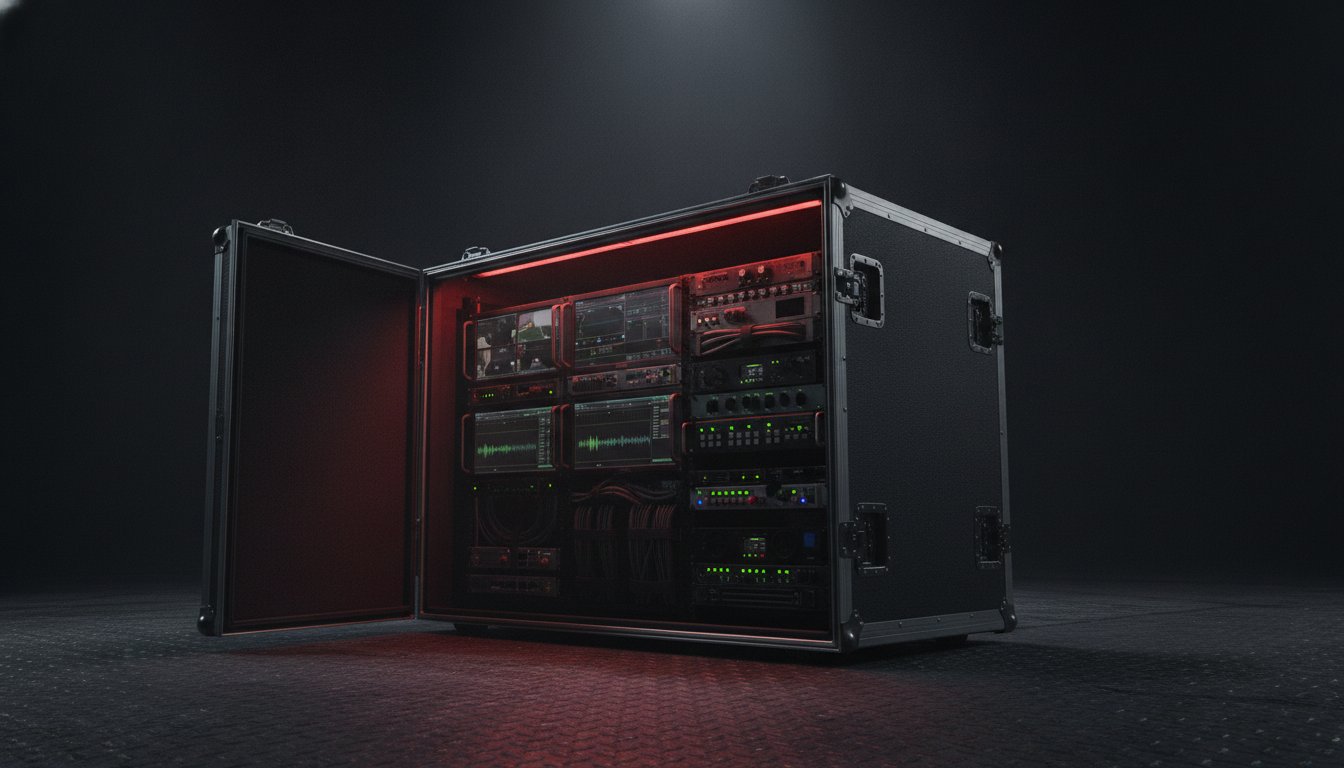
A broadcast case is no longer just a shipping container; it's a precision-engineered operational environment where thermal management and signal integrity determine the success of a live production. You understand that equipment failure in the field results in immediate operational compromise. Whether it's high-value monitors sustaining structural damage during transit or critical hardware throttling due to heat buildup in cramped enclosures, the physical demands of mobile production are relentless. This guide explores how professional-grade AV Broadcasting Cases mitigate these risks through advanced mechanical assembly and rigorous logistical standards.
You'll discover the technical specifications required to build a reliable mobile command center that speeds up deployment while protecting your high-value assets. We provide a methodical overview of current industry standards, including ATA 300 Revision 2023 compliance and the integration of modern IP-based production hardware. By the end of this article, you'll have a comprehensive understanding of the thermal engineering and cable management protocols necessary to maintain a stable, professional-grade workstation in any environment. This technical deep dive ensures your gear remains protected and your workflow stays efficient during high-stakes deployments.
Key Takeaways
- Identify the critical design differences between standard storage units and integrated mobile workstations built for high-density broadcast environments.
- Analyze the engineering protocols for thermal management and cable architecture necessary to maintain signal integrity and prevent hardware overheating.
- Evaluate the performance of ATA 300 compliant materials, comparing the durability and weight-reduction benefits of plywood versus honeycomb plastics.
- Optimize operator ergonomics during extended production cycles by utilizing specialized monitor mounting solutions and adjustable control surfaces.
- Discover the logistical advantages of using professional-grade AV Broadcasting Cases and custom ZCASE engineering for complex, multi-site live streaming workflows.
Defining the AV Broadcasting Case: More Than Just a Protective Shell
An AV broadcasting case functions as a centralized operational hub for live production. It's not just a box. Unlike a traditional Road case used for simple equipment transport, these units are engineered as active workstations. Modern AV Broadcasting Cases provide the structural integrity required to house high-density rack gear while maintaining strict thermal and ergonomic standards. This equipment category eliminates the need for external furniture or temporary setups at a venue, serving as the literal backbone of a remote production site.
Broadcast gear requires specialized housing because of high heat output and the necessity for multi-monitor visibility. Standard audio racks often lack the depth and ventilation paths needed for modern video switchers and server-grade hardware. By integrating monitor mounts and sliding work surfaces directly into the chassis, these cases reduce deployment time from hours to minutes. A pre-wired broadcast case allows engineers to achieve operational status almost immediately upon arrival, which is critical in the high-pressure environment of live events.
Key components of these systems include:
- Precision-aligned rack rails for secure hardware mounting and vibration dampening.
- VESA-compliant monitor mounts integrated into the lids or retractable frames for immediate viewing.
- Heavy-duty sliding work surfaces that support controllers, keyboards, and laptops.
- Reinforced cable pass-throughs designed to manage high-bandwidth signal paths without crimping.
The Evolution of Mobile Production Workstations
The industry has transitioned from massive, dedicated OB vans to modular fly-pack systems. This shift was accelerated by the introduction of compact switchers, such as the Blackmagic ATEM series, which condensed several rack units of functionality into a single device. Modern cases facilitate "studio-in-a-box" capabilities, allowing a single operator to manage a multi-camera stream from a compact footprint that fits through standard doorways and into cargo elevators.
Core Differences Between Utility and Broadcast Engineering
Engineering a broadcast case requires higher mechanical precision than a standard utility box. Rack-mount alignment must be exact to prevent chassis stress on sensitive video hardware. Additionally, the integration of high-value display technology requires specialized lid hinges and gas-spring arms to support the weight of 24-inch or 27-inch monitors. Proper weight distribution is essential; a top-heavy case can become a safety hazard during live operation. These cases use strategic hardware placement to ensure the center of gravity remains low, providing stability when all monitors and work surfaces are fully extended.
The Engineering of Mobile Workstations: Thermal Management and Cable Architecture
High-density hardware configurations generate significant thermal energy within the confined volume of a rack enclosure. In professional production, heat is the primary cause of equipment failure and signal degradation. Engineered AV Broadcasting Cases must facilitate continuous airflow to prevent hardware throttling, especially when housing high-performance servers and video switchers. The Broadcast Engineer's Reference Book emphasizes that mobile control rooms require meticulous environmental control to maintain system reliability during extended operation. Effective thermal management transitions from passive venting to active cooling based on the specific power draw of the internal components.
Airflow Design in Enclosed Racks
Passive cooling strategies utilize perforated panels and strategic vent placement to encourage natural convection. However, deep rack configurations often develop thermal bottlenecks where hot air becomes trapped between closely spaced equipment. To mitigate this, active fan kits are integrated into the rear or side panels to force air across critical heat sinks. Protecting sensitive digital components from heat soak requires a calculated airflow path that pulls cool air from the front and exhausts it through the rear. This directional flow ensures that the internal ambient temperature remains within the manufacturer's specified operating range even in high-temperature outdoor environments.
Advanced Cable Management Solutions
Internal cable architecture is as vital as thermal control for maintaining operational uptime. Organized cable trunks prevent snagging and mechanical stress during transit, ensuring that connections remain secure. High-bandwidth signals, particularly 12G-SDI and fiber optics, require strict adherence to minimum bend radii to avoid signal loss or physical damage to the core. Engineers prioritize the use of internal lacing bars and hook-and-loop fasteners to secure looms without applying excessive pressure to the jackets.
External I/O panels further enhance field efficiency. By terminating internal connections to a labeled patch bay on the case exterior, operators can perform rapid deployment without opening the rear of the rack. This protects the internal wiring from frequent handling and environmental exposure. For those building complex mobile rigs, selecting a workstation with integrated cable management accessories is a logical step toward professional-grade reliability. This structured approach to cable architecture ensures that signal integrity is maintained from the camera input through to the final broadcast output.
Evaluating Protection Standards: ATA 300 Compliance for High-Value Gear
Protection standards for high-value production equipment are defined by rigorous engineering benchmarks. High-performance AV Broadcasting Cases must meet or exceed these standards to ensure the survival of sensitive video switchers and server hardware during frequent transit. The primary metric for durability in the transport industry is the ATA 300 standard, which dictates material quality, construction techniques, and hardware specifications. Engineering a case to these standards ensures that the internal components are shielded from the mechanical stresses of global logistics.
Material selection directly impacts both structural integrity and logistical costs. Traditionally, 9mm or 12mm laminated plywood provides the necessary rigidity for heavy rack configurations. However, the industry is increasingly adopting honeycomb plastic panels for modern professional cases. These materials offer a significant weight reduction while maintaining the impact resistance required for high-frequency transport. This weight savings is critical for meeting airline weight restrictions and reducing fuel consumption during ground transport.
Hardware integrity is non-negotiable in professional environments. Professional units utilize recessed butterfly latches and spring-loaded handles to prevent mechanical failure or snagging during loading. Heavy-duty steel ball corners are essential for absorbing kinetic energy during impacts, protecting the internal frame from deformation. For delicate electronics, shock-mounted rack frames utilize internal rubber isolators to dampen vibrations that could otherwise dislodge internal components or damage sensitive optical drives.
The Anatomy of a Professional Flight Case
The structural rigidity of a case depends on the thickness of the laminated plywood and the precision of the aluminum extrusions. These extrusions reinforce the edges and provide a secure mating surface for the lids, ensuring a dust-resistant seal. ATA 300 Category 1 standard is the industry benchmark for containers designed to withstand a minimum of 100 round-trip shipments without structural failure.
Logistical Efficiency and Truck Pack Standards
Logistical efficiency is achieved through standardized dimensions that optimize cargo space in standard trailer widths. Utilizing TruckPaX™ Truck Pack Cases allows production companies to maximize their shipping footprint and reduce overall transportation costs. Stacking stability is maintained through the use of integrated caster dishes, which ensure that heavy workstations remain locked in place during transit. This precision in case dimensions ensures that AV Broadcasting Cases integrate seamlessly into complex global logistics chains without wasted volume.

Strategic Configuration: Optimizing Monitor Mounts and Control Surfaces
Strategic configuration of an operational environment directly impacts operator performance and technical accuracy during a live event. Professional AV Broadcasting Cases are designed to bridge the gap between simple rack storage and a fully functional control room. Ergonomics play a vital role here. Operators often work 12 hour shifts; therefore, the physical relationship between the monitoring plane and the control surface must minimize neck strain and repetitive motion fatigue. A well-configured workstation positions the multiview display at eye level while keeping the primary switcher or color grading panel within a natural reach zone.
Modern mobile workstations utilize multi-level designs to separate monitoring from control. This tiered approach allows for a deeper workspace that can accommodate full-sized keyboards and specialized consoles without obstructing the operator's line of sight to the displays. Maintaining this balance ensures that the technical director can focus on the program feed while managing complex signal routing across multiple rack-mounted devices.
Visual Monitoring in the Field
Visual monitoring in remote locations presents unique challenges, including variable ambient light and physical vibrations. VESA-compliant mounts provide the standard interface for displays, but the choice between fixed lid mounts and gas-spring arms depends on the required flexibility. Gas-spring arms allow for precise tilt and height adjustments to counteract glare in outdoor environments. For larger production setups requiring separate multiview arrays, utilizing specialized Flat Panel LED TV Cases ensures that high-value displays are protected during transit and easily integrated into the mobile command center upon arrival. Stability is maintained through reinforced mounting plates that prevent screen oscillation in high-vibration environments, such as temporary stages or mobile trailers.
Worksurface and Accessory Integration
The integration of control surfaces, such as ATEM panels or DaVinci Resolve consoles, requires a stable and spacious worksurface. Sliding tables offer the advantage of a retractable footprint, allowing the case to remain compact during transport while providing a full-depth desk during operation. Hinged lids can also serve as secondary surfaces for laptops or script binders. Beyond the primary controls, storage for peripheral gear is essential. Integrated drawers provide secure housing for microphones, converters, and headsets. For small-form-factor devices like Stream Decks or specialized controllers, custom foam inserts prevent movement and mechanical wear.
Optimizing your field setup requires a balance of protection and operational efficiency. To explore professional configurations for your next production, browse the full range of AV Broadcasting Cases available for immediate deployment.
Custom Broadcast Solutions: Integrating ProX and ZCASE Engineering
Managing environmental factors is a critical aspect of custom engineering. For outdoor news and sports broadcasting, maintaining watertight integrity is a primary requirement. This is particularly important for mobile news gathering (MNG) units that operate in unpredictable climates. Accessing the ProX dealer network ensures that these custom solutions are backed by global support and a consistent supply of standardized replacement components. This logistical backbone allows for the maintenance of a fleet across different geographic locations, ensuring that downtime remains minimal.
Advanced Protection for Extreme Environments
In environments where moisture, dust, or coastal salt air are present, standard plywood enclosures don't provide sufficient protection for sensitive electronics. This is when to utilize UltronX™ Watertight Cases for sensitive electronics. These units use high-impact polypropylene shells and specialized gaskets to create an airtight seal. Ruggedized solutions for MNG units ensure that critical streaming and recording hardware remain operational despite environmental exposure. These cases are engineered to withstand the physical demands of rapid deployment in the field while maintaining a controlled internal environment that prevents salt-air corrosion and dust ingress.
Next Steps: Consulting with ProX Engineering
Starting a custom engineering project for a broadcast workstation begins with a detailed evaluation of your hardware footprint and operational workflow. While many productions can be serviced by off-the-shelf AV Broadcasting Cases, bespoke needs require a consultative approach to ensure all mechanical and thermal requirements are met. Professional-grade gear represents a significant capital investment; ensuring long-term value through ProX Cases Replacement Parts availability is a core logistical advantage. This ensures that your mobile command center remains serviceable for years, regardless of the physical wear encountered during global deployment. By prioritizing engineering precision over temporary aesthetics, you build a reliable operational foundation for any live production environment.
Precision Engineering for the Future of Live Production
Maintaining operational uptime in high-stakes environments requires more than simple protection; it demands a meticulously engineered environment. You've seen how integrating thermal management, cable architecture, and ergonomic monitoring into your mobile workstation prevents equipment failure and reduces deployment time. By adhering to ATA 300 Category 1 standards, professional AV Broadcasting Cases ensure that high-value electronics survive the mechanical stresses of global transit. These systems function as the reliable backbone of any remote broadcast site.
ProX has been manufacturing performance gear since 1984, providing the engineering precision required by industry veterans. Our partnership with ZCASE for custom build solutions allows for advanced mechanical and hydraulic integration that off-the-shelf units can't match. Supported by a global dealer network, your investment is backed by professional-grade parts and technical expertise wherever your production takes you. This commitment to structural integrity and functional excellence ensures your gear remains operational under the most demanding conditions.
Explore our full range of AV Broadcasting Cases to build a mobile command center that meets your specific technical requirements. Secure your workflow with a workstation designed for the practical realities of professional use.
Frequently Asked Questions
What is the difference between a standard rack case and an AV broadcasting case?
An AV broadcasting case differs from a standard rack case by functioning as a complete mobile workstation rather than a simple transport container. While standard racks only provide mounting rails, AV Broadcasting Cases incorporate integrated monitor mounts, sliding work surfaces, and specialized cable management systems. These features allow operators to maintain a full production environment without removing equipment from the enclosure. This configuration significantly reduces setup time and ensures all hardware remains connected and protected during operation.
Does an AV broadcasting case include the monitors and switchers?
No, these cases are sold as high-performance enclosures and do not include electronic hardware such as monitors or switchers. The workstation is engineered to accommodate specific hardware models, allowing you to integrate your existing monitors, servers, and control surfaces. This approach ensures that you can select the exact technical components required for your production while relying on the case for structural integrity and logistical protection.
How do I manage heat inside a closed broadcast workstation case?
Managing internal heat requires a combination of active fan kits and strategic passive ventilation panels. High-density rack gear generates significant thermal energy that must be exhausted to prevent hardware throttling or failure. You should configure your rack to pull cool air through the front and force it out the rear using integrated fans. This directional airflow ensures that the internal ambient temperature remains within the manufacturer's specified operating limits during continuous live production.
Are AV broadcasting cases compatible with Blackmagic Design ATEM switchers?
Yes, most professional workstations are fully compatible with Blackmagic Design ATEM switchers and other standard 19-inch rack-mount hardware. These AV Broadcasting Cases utilize precision-aligned rails that accommodate the standard rack dimensions used by Blackmagic, NewTek, and other industry manufacturers. Custom foam inserts or specialized sliding trays can also be utilized to secure smaller desktop-style switchers within the rack frame, ensuring they remain stable during transport and operation.
What does ATA 300 Category 1 mean for my production gear?
ATA 300 Category 1 is the industry benchmark for containers designed to withstand a minimum of 100 round-trip shipments without structural failure. This standard dictates the use of specific materials, such as high-grade laminated plywood or honeycomb plastics, and heavy-duty hardware like recessed latches and steel ball corners. Meeting this requirement ensures that your production gear is shielded from the mechanical stresses of global logistics and frequent handling by transport personnel.
Can I get a custom case built for my specific broadcast control surface?
Yes, bespoke configurations are available through the ZCASE Custom Build partnership for unique broadcast control surfaces. This engineering-led process allows for the integration of specialized hydraulic monitor lifts, unique worksurface dimensions, and custom cable I/O panels. If your production requires a non-standard footprint or specific mechanical movements, custom engineering ensures the case meets those exact operational needs while maintaining the structural durability required for professional field use.
Are these cases watertight for outdoor broadcasting?
Professional plywood cases provide significant water resistance, but fully watertight protection requires a specialized enclosure like the UltronX™ series. These watertight units utilize high-impact polypropylene shells and airtight gaskets to shield sensitive electronics from moisture, dust, and salt air. While standard broadcast workstations are suitable for most environments with proper cover, UltronX™ cases are the preferred solution for extreme outdoor broadcasting or mobile news gathering in unpredictable climates.
How many rack units (U) do I need for a mobile streaming setup?
The required number of rack units depends on your specific hardware footprint, but most mobile streaming setups utilize between 4U and 12U of space. A typical configuration might include 4U for the switcher and encoders, with an additional 8U to 12U for servers, power conditioners, and storage drawers. It's essential to account for thermal clearance between high-heat devices, so selecting a case with slightly more capacity than your current gear list is often a prudent engineering decision.
Disclaimer
Any trademarks, trade names or brand names appearing herein that do not belong to ProX are the property of their respective owners and/or companies, and such appearance doesn't and shall not constitute or imply endorsement, sponsorship or recommendation by ProX.


