
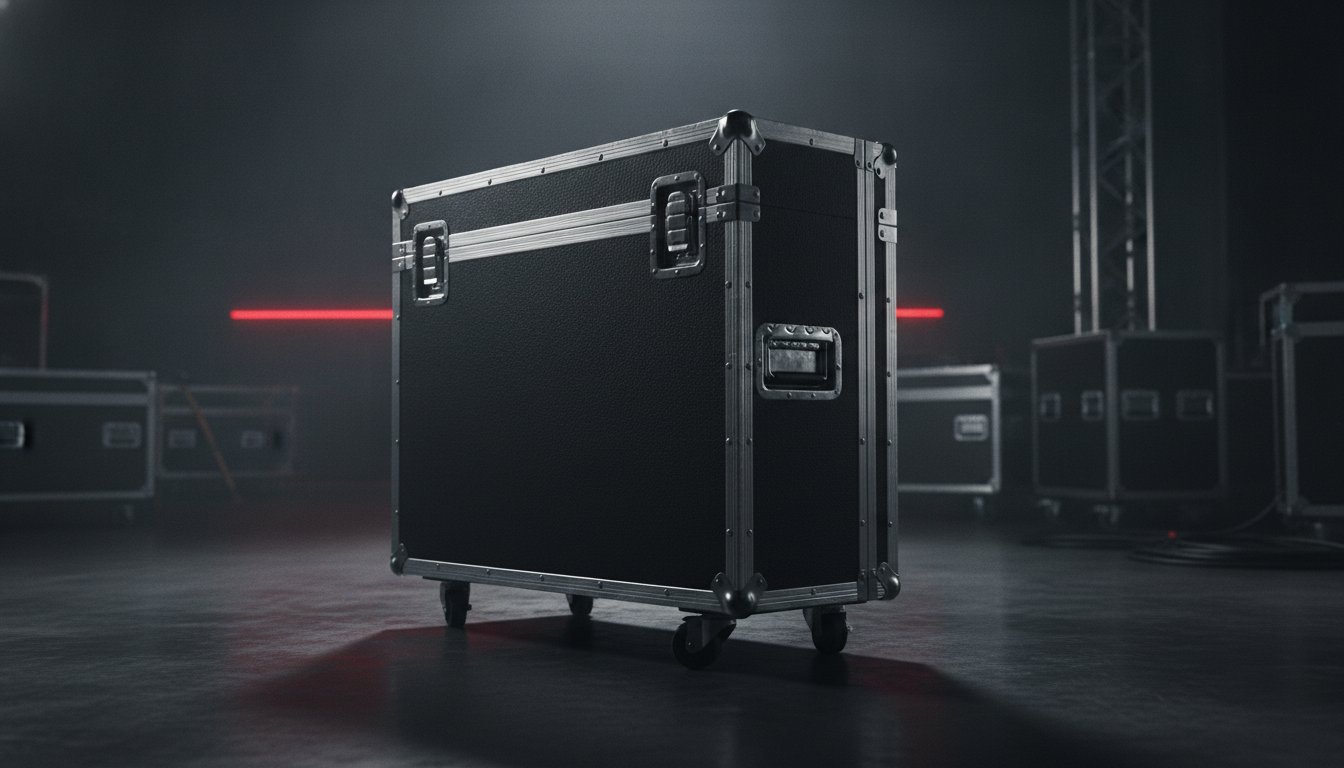
A single millimeter of frame torsion during a multi-city tour can exert enough pressure to compromise the liquid crystal layer of a professional display, rendering a five-figure investment useless before the first load-in. You understand that in the high-stakes environment of professional production, equipment failure is a liability that your project schedule cannot absorb. Structural integrity is the primary defense against the physical demands of modern logistics, particularly as LTL freight rates have seen a 12.5 percent year-over-year increase as of May 2026. Utilizing high-specification Flat Panel LED TV Cases is a technical necessity for maintaining the functional excellence of your inventory during transit.
This guide provides a methodical checklist for selecting protective housing that adheres to the ATA 300 Revision 2020.1 standard for durability. You'll learn the critical structural requirements and logistical steps required to ensure your displays survive rigorous touring cycles without incident. We will analyze how precision interior sizing, foam density, and hardware reliability contribute to optimized truck pack density and a consistent, zero-damage transport history.
Key Takeaways
- Identify how frame torsion causes liquid crystal failure and why standard containers are insufficient for professional displays.
- Specify the mechanical requirements for high-performance Flat Panel LED TV Cases, including 3/8-inch plywood construction and aluminum valance sealing.
- Assess the logistical advantages of dual-screen configurations for large-scale deployments versus the handling requirements of single-unit housings.
- Establish a rigorous pre-tour inspection protocol to verify the integrity of recessed latches and external laminates before transport.
- Understand the engineering benefits of using genuine replacement parts to extend the service life of your protective equipment.
Understanding the Risks of Flat Panel LED TV Logistics
A professional flat-panel case functions as a high-impact protective enclosure designed for the repetitive demands of the touring industry. These units are engineered to isolate sensitive electronics from the physical stressors inherent in global logistics. Unlike consumer-grade storage solutions, professional TV flight cases utilize rigid materials and mechanical fasteners to maintain structural integrity over hundreds of transit cycles. High-value displays require this level of engineering because the standard supply chain environment is inherently hostile to large-format glass panels.
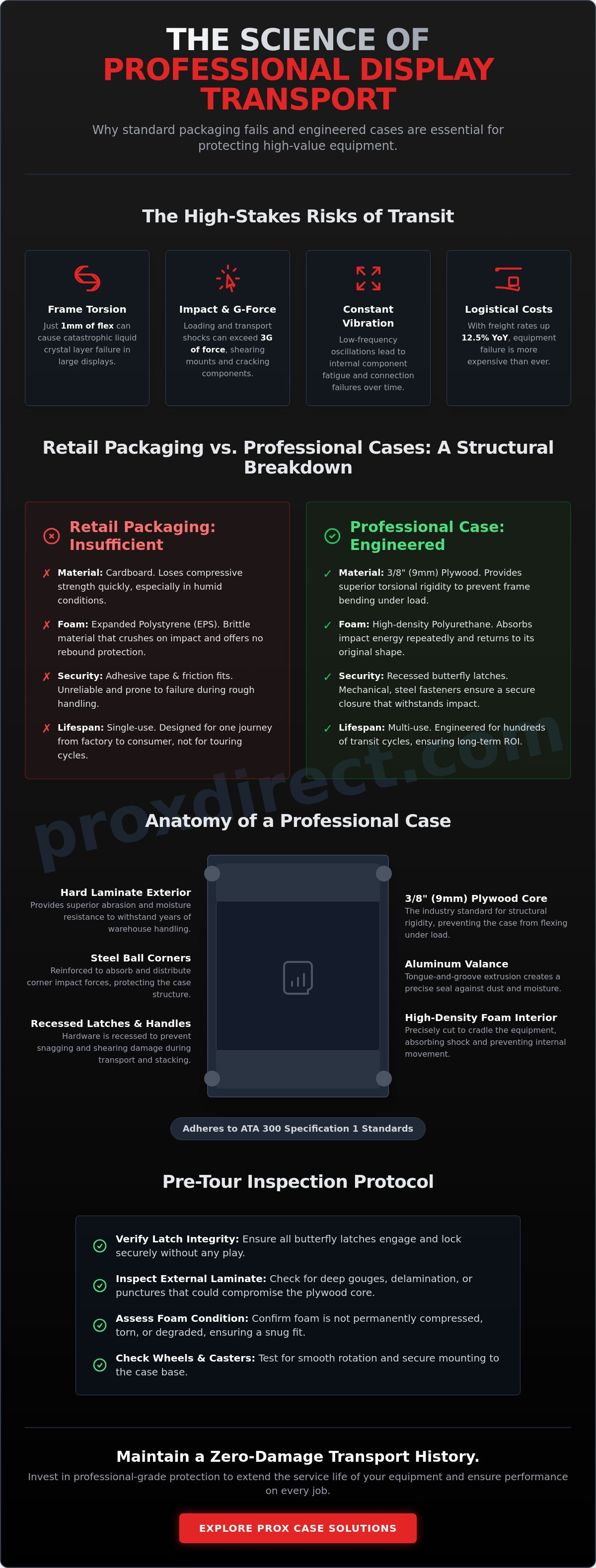
The primary threat to these displays is frame torsion. Large LED and LCD screens possess a high surface area but minimal depth, making them susceptible to twisting forces. When a transport container lacks sufficient rigidity, external pressure or uneven stacking can cause the entire housing to flex. This torsion transfers directly to the screen's liquid crystal layer; even minor deviations can lead to permanent pixel damage or total panel failure. Vibration during transit also poses a silent threat. Constant low-frequency oscillation can lead to internal component fatigue and the loosening of critical ribbon cables or surface-mounted components.
The Physics of Screen Failure in Transit
Lateral pressure points are the leading cause of micro-fractures in large glass panels. In a standard transport environment, cases are often pushed, stacked, or secured with high-tension ratchets. Without a rigid outer shell, these forces concentrate on specific points of the display rather than being distributed across the housing. Thermal expansion also plays a role. Professional Flat Panel LED TV Cases must account for temperature fluctuations within sealed environments. As materials expand and contract at different rates, internal pressure can build against the screen surface if the interior cushioning is not precisely calibrated. Furthermore, G-forces during loading and unloading can exceed 3G. This sudden deceleration can shear mounting bolts or crack the internal chassis if the case does not provide adequate shock absorption.
Why Retail Packaging is Insufficient for Professional Use
Retail packaging is designed for a single journey from the factory to the consumer. The structural limitations of double-walled cardboard are significant; the material loses its compressive strength rapidly when exposed to humidity or repeated handling. Professional touring standards require 9mm or 12mm plywood construction to ensure the enclosure remains square under load. Retail boxes use Expanded Polystyrene (EPS) foam, which is brittle and crushes upon impact without rebounding. Professional cases utilize high-density polyurethane foam that absorbs energy and returns to its original shape. Standard retail boxes rely on adhesive tape and friction fits, while professional enclosures use recessed butterfly latches and steel ball corners to ensure the lid remains secure during high-impact events.
- Material Resilience: High-density foam provides repeatable shock protection over years of use.
- Mechanical Security: Steel hardware prevents accidental opening during rough handling.
- Logistical Efficiency: Uniform dimensions and stacking cups allow for secure, high-density truck packs.
Structural Requirements for Professional TV Flight Cases
The structural integrity of Flat Panel LED TV Cases depends on the quality of their foundational materials. While smaller utility containers might utilize 1/4-inch panels, large-format displays require the rigidity of 3/8-inch (9mm) plywood. This thickness is the industry standard because it provides the necessary torsional resistance to prevent the frame bending described in the previous section. A thinner substrate lacks the mass to support the mechanical stressors encountered during heavy-duty logistics. These plywood panels are typically bonded to a hard-surface laminate, such as a honeycomb or digital-patterned finish, which provides superior abrasion resistance and a professional aesthetic that withstands years of warehouse handling.
Reinforcing this wooden core is the tongue-and-groove aluminum valance. This extrusion serves a dual purpose. It acts as a structural skeleton that reinforces the edges of the 9mm panels, and it creates a precision seal when the lid is closed. This alignment is critical for moisture and dust exclusion in non-climate-controlled environments. To manage corner impacts, engineers utilize reinforced steel ball corners. These components are designed to deflect energy away from the plywood joints, functioning as sacrificial crumple zones that preserve the overall geometry of the enclosure. Industrial-grade hardware completes the build, utilizing recessed butterfly latches that won't shear off when the case is slid against others in a tight truck pack.
Material Standards and Plywood Grades
Professional manufacturing relies on multi-rivet assembly to secure aluminum extrusions to the plywood substrate. This mechanical fastening is superior to adhesive-only methods because it distributes load across a larger surface area. High-density laminates, particularly those with a honeycomb texture, offer enhanced protection against the punctures and deep scratches common in multi-city tours. While thicker 1/2-inch panels exist, they often create an unfavorable weight-to-protection ratio. The 9mm standard remains the optimal balance for maintaining structural safety without incurring excessive freight surcharges.
Hardware and Mobility Specifications
Mobility is a technical requirement, not a luxury. High-performance cases utilize 4-inch heavy-duty casters equipped with reinforced mounting plates and locking mechanisms. These wheels must support the static weight of the display and the dynamic forces of rapid movement over uneven surfaces. Recessed spring-action handles are essential for a streamlined exterior, which is a hallmark of professional AV Broadcasting Cases. All hardware components should ideally meet the ATA Specification 300 Category I standard. This ensures the case can withstand a minimum of 100 round trips through the commercial airline system. Review our technical specifications for ProX Cases to ensure your inventory meets these industrial benchmarks.
Evaluating Single vs. Dual Monitor Case Configurations
Selecting the optimal enclosure configuration involves balancing logistical efficiency against the physical limitations of transport crews. Flat Panel LED TV Cases are typically available in single or dual-monitor formats, each presenting distinct operational trade-offs. While consolidated housing reduces the total number of units handled, it significantly increases the localized mass of the shipment. This decision impacts everything from truck pack density to the safety of your personnel during load-in and load-out procedures.
Dual-screen cases provide a consolidated footprint for large-scale deployments. By housing two displays in a single unit, production teams can reduce the total quantity of items moved. This consolidation often results in a smaller overall storage footprint in a warehouse or on-site at a venue. Additionally, professional designs incorporate adjustable interior walls. These modular dividers allow for universal screen compatibility, accommodating different display depths or bezel widths within the same external dimensions without requiring custom foam inserts for every model change.
When to Choose a Dual-Screen Configuration
Dual-screen setups are ideal for trade shows and mirrored stage environments where displays are deployed in pairs. Consolidating screens into one unit improves loading times. This approach also facilitates integrated cable management within the case, allowing for pre-wired setups in some configurations. However, the weight of two large-format displays plus the 9mm plywood enclosure can easily exceed 300 pounds. This necessitates multi-person crews. Operators must prioritize weight distribution to prevent the case from becoming top-heavy when the lid is removed, especially on uneven surfaces.
- Logistical Efficiency: Reduces the bill of lading entry count and simplifies inventory tracking for large tours.
- Lift-Gate Safety: High-mass dual units require mechanical assistance; verify that your transport vehicles have appropriate lift capacities.
- Structural Rigidity: Larger dual cases require additional internal bracing to prevent the frame torsion issues previously discussed.
The Versatility of Single-Screen Cases
Single-screen enclosures offer superior maneuverability for solo operators or small production teams. Their lower mass allows for easier navigation through narrow corridors or tight freight elevators where larger dual units might fail to clear the opening. In terms of truck pack density, single units provide greater flexibility for mixed-gear loads. They can be slotted into smaller gaps in the trailer that a dual-screen unit would not fit. Review the wide selection of ProX-Cases for single-screen options that prioritize mobility and high-impact protection. These units are particularly effective for rental houses that frequently ship individual displays to diverse locations where site access conditions are unknown.
Pre-Tour Inspection Checklist for TV Transport
Implementing a rigorous pre-tour inspection protocol is a technical necessity for maintaining a zero-damage transport history. Before any high-value display is loaded, the structural integrity of your Flat Panel LED TV Cases must be verified through a methodical examination of both external and internal components. This process ensures that the engineering standards established during manufacturing haven't been compromised by previous deployments or warehouse environmental factors. A failure in a single mechanical fastener can lead to catastrophic equipment loss during high-G maneuvers in transit.
Begin with a visual inspection of the external laminate. Look for punctures, deep abrasions, or signs of delamination in the 9mm plywood substrate. If the protective laminate is breached, the wooden core becomes susceptible to moisture absorption, which can lead to swelling and a loss of torsional rigidity. Check the mechanical operation of all recessed butterfly latches. Each latch should engage and rotate without resistance; a sticking mechanism often indicates a bent strike plate or internal oxidation. Finally, examine the casters. Ensure all mounting bolts are torqued correctly and that the swivel functionality allows for 360-degree movement without binding.
Hardware and External Integrity
Structural stability relies on the security of the mechanical assembly. Inspect all rivets along the aluminum extrusions; loose or missing rivets must be replaced immediately to prevent the case from racking under load. If you observe oxidized hardware, clean the surface to prevent further corrosion that could weaken the steel. The aluminum valance requires specific attention. Even a minor bend in the tongue-and-groove extrusion will prevent a flush seal, allowing dust and abrasive particulates to enter the enclosure. Lubricate latch mechanisms with a dry-film lubricant to ensure reliable operation in extreme temperatures. For those managing aging inventory, sourcing ProX Cases replacement parts is the most efficient way to restore original factory specifications.
Interior Protection and Foam Alignment
The internal environment of the case is the final defense against screen failure. Examine the high-density foam for compression sets. If the foam has lost its rebound capacity, it will no longer provide the "zero movement" fit required to isolate the display from vibration. Use industrial adhesive to re-secure any loose foam strips, ensuring the adhesive is fully cured before screen insertion. The interior must be cleaned with a vacuum or compressed air to remove abrasive debris that can scratch the liquid crystal surface. When loading, verify the screen is perfectly centered within the adjustable foam blocks. This prevents edge-impact transfer, where a side-load on the case is transmitted directly to the bezel of the display rather than being absorbed by the internal cushioning system.
- Mechanical Fasteners: Verify all 1/2-inch bolts on caster plates are secure.
- Seal Integrity: Inspect the rubber gaskets for cracking or loss of elasticity.
- Fitment Test: Close the lid and check for any internal shifting by gently rocking the case.
Long-Term Maintenance and ProX Case Solutions
Professional gear management extends far beyond the initial purchase of protective enclosures. Maintaining the functional excellence of your inventory requires a commitment to engineering precision and the consistent use of genuine replacement parts. Since 1984, ProX has utilized over 40 years of industrial expertise to develop Flat Panel LED TV Cases that exceed the physical demands of global touring. This long-term perspective ensures that your cases remain a reliable backbone for your production needs, even as display technology continues to evolve toward thinner profiles and larger formats.
Large-scale deployments, such as concert tours or corporate activations, often require more than individual screen transport. ProX supports these complex logistical needs through specialized LED-Video-Panel-Wall-Support systems. These integrated solutions allow for the streamlined deployment of high-resolution video walls while maintaining the same level of structural protection found in our standalone enclosures. By utilizing a standardized dealer network, professionals gain access to localized support and maintenance. This ensures that critical replacement hardware is available whenever a component reaches the end of its service life.
ProX Engineering Standards
Every new case design undergoes rigorous testing phases to verify its performance against ATA 300 Revision 2020.1 standards. This includes drop tests and compression analysis to ensure the 9mm plywood and aluminum valance maintain a flush seal under stress. Our collaboration with ZCASE in Poland allows for the integration of advanced mechanical features into specialized mobile workstations and custom housings. We also prioritize standardized dimensions. This focus on engineering precision facilitates efficient truck packs and global logistics, allowing your gear to integrate seamlessly with standard freight systems worldwide.
Sustainable Gear Management
Extending the lifespan of your touring cases is achieved through methodical seasonal maintenance. Inspect all mechanical fasteners and lubricate butterfly latches twice annually to prevent oxidation. As screen technology advances, the internal architecture of your Flat Panel LED TV Cases can be adapted. You don't need to replace the entire enclosure; instead, you can upgrade internal foam kits to accommodate newer, slimmer display models. This sustainable approach maximizes your initial investment while maintaining top-tier protection. Visit our dealer portal through the ProX-Cases category to find the right protective solution for your specific display requirements.
Securing Your Professional Display Inventory
Effective display protection requires a methodical approach to both structural specifications and ongoing maintenance. You now understand that preventing frame torsion and liquid crystal failure depends on utilizing high-specification Flat Panel LED TV Cases built with 9mm plywood and reinforced hardware. Adhering to a rigorous pre-tour inspection protocol ensures that your enclosures maintain the precision seals necessary to exclude dust and moisture during global logistics. By prioritizing engineering excellence over temporary retail solutions, you protect your inventory from the high-G forces and vibration fatigue common in professional production environments.
ProX has been engineering performance gear since 1984, providing specialized solutions that meet ATA-300 Style Category 1 Protection Standards. Our enclosures are fully compatible with professional displays from major brands such as Samsung, LG, and Sony. Maintaining the integrity of your technical assets is a long-term investment in your firm's professional reliability. It's essential to use equipment that survives the rigors of multi-city tours without structural degradation. Ensure your next deployment is successful by choosing housing that stands up to the physical realities of the professional industry.
Browse the Full Range of ProX Flat Panel LED TV Cases
Frequently Asked Questions
Can I ship a flat-panel TV in its original cardboard box for touring?
Retail cardboard packaging is insufficient for the repetitive stressors of professional touring. These boxes are designed for a single factory-to-consumer journey and quickly lose structural integrity when exposed to humidity or stacking. Professional Flat Panel LED TV Cases provide the necessary 9mm plywood reinforcement and high-density foam to prevent frame torsion and screen failure during multi-city logistics.
How much thicker should the plywood be for screens over 70 inches?
While 3/8-inch (9mm) plywood is the industry standard for most professional enclosures, screens exceeding 70 inches often require 1/2-inch (12mm) panels. This additional thickness increases the weight-to-protection ratio but is necessary to maintain structural squareness across larger surface areas. Thicker panels prevent the center-point sagging that can occur when heavy, large-format displays are transported in horizontal configurations.
What is the difference between an ATA-300 case and a standard utility box?
The primary difference lies in certified testing and construction standards. An ATA-300 Category 1 case is engineered to survive a minimum of 100 round-trip shipments, utilizing specific recessed hardware and high-grade materials. Standard utility boxes often lack the tongue-and-groove aluminum valance and reinforced ball corners required to meet these rigorous airline and freight standards.
Are dual-monitor cases too heavy for a single person to move?
Dual-monitor cases are typically too heavy for safe movement by a single individual. When loaded with two professional displays, the total mass frequently exceeds 300 pounds. Safe operation requires a multi-person crew or mechanical assistance, such as a lift gate or ramp. Attempting solo maneuvers with these high-mass units increases the risk of tipping and equipment damage.
How do I clean the internal foam of my TV case without damaging it?
Clean internal foam using a vacuum with a brush attachment or low-pressure compressed air to remove abrasive particulates. For stubborn debris, use a lightly dampened microfiber cloth with water; avoid solvent-based cleaners that can degrade the polyurethane structure. Ensuring the interior remains free of dust is critical to prevent surface scratches on the screen during the loading process.
What happens if my screen is smaller than the case interior?
If a display is smaller than the case interior, you must utilize adjustable foam blocks or high-density foam inserts to achieve a zero-movement fit. Any internal shifting during transit allows kinetic energy to build; this can lead to bezel damage or screen cracking upon impact. Professional Flat Panel LED TV Cases often include modular foam systems to accommodate various screen dimensions within the same structural shell.
Do I need to remove the TV stand before placing it in a flight case?
You must remove the factory pedestal stand before placing a display in a flight case. These cases are designed to support the screen's weight via the frame or specialized foam cradles; leaving the stand attached can create dangerous pressure points. Most professional enclosures include a dedicated accessory compartment for storing stands, cables, and remote controls separately from the sensitive glass panel.
How do I verify if a case meets international shipping standards?
Verify compliance by reviewing the manufacturer's technical specifications for ATA 300 Revision 2020.1 certification. This standard ensures the enclosure has passed rigorous drop, puncture, and water-resistance testing. Additionally, check for high-quality components like 4-inch heavy-duty casters and recessed butterfly latches; these are indicators of hardware built for the demands of international freight environments.
Disclaimer
Any trademarks, trade names or brand names appearing herein that do not belong to ProX are the property of their respective owners and/or companies, and such appearance doesn't and shall not constitute or imply endorsement, sponsorship or recommendation by ProX.


