

What slows a touring changeover more: a missing case, or a case buried behind everything the crew needs first? Equipment may be counted and protected at one venue, then become difficult to locate or access at the next if inventory, packing order, and handoffs aren’t consistent. This tour manager gear logistics guide offers a practical system for coordinating those details across a touring schedule.
A reliable system starts with an inventory crews can use and a packing plan that reflects each department’s equipment, protection needs, and setup sequence. It also identifies who handles each load, where essential gear sits, and how access changes between travel legs. The steps below cover equipment records, case sequencing, crew handoffs, and transport and storage planning. They also explain how case categories for audio, lighting, staging, and general storage can support organized handling, and when custom case engineering can address specific equipment dimensions or protection requirements. The goal is a process the crew can repeat from venue to venue.
Key Takeaways
- Use a shared equipment inventory to keep records consistent across departments and venues.
- This tour manager gear logistics guide outlines a workflow for coordinating department leads, transport teams, and venue arrivals.
- Sequence cases around setup access so essential equipment is easier to locate during load-in and changeovers.
- Use a reusable checklist to reconcile inventory, identify cases, and record damage or discrepancies.
- Match case choices to equipment dimensions, handling needs, and touring workflow, from general storage to custom-engineered solutions.
Tour gear logistics: What a tour manager needs to coordinate
Tour gear logistics covers equipment records, protection, movement, access, and handoffs across a touring schedule. These decisions are connected: a venue’s load-in window shapes transport timing, crew assignments determine who receives each department’s cases, and load order affects how quickly equipment reaches the setup area.
An effective touring gear logistics plan connects every item to its case, responsible crew, destination, and access sequence. Start with that shared picture, then use it to clarify equipment movement and responsibility from departure through arrival.
Equipment logistics is related to, but distinct from, advancing a show. Advancing covers venue and production coordination, such as confirming schedules, access details, and technical requirements. Gear logistics applies relevant information to the physical equipment plan: what travels, how it is packed, who handles it, and where it needs to be available. For broader context on tour structures and equipment movement, see Concert Tour Logistics.
Which equipment and production details belong in the plan?
Organize the inventory by department, equipment function, and responsible crew lead. For each item, record its identifier, quantity, assigned case, destination, and show-day access requirements. Separate confirmed details from open questions, such as a count discrepancy or an unassigned case, and assign each follow-up to a person. This gives tour management and the crew handling each load a clear record to work from.
Include details that affect equipment movement or access. For example, identify a console case needed early in setup in the load sequence, while grouping equipment for a later build phase so it can be accessed when required. Department leads can maintain their records, and tour management can consolidate them into the shared plan.
Why do inventory, access, and protection need one workflow?
A count is most useful when it informs both loading and receipt. Matching inventory to case assignments helps crews locate equipment, confirm it arrived, and report missing items or damage through a consistent handoff. Access order matters too: placing essential cases where crews can reach them without unnecessary unloading supports efficient setup and changeovers.
Choose cases with equipment dimensions, handling, storage conditions, and access timing in mind. Audio, lighting, staging, and broadcast equipment may need different case categories or internal organization. Protective cases help manage transport risk, but no packing plan can guarantee damage prevention. Treat protection as one part of a workflow that also includes careful handling, clear identification, and arrival checks.
Build a touring gear logistics workflow from inventory to arrival
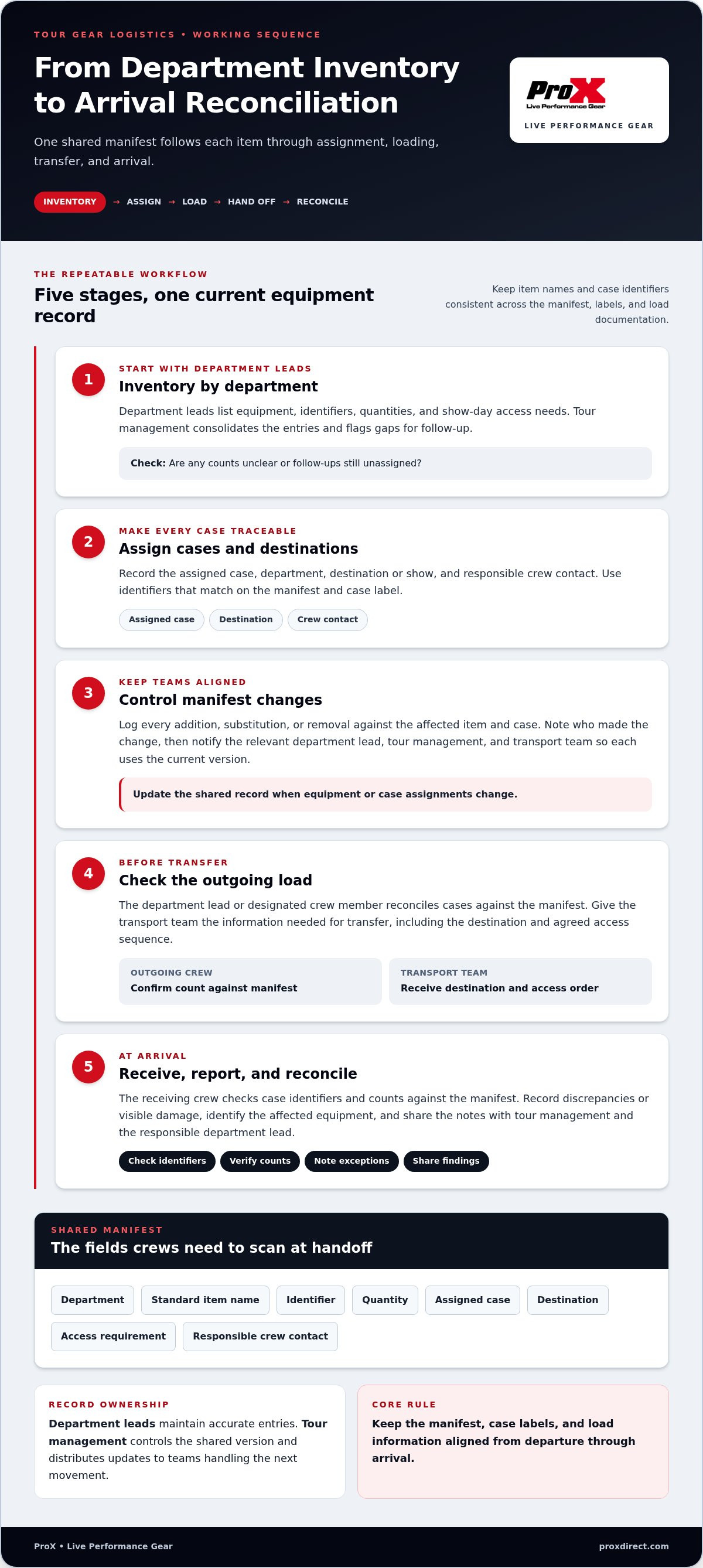
A reliable workflow connects department-level equipment records to the crew members who pack, load, transfer, and receive the cases. Use one shared manifest as the working record, with consistent item names and case identifiers across inventory sheets, labels, and load documentation. Follow each item from the initial count through arrival reconciliation.
Inventory, assign, document, load, hand off, receive, and reconcile: each stage should update the same equipment record.
- 1. Inventory by department. Department leads list equipment, identifiers, quantities, and show-day access needs. Tour management consolidates the entries and flags gaps for follow-up.
- 2. Assign cases and destinations. Record the assigned case, department, destination or show, and responsible crew contact. Use identifiers that appear consistently on the manifest and case label.
- 3. Control manifest changes. Log every addition, substitution, or removal against the affected item and case. Note who made the change and notify the relevant department lead, tour management, and transport team so they all use the current version.
- 4. Check the outgoing load. The department lead or designated crew member reconciles the cases against the manifest. Give the transport team the information needed for the transfer, including the destination and agreed access sequence.
- 5. Receive and report. At arrival, the receiving crew checks case identifiers and counts against the manifest. Record discrepancies or visible damage, identify the affected equipment, and share the notes with tour management and the responsible department lead.
How should managers organize a touring equipment manifest?
Structure the manifest so crews can scan it during a handoff. A row for each item or tracked case can include its department, standard name, identifier, quantity, assigned case, destination, access requirement, and responsible crew contact. Avoid informal renaming between departments. If a case assignment changes, update both the manifest and label information so the records stay aligned.
Department leads maintain the accuracy of their entries; tour management controls the shared version and distributes updates to the teams handling the next movement. For equipment with specific protection requirements, the touring flight case engineering guide offers further detail.
How can teams manage handoffs between venues and transport?
Assign responsibility at both ends of each transfer. Before handoff, the outgoing crew records the count and any exceptions. The receiving crew checks what arrived and notes mismatches. Keep the current manifest accessible to staff involved in the transfer, and make exception notes specific enough to identify the case and equipment. A planned case approach can support this process; explore protective case categories for different production needs.
Compare case and load strategies for different touring departments
Case and load decisions should reflect what each department transports, how its equipment is handled, and when it must be reached during setup. A shared strategy makes the manifest easier to follow, but treating every item as interchangeable can hide differences in fit and access. Keep department-specific requirements visible while coordinating them in one load plan.
| Department | Access and load focus | Handling and organization | Equipment-fit considerations |
|---|---|---|---|
| Audio | Place cases according to the audio setup sequence and planned access. | Group related equipment and identify cases clearly by function. | Department leads should confirm equipment dimensions and any specific internal organization needs. |
| Lighting | Coordinate case placement with the lighting build sequence. | Keep department and equipment identifiers consistent between labels and manifest. | Record the dimensions and handling needs of fixtures and related equipment. |
| Video | Plan access around the video setup sequence and destination. | Keep cases for related components identifiable and grouped in the load plan. | Account for the shape and dimensions of screens and other video equipment. |
| Staging | Plan case access around the order staging components are required. | Group related components and make their destination clear. | Confirm fit for truss sections and base plates. See stage truss and base plate cases. |
| General production | Keep frequently accessed support equipment reachable as required. | Separate shared or miscellaneous items from department-specific loads. | Match case dimensions and internal organization to the equipment being stored. |
What should tour managers compare across equipment departments?
Compare dimensions, handling requirements, storage arrangements, destination, and setup sequence. Department leads should own detailed fit information because they know how their equipment is configured and used. Tour management can apply those requirements to the shared load plan. Keep specialized needs distinct: a case assignment that suits one department may not suit another.
Load order affects access at the venue. If cases needed early are placed behind equipment scheduled for later setup, the crew may need to move other cases before reaching them. Grouping by department and sequencing by use makes the intended order clear to both loading and receiving teams.
When do standardized cases or custom cases make sense?
Standardized case assignments support repeatable inventories and familiar handling routines across the schedule. Custom case engineering is useful when equipment dimensions or protection requirements call for a specific fit. For truck-pack planning, use the truck-pack case range to organize equipment around the intended load.
Create a practical tour gear checklist for load-out and arrival
A reusable checklist turns the equipment plan into a consistent handoff at each venue. Keep the core checks stable, then add department-specific instructions for equipment that needs a particular handling method, storage location, or setup order. The checklist below connects the manifest to crew actions before departure, during loading, at receipt, and after arrival.
Pre-departure and loading
- Reconcile the count: Compare each department’s equipment and case quantities with the current manifest. Record unresolved discrepancies and assign them for follow-up before the load moves.
- Verify identification: Check that case labels match the production’s agreed identifiers and destination information. Note additions, substitutions, or removals in the manifest.
- Pass on handling instructions: Include information the receiving crew needs, such as department ownership, storage location, or access priority.
- Confirm load sequence: Arrange the planned order around the next venue’s setup sequence. Cases needed earlier should be accessible without moving unrelated equipment unnecessarily.
Before loading, department leads verify their equipment records, and the person overseeing the load confirms cases against those records. Give transport staff the current destination and sequence information. Keep case organization aligned with the plan, and include protective case selection in transport planning.
Receipt and post-arrival
- Check received quantities: Compare the cases and equipment received with the manifest. Match identifiers, not just general descriptions.
- Record exceptions: Document missing items, count mismatches, or visible damage through the agreed reporting process. Include the case identifier, department, and a concise description, then notify the responsible crew contact and tour management.
- Prioritize access: Stage cases according to the next setup sequence and venue layout. Keep department leads informed if access or storage arrangements differ from the plan.
- Close the record: Update the manifest with arrival counts and exception notes. Carry unresolved items forward so they remain visible at the next handoff.
Adapt the checklist to the venue’s access routes and storage areas while keeping identification and reconciliation steps consistent. Department leads can add handling checks for their equipment; tour management maintains the shared version so each crew follows the same process.
Explore protective case categories to find options for organizing a touring load.
Choose case solutions that support the touring logistics plan
Case selection should follow the equipment and production workflow. Dimensions, department ownership, handling requirements, storage conditions, and setup access all affect what a case needs to accommodate. A case that fits the equipment but complicates identification or access can add friction to the load plan. Aim for a practical match, not a universal solution or a guarantee against damage.
We offer protective case categories for production equipment, including audio, lighting, broadcast, and staging. These options can help departments organize equipment by function while keeping case assignments visible in the manifest.
How should the case approach match the production workflow?
Start with equipment dimensions and department requirements, then account for how cases will be handled, stored, and accessed. General storage cases can organize shared supplies or equipment that doesn’t require a department-specific layout. Department-specific cases can keep related equipment together, while truck-pack cases can support a planned load arrangement. Custom engineering is useful when equipment dimensions or protection needs call for a particular configuration.
Repeatability matters across multiple stops. Consistent case assignments make inventories and handling routines more familiar to crews, while clear department and destination identification helps preserve that consistency. Keep unique requirements visible rather than forcing specialized equipment into a general approach.
What information helps move from planning to case selection?
Use the touring manifest to identify what needs to be stored together, who owns it, where it is going, and when the crew needs access. Department leads should provide accurate equipment dimensions and handling requirements. Tour management can add quantities, case assignments, and access priorities so the case approach supports the actual sequence of movement and setup.
- Equipment fit: Record dimensions and note specific protection or internal organization requirements.
- Department grouping: Identify related equipment and the crew responsible for it.
- Touring workflow: Note destinations, storage arrangements, handling needs, and setup access priorities.
- Repeatability: Identify equipment and case assignments that stay consistent across stops, along with changes that require a different approach.
We engineer performance gear and offer case categories and custom engineering for different equipment and production requirements. Use the manifest and department input to guide selection, then explore our case solutions as part of your touring logistics plan.
Put a Consistent Gear Plan Into Practice
A dependable touring process connects accurate inventory to clear crew handoffs, deliberate load order, and arrival checks. Keep the manifest current, assign responsibility for counts and exceptions, and adapt case placement to each venue’s layout and setup sequence. These practices give departments a shared reference while keeping their distinct equipment and handling needs visible.
The right case approach supports that system. We offer case categories for audio, lighting, DJ, broadcast, and staging equipment, along with custom case engineering tailored to equipment dimensions and protection requirements. These options help production teams plan around the practical demands of equipment organization and movement.
Use this tour manager gear logistics guide as a framework, then refine the inventory, handoff process, and case assignments to suit your production. Explore our case solutions to find options that align with your equipment and touring workflow. A consistent plan helps the crew keep gear accounted for and accessible from stop to stop.
Frequently Asked Questions
What should a tour manager include in a gear logistics plan?
A gear logistics plan should connect equipment records with case assignments, transport movements, access requirements, and crew responsibilities. Include department, item identifier, quantity, destination, assigned case, responsible contact, and handling or setup notes. Distinguish confirmed details from open internal follow-ups. Keep the plan current as equipment is added, substituted, or removed, and share updates with the teams responsible for each transfer.
How do tour managers keep track of equipment across multiple venues?
Use a shared manifest with consistent names and identifiers to track equipment across venues. Department leads maintain their equipment details, while tour management consolidates updates and distributes the current record to crews handling each load. At departure and arrival, assigned crew members reconcile cases and quantities against the manifest. Record discrepancies and visible damage through the agreed reporting process so unresolved items remain visible at the next stop.
How should touring gear be packed for transport?
Pack touring gear in cases suited to the equipment’s dimensions, handling needs, and protection requirements. Organize related items so crews can identify contents and department ownership, and check that internal padding or inserts support the equipment’s fit. Label each case according to the production’s agreed system, then sequence the load around the next venue’s setup order. Keep cases needed early accessible and give receiving crews clear handling and placement instructions.
When should a production use custom-built cases?
Custom-built cases are useful when equipment dimensions, configuration, or protection requirements call for a specific fit. Prepare accurate measurements and describe how the equipment is handled, stored, and accessed during production. This helps shape the case around the actual gear rather than forcing specialized equipment into a general storage approach. We offer custom case engineering tailored to equipment dimensions and protection requirements, alongside department-specific case categories.
How can a tour crew reduce equipment mix-ups during handoffs?
Use the same case identifiers on labels, inventory records, and load documentation, and assign responsibility for outgoing and receiving counts. At each handoff, compare case identifiers and quantities with the current manifest rather than relying on memory or general descriptions. Record substitutions, missing items, or visible damage in the agreed reporting system, including the department and responsible contact. Keep current documentation accessible to crew members handling the transfer.
What information should be on a touring equipment manifest?
A touring equipment manifest should identify each item or tracked case by department, standard name, identifier, quantity, assigned case, destination, and responsible crew contact. Include handling instructions and access priorities when they affect loading or setup. Record additions, substitutions, and removals so everyone works from the same current information. Keep unresolved discrepancies visible and assign them for internal follow-up.
How do case choices affect touring load-in and setup?
Case choices affect how equipment is grouped, identified, handled, and accessed at a venue. Department-specific cases can keep related gear organized, while truck-pack and storage approaches can support a planned load arrangement. Loading sequence matters too: equipment needed early in setup should be accessible without unnecessary movement of other cases. Match case assignments to dimensions and department requirements, then coordinate placement with the venue layout and crew setup sequence.
Disclaimer
Any trademarks, trade names or brand names appearing herein that do not belong to ProX are the property of their respective owners and/or companies, and such appearance doesn't and shall not constitute or imply endorsement, sponsorship or recommendation by ProX.


