
The final pre-show check needs a clearly assigned lead. A rigging safety checklist for small events should be completed by a qualified rigger or stage manager before each performance or event day. The lead checks the installation, confirms the venue’s load limits, and records issues that must be resolved before the event proceeds.
Small productions still depend on accurate load information, correctly rated hardware, and competent rigging decisions. This checklist explains who leads the inspection and how the team assesses venue capacity, equipment ratings, rigger competence, and event readiness. It distinguishes visual inspection from operational verification, so the final review covers both the installed system and its performance before the audience enters.
Key Takeaways
- Match the rigging plan to the venue’s structural capacity and suspension points rather than carrying assumptions from another location.
- Use documented load calculations and a rigging plot to make overhead loads and rigging points clear to the crew.
- Check that rigging hardware is identifiable, rated for its intended use, and free of visible damage before installation.
- Assign inspection tasks according to demonstrated competence, and keep findings clear enough for the production team to act on.
- Make the final review cover connections, structural alignment, ground support, and abnormal movement or sound before the event starts.
Who is responsible for completing the pre-show safety checklist?
A qualified rigger or stage manager should lead the pre-show rigging inspection before each performance or event day. Production managers, venue engineers, automation technicians, safety managers, and qualified inspectors may contribute, depending on the event. For a high-consequence lift, one competent person should lead while a second verifies critical findings. The lead records defects, assigns corrective action, and confirms that unresolved hazards keep affected equipment out of service.
The individual leading the rigging inspection needs to understand the installed system, equipment ratings, and the venue’s requirements. OSHA 29 CFR 1926.251 covers rigging equipment used in construction in the United States, according to the Occupational Safety and Health Administration (OSHA). That construction standard does not, by itself, define every requirement for an entertainment event. Event teams must also apply the rules and procedures relevant to their work and location.
Before use, inspect the entire load path, from the venue attachment point through the suspension hardware to the supported equipment. Check trusses for bent chords, damaged welds, corrosion, deformation, missing hardware, and damaged connection points. Confirm that chain hoist capacity markings are legible, chains are in sound condition, and brakes, electrical connections, limit switches, and emergency stops function. Examine shackles for visible working load limits, correctly installed pins, undamaged threads, and deformation.
Inspect slings for cuts, abrasion, broken stitching, wire damage, chemical exposure, and heat damage. For wire rope slings, OSHA identifies 10 randomly distributed broken wires in one rope lay as a minimum removal trigger, according to the Occupational Safety and Health Administration (OSHA). Remove defective equipment from service rather than relying on a visual impression that it remains usable.
Frequency depends on the inspection type and service conditions. OSHA requires a competent person to inspect slings and their fastenings and attachments each day before use, according to the Occupational Safety and Health Administration (OSHA). For steel erection lifts, OSHA requires a qualified rigger to inspect rigging before each shift and as necessary during use, according to the Occupational Safety and Health Administration (OSHA). Periodic sling inspections should be scheduled according to service conditions and a qualified person's recommendation.
Keep three tasks distinct: inspection assesses safety before use, installation builds and sets up the system, and maintenance provides ongoing care and repair. A pre-event review should also cover temporary structures, stage platforms, ground support, connections, and venue suspension points. Outdoor teams must assess wind and weather because wind loading, rain exposure, anchoring, and bracing affect structural stability. For overhead loads, confirm each connection and install a secondary safety bond that independently secures the load if its primary attachment fails.
- Assign one lead: Record the responsible person and any second-person verification for critical findings.
- Check each component: Review trusses, hoists, connectors, slings, structures, and venue attachment points before use.
- Match inspection frequency to use: Apply daily pre-use checks and service-based periodic sling inspections.
- Document and resolve defects: Keep unsafe equipment out of service until corrective action is complete.
Venue structural capacity and overhead load limits
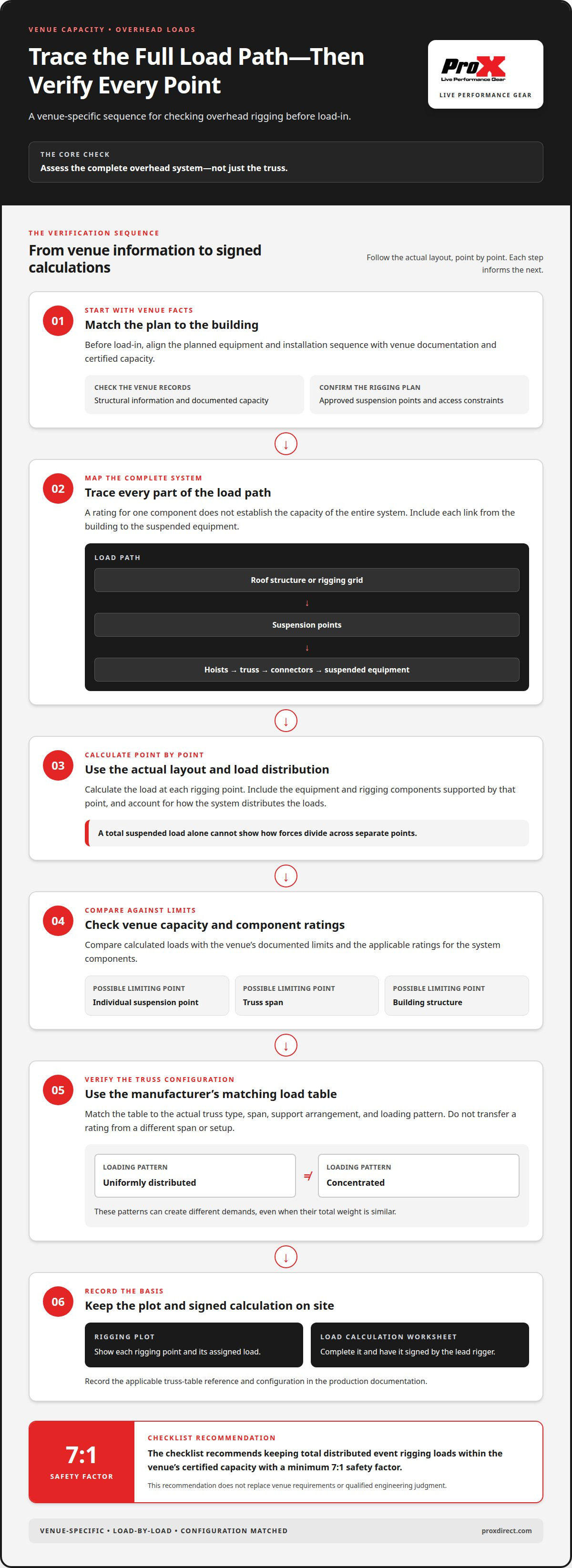
Venue and building requirements depend on the structure, approved suspension points, local rules, and the production’s rigging plan. Before load-in, align the planned equipment and installation sequence with venue documentation and certified capacity. Keep a rigging plot on site, showing each rigging point and its assigned load.
Use the venue’s structural information to assess the complete overhead system, not just the truss. The load path includes the roof structure or rigging grid, suspension points, hoists, truss, connectors, and suspended equipment. A load rating for one component does not establish the capacity of the entire system. The limiting point may be an individual suspension point, a truss span, or the building structure.
Calculate the loads at each rigging point and account for how the system distributes them. Include the equipment and rigging components supported by each point, then compare calculated loads with the venue’s documented limits. The checklist calls for a completed load calculation worksheet signed by the lead rigger. It recommends keeping total distributed event rigging loads within the venue’s certified capacity with a minimum 7:1 safety factor. Treat that as the checklist’s stated recommendation, not a substitute for venue requirements or qualified engineering judgment.
Truss ratings depend on the manufacturer’s load tables and the configurations they describe. Match the table to the actual truss type, span, support arrangement, and loading pattern. A uniformly distributed load and a concentrated load can create different demands, even when their total weight is similar. Don’t transfer a rating from a different span or setup. Record the applicable table reference and configuration in the production documentation.
Safe working load is the permitted working load assigned to a component or system in its specified configuration. Rigging load calculations determine what each point and component will carry, then compare those values with applicable ratings and venue limits. Calculations must reflect the actual layout; a total suspended load alone cannot show how forces divide across separate points.
- Before load-in: Match the rigging plot to venue drawings, suspension points, and access constraints.
- At each point: Record the planned load and compare it with the venue’s documented limit.
- For each truss span: Apply the manufacturer’s table for the installed configuration and load pattern.
- At sign-off: Keep the completed worksheet with the plot and lead rigger’s signature.
Venue-specific errors often begin when a touring production reuses a previous plan without accounting for different roof structures, grids, point locations, or installation sequences. A dedicated plot for each venue makes those differences visible. Reconcile it with the inventory and final equipment positions before lifting: moving a fixture or changing a suspended load can alter point loads and distribution. If the layout changes, revise the calculation and plot before proceeding.
Rigging identification and rated capacity
Before adding a component to an overhead system, identify its type, rating, and intended use. Read capacity markings on chain hoist motors and working load limits on shackles. Match each item to the rigging plan and its position in the load path. A rating is useful only when the equipment’s identity is legible and its configuration matches the planned application.
Check the hoist’s capacity marking against its assigned load, then confirm the equipment has a current inspection and a load-sensing brake. Inspect shackles and connectors for visible working load limits, correctly installed pins, undamaged threads, and deformation. A pin that is not seated correctly can compromise the connection, even when the shackle’s marked limit appears adequate.
Use a consistent identification method across the production inventory. Record each hoist, connector, and other load-bearing component by its marked identifier and rating, then link that record to the rigging plot. If a label is unreadable, the component cannot be reliably matched to its rating. Keep unidentified or damaged hardware out of the planned system until a qualified person resolves its status.
Venue suitability involves two separate capacity questions. The venue’s safe occupancy capacity concerns people, while overhead rigging capacity concerns structural points and suspended equipment. One cannot establish the other. For example, a festival venue’s permitted audience count does not tell the crew how much load a roof point can carry. Use the venue’s structural documentation for overhead limits and applicable occupancy information for audience planning.
Fall-protection anchor points require their own rating check. The checklist specifies a minimum rating of 5,000 lbs for these points. Keep that requirement distinct from equipment suspension ratings; an anchor intended for fall protection is not automatically an approved suspension point. The rigging plan should identify the intended function of each point and prevent substitutions based only on location or appearance.
- Identify: Read the capacity marking and record the component’s identity.
- Match: Confirm the rating and configuration suit the assigned position.
- Inspect: Look for damaged threads, deformation, insecure pins, and unreadable markings.
- Separate: Distinguish occupancy limits, suspension capacities, and fall-protection anchor ratings.
Use manufacturer load tables for the exact truss type and installed arrangement; a rating from another configuration does not establish capacity. Keep table references with the equipment documentation. During load-in, stop and reassess whenever a substitute component, different hoist, or revised truss arrangement changes the marked rating or configuration. This connects the documented capacity to the hardware actually installed.
Competence and rigger certification
A rigger’s competence is demonstrated through task-specific knowledge, sound judgment, and the ability to recognize unsafe conditions. Assign inspection and sign-off responsibilities to someone who understands the equipment, work method, and production hazards. A certificate can document assessed knowledge, but the event still needs clear responsibility for each technical decision.
ETCP describes personnel certification as a voluntary process through which a nongovernmental organization recognizes an individual’s knowledge and skills. Certification can provide a documented credential, while practical competence also depends on the assigned work. Someone assessing a chain hoist, for example, needs to understand its markings, controls, and inspection criteria. The person reviewing a venue rigging plan needs relevant structural and load-planning knowledge.
Match the lead rigger’s experience to the planned system. A straightforward ground-supported setup and a complex overhead installation require different technical oversight. Before work starts, assign who reviews the rigging plot, inspects installed equipment, records defects, and has authority to stop work. Keep those assignments in the production record so crew members know whom to notify when conditions change.
Use a defined handover between the lead rigger and other departments. The venue engineer can provide structural information, the production manager can communicate schedule and equipment changes, and the stage manager can coordinate the final readiness report. These roles support the rigger’s decisions but do not replace the designated technical lead. If a component, load position, or installation method changes, update relevant records and have the responsible person reassess the work.
- Confirm scope: Match each person’s assigned task to their training and demonstrated experience.
- Identify authority: Record who leads the inspection and who can halt affected work.
- Document findings: Note defects, corrective action, and the person who closes each item.
- Communicate changes: Share revisions to equipment, schedule, or installation method with the rigging team.
Legal and training requirements vary by jurisdiction and job context. California Assembly Bill No. 1775 sets training, certification, and workforce requirements for employees involved in setting up, operating, or dismantling live events at public venues for entertainment vendors. The OSHA 10-hour general entertainment safety training is identified as one option for meeting the training requirement described for California live-event vendor employees. Apply the requirement to its stated context rather than assuming it governs every event or crew.
A useful competence record identifies the lead rigger, assigned inspection duties, relevant training or certification, and sign-off responsibilities. It should also show how findings were communicated to the production team. For a high-consequence lift, assign a second competent person to verify critical findings. This independent review adds a documented cross-check without transferring accountability from the lead rigger.
Final pre-event safety confirmation
Complete a final walk-through after installation and before the audience enters. The lead rigger verifies the built system against the rigging plot, load calculations, and venue limits. Inspection confirms correct installation; operational verification checks whether the system behaves as expected. Record the result, responsible personnel, and any corrective action before the event proceeds.
Start with a visual review of the complete structure. Check trusses for bent chords, damaged welds, corrosion, missing hardware, deformation, and damaged connection points. Confirm that each connection is seated and secured, then compare installed equipment positions with the approved plot. A fixture moved during focusing can change the loading, so repeat the review when positions or equipment change.
Ground support needs its own confirmation. Verify that the ground is flat, solid, and stable, then check that base plates make full contact. Confirm adjustable legs are level and locked. Uneven ground can change support conditions; missing pins or loose bolts can compromise connections. Correct these issues before overhead loading continues, rather than treating them as cosmetic defects.
- Recheck connections: Confirm pins, bolts, clamps, and hooks are secured, because one loose connection affects the load path.
- Verify overhead loads: Compare installed loads with approved limits and confirm secondary safety bonds secure significant overhead loads.
- Inspect lighting: Check that fixtures are mounted securely, clamps and hooks are locked, and cables have no excessive tension.
- Review the structure: Confirm alignment and look for abnormal movement or sound before operation.
- Control cable routes: Manage electrical cables to reduce trip hazards around work and audience areas.
For outdoor events, include current wind conditions and weather exposure in the final decision. Confirm that planned bracing, anchoring or ballast, and rain protection are in place for the installed structure. Wind can affect temporary structures and overhead systems; changing conditions require the responsible personnel to reassess the setup before operation.
Make the final confirmation a documented hold point, not an informal glance. The lead rigger records completed checks, open defects, corrective work, and who confirmed each resolution. If a defect remains, keep the affected equipment out of operation until it is addressed. Communicate the status to the production team so stage management, operators, and other personnel share the same confirmed information.
Before opening, reconcile the final installed configuration with the planning documents. Confirm actual loads, structural alignment, connection security, and ground support. Then verify system behavior during controlled operation, watching for abnormal sound or movement. This final comparison between the plan and installed system gives the team a clear decision point: proceed only when documented checks are complete and identified issues are resolved.
ProX
ProX supports event crews with cases and workstations for transporting and organizing production equipment. Once the rigging plan, venue limits, and inspection responsibilities are established, consider how equipment moves between storage, load-in, and the work area. Santosom Cases, TruckPaX™ Truck Pack Cases, and Utility/Storage Cases serve different equipment and storage needs, while Workstations support organized production setups. These products complement event preparation; they don’t replace qualified rigging judgment, venue documentation, or pre-show inspections. Contact ProX to discuss case and workstation options for your production equipment.
Carry the plan into your next production
Make the checklist part of the production’s working documents, alongside the equipment inventory and venue-specific plan. This gives the crew a consistent reference when changes occur during load-in, rehearsal, or setup. Keep responsibility for structural decisions with qualified rigging personnel, and treat equipment transport and organization as separate parts of the workflow.
A rigging safety checklist for small events is most useful when it reflects the actual venue, installed configuration, and crew responsibilities. Review the process after each event, note where handovers or documentation could be clearer, and incorporate those improvements into the next production plan.
ProX offers equipment cases and storage options for event production gear. For help considering case options alongside your equipment workflow, contact ProX about production equipment cases. A well-organized equipment plan supports a more deliberate setup from load-in through the final inspection.
Frequently Asked Questions
Are paper checklists still acceptable?
Yes. A paper checklist can support an inspection if it is legible, completed at the event, and retained with the production records. Identify the event, inspection time, responsible person, findings, and corrective actions. Keep one controlled version available to the crew so departments aren’t working from different copies. A digital form can serve the same purpose; the key is clear documentation and access to the current record.
How often should stage rigging equipment be inspected?
Inspect rigging before each event and follow equipment-specific inspection intervals. The Occupational Safety and Health Administration (OSHA) requires a competent person to inspect slings and their attachments each day before use. Periodic sling inspections in normal service occur at least annually, in severe service at least monthly, and in special service according to a qualified person’s recommendation, commonly at least quarterly. More frequent checks may be needed when service conditions change.
Should inspections continue after rehearsals begin?
Yes. Rehearsal activity can change equipment positions, cable routes, or operating conditions, so inspect affected areas again after changes. During system operation, watch for unusual movement, sound, or changes in alignment. Real-time load monitoring can also provide visibility during testing, rehearsals, and performances. Record and communicate new findings to the responsible rigging personnel, and pause the affected operation while they assess any safety concern.
What should never be skipped?
Never skip the review of the load path, critical connections, and equipment condition before use. A single unsecured pin, damaged sling, or load placed beyond its approved position can invalidate earlier checks. Confirm that significant overhead loads have secondary safety bonds and that the rigging team knows who can stop work. Document defects and corrective action instead of relying on verbal confirmation alone.
What should a pre-event rigging safety checklist include for small events?
Include the event-specific rigging plot, load calculation record, venue limits, equipment inventory, and named inspection lead. Add checks for truss condition, hoist function, connectors, slings, ground support, and suspended equipment. Record each finding, its status, and who resolved it. Include site conditions such as cable routes and, outdoors, weather-related controls. The checklist should match the installed configuration, not a generic setup from another event.
Who is qualified to inspect and install event rigging?
A qualified rigger or competent person should perform checks within their demonstrated knowledge and assigned responsibilities. Installation and inspection are distinct tasks: the person building a system must understand its design and connections, while the inspector must recognize defects and assess the installed work. ETCP describes personnel certification as voluntary recognition of an individual’s knowledge and skills. Certification is useful documentation, but the task still requires appropriate competence.
What are OSHA rules for temporary event rigging and overhead loads?
OSHA 29 CFR 1926.251 covers rigging equipment used in construction in the United States, according to the Occupational Safety and Health Administration (OSHA). Its relevance depends on the work context; it isn’t a universal event-rigging code. OSHA also requires qualified riggers to inspect rigging before each shift for steel erection lifts. Identify which work rules apply to the activity, then follow the venue’s requirements and applicable local regulations.
What are common event rigging hazards and failure risks?
Common risks include uneven ground, loose bolts, missing pins, overloaded truss spans, weak suspension points, and unaddressed wind loads. Each can undermine a different part of the system: support, connection, capacity, or stability. Outdoor conditions can change, while substitutions during load-in can alter the planned setup. Track changes, inspect affected components, and keep the event team informed about hazards and unresolved corrective actions.
Disclaimer
Any trademarks, trade names or brand names appearing herein that do not belong to ProX are the property of their respective owners and/or companies, and such appearance doesn't and shall not constitute or imply endorsement, sponsorship or recommendation by ProX.


