

The dock is rarely the place to solve a workflow problem. When access windows are tight or equipment arrives out of sequence, crews lose time moving cases aside, clarifying responsibilities, and handling the same gear more than once. Reducing load-in and load-out time starts before the first item reaches the venue.
A fast turnaround matters, but a rushed breakdown can leave gear unaccounted for or poorly packed. The answer isn’t simply to move faster. A clear sequence, defined crew roles, and consistent equipment locations keep work moving without sacrificing control.
This guide shows how to identify where turnaround time is being lost and build a repeatable process around venue access, crew coordination, and equipment flow. You’ll find practical steps for planning the dock sequence, assigning responsibilities, packing gear systematically, and choosing cases and storage methods suited to your equipment and protection needs.
Key Takeaways
- Separate active handling from waiting and access delays to pinpoint where turnaround time is being lost.
- Assign a lead to each event phase and handoff so responsibilities stay clear from arrival through venue exit.
- Choose between sequencing changes and standardized equipment packing based on your crew, venue, and accountability needs.
- Use a consistent breakdown sequence that follows the setup plan and verifies each equipment group before it leaves.
- Reducing load-in and load-out time can start with equipment that suits the production’s handling needs, including cases engineered for specific dimensions or protection requirements.
Reducing Load-In and Load-Out Time Starts with Finding the Delays
Event load-in is the movement of production equipment into a venue. Load-out is its movement back out after the event. The work may involve cases, staging, truss, sound, and lighting equipment, all moving along routes shaped by the venue and production plan. Live event support encompasses various technical and logistical elements. These activities share access points and handoffs, so a delay in one area can interrupt the flow of equipment elsewhere.
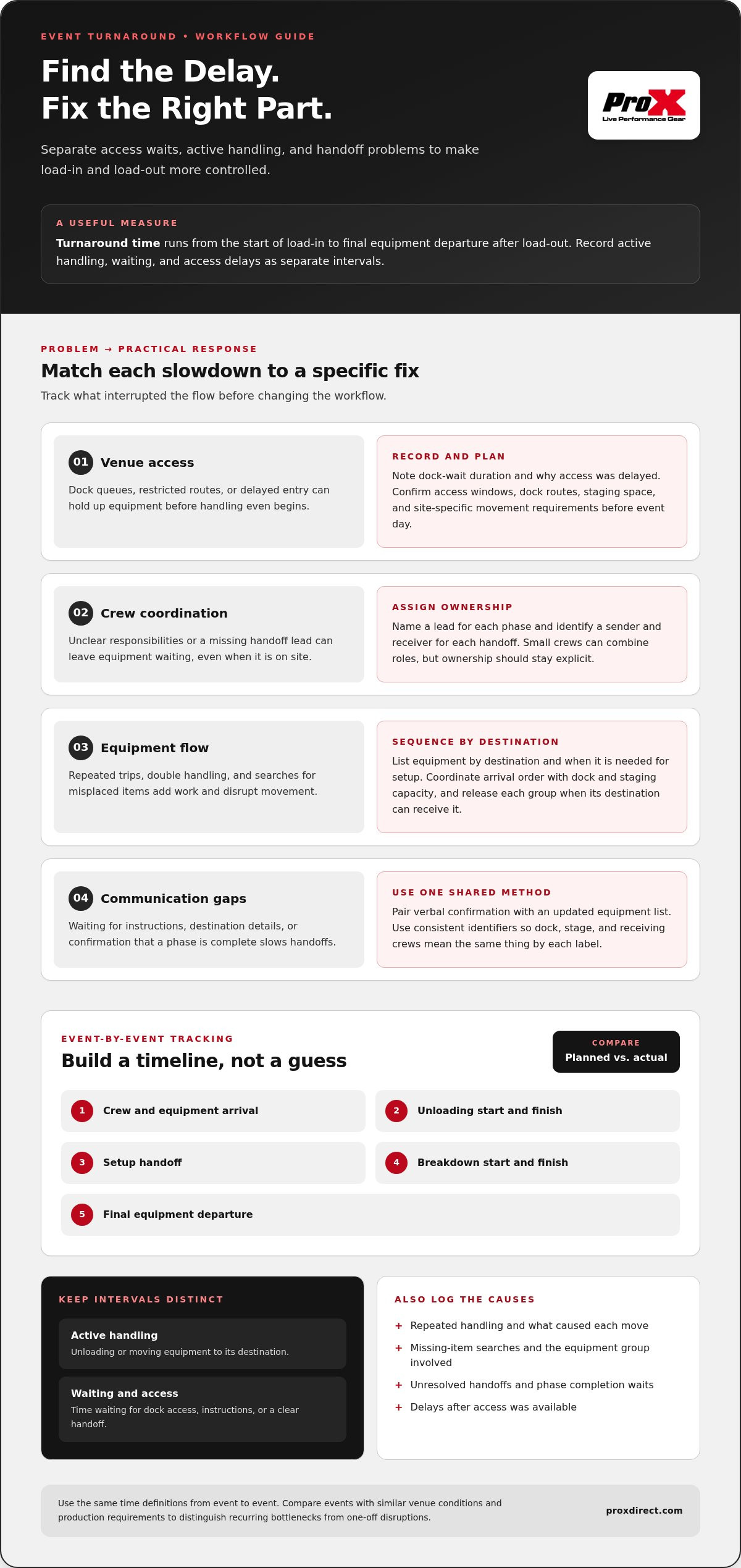
Measure the full turnaround, but don’t treat it as one block of labor. Separate active handling, such as unloading or moving gear to its destination, from time spent waiting for dock access, instructions, or a clear handoff. This is event logistics, not electrical load shifting, which means moving electricity consumption between time periods.
Which delays consume the most turnaround time?
Start a timeline for each event. Record crew and equipment arrival, unloading start and finish, setup handoff, breakdown start and finish, and final departure. Compare planned and actual times. This helps show whether a late start came from venue access or from crew, equipment, or communication issues after access was available.
- Venue access: Note dock queues, restricted routes, and delays entering the work area.
- Crew coordination: Record pauses caused by unclear responsibilities or an unavailable handoff lead.
- Equipment flow: Track repeated trips, equipment moved more than once, and searches for misplaced items.
- Communication: Log waits for instructions, destination details, or confirmation that a phase is complete.
Compare events with similar venue conditions and production requirements. Planned-versus-actual timing across comparable events can reveal recurring bottlenecks, while helping you distinguish them from one-off disruptions. This is more useful than relying on an industry benchmark that may not fit your crew or site.
What should a production team measure?
Track each phase separately instead of recording only the total time. A long load-in, for example, may include a short unloading period but a substantial wait before equipment can move from the dock. Without separate timestamps, those causes look identical in the final duration, and the team may change the wrong part of its process.
- Record the start and finish of unloading, setup handoff, breakdown, and departure.
- Note dock-wait duration and the reason access was delayed.
- Count repeated handling and document what caused each move.
- Log missing-item searches and unresolved handoffs, including the equipment group involved.
For production tracking, turnaround time is the elapsed period from the start of load-in to final equipment departure after load-out, with active handling, waiting, and access delays recorded as separate intervals. Use the same definitions from event to event. Consistent records make it easier to locate avoidable delays and choose a targeted workflow change.
Plan the Crew, Venue Access, and Equipment Sequence Before Event Day
A schedule becomes useful on site when each phase has an owner, a defined start condition, and a clear handoff. Break the event plan into named phases, such as dock intake, equipment movement, stage placement, technical setup, breakdown, and departure. For each phase, identify who directs the work and what must be complete before the next crew or vendor takes over. This prevents a common delay: equipment is present, but no one is assigned or authorized to move it.
Confirm venue access windows and instructions with the appropriate venue team before event day. Document the loading-dock route, available staging space, equipment or vehicle limits, and site-specific movement requirements. Share the plan with incoming crews and vendors so arrival order and access expectations are clear. Case selection belongs in this plan too: a flight case engineering guide can help teams consider how equipment protection and case configuration relate to handling needs.
Assign roles and handoffs clearly
Name a sender and receiver for every handoff. One person can direct dock intake, while designated leads oversee equipment movement, stage placement, and final checks. A small crew can combine roles, but ownership should still be explicit. Choose one handoff method, such as a verbal confirmation paired with an updated equipment list, so crews and venue staff know what has moved and what remains outstanding.
- Dock intake: Direct incoming equipment to the correct holding area or destination.
- Equipment movement: Coordinate the route and order of movement through the venue.
- Stage placement: Confirm placement against the production plan before technical setup proceeds.
- Final checks: Account for equipment groups during the transition to the next phase.
Use concise, consistent identifiers on the equipment list and cases. A destination or department label should mean the same thing to the dock lead, stage crew, and person receiving the handoff. Avoid changing names between teams; inconsistent terms make the plan harder to follow under time pressure.
Build an order of movement around setup dependencies
List equipment by destination and by the point in setup when it is needed. Don’t bury items required to establish the stage or work area behind gear that will be used later. At the same time, avoid sending equipment into a space that cannot hold it. Coordinate arrival order with the venue’s dock and staging capacity, then release each group when its destination can receive it.
- Confirm access, routes, space, and site instructions.
- Assign leads for each movement phase and handoff.
- Stage equipment by destination and setup dependency.
- Release each equipment group when its receiving area is available.
This sequence makes reducing load-in and load-out time a planning task, not an instruction to rush. If you’re reviewing how cases support equipment handling, explore protective equipment cases as part of the broader movement plan.
Compare Workflow Changes with Equipment Organization
Once the main friction points are visible, compare changes to the work sequence with changes to how equipment is packed and identified. A revised movement order may reduce congestion without changing cases. Standardized packing may cut searches and repeated unpacking, but it won’t resolve an unclear handoff or a restricted dock route. Choose the change that addresses the delay your team has actually recorded.
Assess each option against four conditions: what setup depends on it, whether the crew knows the process, what the venue can accommodate, and how the team will account for each equipment group. A useful comparison considers both the benefit and the limitation instead of assuming one change will solve every delay.
- Adjust movement sequence. Use this when equipment arrives out of order or blocks access to items needed first. It can improve flow without changing packing, but it relies on accurate setup priorities and coordination with the venue.
- Standardize case layouts. Use this when crews repeatedly search for equipment or unpack mixed groups to find an item. Consistent grouping supports faster identification, but requires crew familiarity and a packing method that suits the production.
- Separate loads by destination. Use this when departments or production areas receive equipment at different times. This can reduce unnecessary movement through the venue, but depends on clear identifiers and suitable staging space.
Cases support organized movement by keeping equipment grouped and identifiable. They can’t replace assigned roles, access planning, or confirmed handoffs. To evaluate a change, compare the relevant phase timings and records before and after applying it at comparable events. Track whether searches, repeated handling, or waits declined, and note any new constraints. This makes reducing load-in and load-out time a process decision based on observed performance, not an assumption about equipment.
When do standardized case layouts help?
Consistent case layouts are useful when the same equipment group travels and gets handled together across events. Dedicated groupings can reduce searches and prevent crews from opening several cases to locate one item. Mixed loads may suit a compact movement plan when items share a destination and setup order, but they can complicate access if gear needed first is packed behind later-use items. Consider professional case options when planning consistent equipment groupings.
When should staging and truss movement be planned separately?
Plan bulky structural components as their own movement group rather than treating them like smaller production equipment. Their destinations and assembly sequence may differ, affecting where they should be staged and who receives each handoff. Keep the plan specific to the venue and production, and account for site instructions and equipment limits. For additional context, see the stage truss and base plate case guide.
Use a Repeatable Load-In and Load-Out Procedure
A repeatable procedure gives crew members the same operating sequence while leaving room for venue-specific instructions. Use a short checklist at each phase transition, such as dock intake to equipment movement, setup to show operation, and breakdown to departure. The checklist should state who confirms the transition, what needs to be accounted for, and whether the next area can receive equipment.
Keep routes clear and avoid competing movement through a narrow access point. If dock space or staging areas become congested, pause the affected movement and have the designated lead resolve the conflict. This is more controlled than letting separate teams improvise routes or relocate equipment without updating the plan.
A practical load-in sequence
Begin with a crew briefing. Review roles, access routes, movement priorities, communication methods, and the handoff process. Keep the briefing tied to the day’s plan. If a route or access instruction changes, tell the affected teams before they move equipment.
- Confirm access. The lead verifies that the crew can use the planned route and that the destination or staging area is available.
- Move by destination. Release equipment groups in the agreed order. Don’t send items into an area that cannot receive or stage them.
- Confirm receipt. The receiving lead acknowledges each group and notes exceptions, such as a missing item or a case sent to the wrong location.
- Record delays. Note when a pause occurs and its cause, such as a route conflict, unavailable space, or unresolved handoff.
These records help distinguish a one-time interruption from a recurring site condition. Use them to adjust the next event’s schedule or movement order instead of relying on memory after the crew has left.
A practical load-out sequence
Before breakdown begins, confirm the order in which equipment will leave its working position and where each group is going. Reverse the setup plan where practical, while accounting for breakdown dependencies. Some gear may need to remain in place until another task is complete. Assign someone to verify each packed group, loose accessories, and shared equipment before it moves to the dock or another designated area.
- Confirm the breakdown order. Identify what can be packed and moved first without disrupting remaining work.
- Check each group. Match packed equipment and accessories against the production inventory, recording exceptions immediately.
- Complete the handoff. Confirm that each group reaches its assigned destination and that the venue area is clear according to site instructions.
- Close the inventory. Have the responsible lead resolve outstanding items before the crew departs.
A consistent checklist supports reducing load-in and load-out time by limiting avoidable pauses while preserving equipment accountability. If you’re reviewing case options for your handling plan, explore cases for live-production equipment.
Match Equipment and Case Planning to Faster Event Turnarounds
Use timing records and handoff notes to connect workflow problems with equipment needs. If crews repeatedly search for the same items, consider whether clearer grouping or case organization would help. If equipment is moved more than once because it arrives before its destination is available, address the movement plan first. Cases can support consistent handling, but they don’t replace a clear sequence, assigned responsibility, or venue coordination.
Choose equipment support based on your production’s inventory, movement pattern, and destination-based packing plan. A case should suit the equipment it protects and the way that group enters the setup sequence. For gear with specific dimensions or protection needs, consider custom case engineering. No case or packing change guarantees a fixed time saving, so assess the effect using the same phase records you used to identify the original delay.
Select equipment support around the production workflow
Match case categories to your inventory, such as microphone, lighting, speaker, mixer, or AV equipment cases. Keep groups that share a destination or setup phase together when that arrangement makes identification and handoff easier. If your production uses staging or truss, include those components in the relevant movement phase and consider suitable case categories for them. Avoid adding equipment or handling assumptions that aren’t part of the event plan.
Case selection works best when it reflects how the crew will access, identify, and account for each group. Consistent organization can support reducing load-in and load-out time by limiting unnecessary searches and handling. The result depends on the workflow, crew familiarity, and venue conditions.
Turn the improvement plan into a next step
Review your timing records and identify the most repeated or avoidable source of delay. Choose one workflow adjustment, such as changing the release order, and one equipment-organization adjustment, such as grouping cases by destination. Evaluate both at the next comparable event. Record the same phase timings and exceptions, then keep the changes that improve flow without weakening equipment accountability.
- Workflow change: Adjust a documented handoff, access sequence, or movement priority.
- Organization change: Standardize the grouping or identification of a specific equipment set.
- Evaluation: Compare phase timings, repeated handling, searches, and unresolved handoffs.
We offer production cases, staging and truss-related cases, and other live-production equipment through a worldwide dealer network. Use your workflow findings to guide the categories you review, then explore professional production equipment through the dealer network.
Put the Next Turnaround Plan into Practice
Choose one recurring delay from your records and make the next event a controlled test. Change one part of the workflow, such as a handoff or movement order, and track the same phase timings afterward. Keep equipment accountability intact while assessing whether the adjustment improved the process. This gives the crew a clear basis for deciding what to retain, refine, or test next.
For equipment that supports organized production handling, choose categories suited to your gear and movement plan. We have manufactured cases since 1984 for the demands of live events. The aim is not speed at any cost. It’s a repeatable operation that moves equipment efficiently while keeping roles, routes, and inventory under control.
Explore professional production equipment and find options that fit your production needs. With a measured process and the right equipment plan, reducing load-in and load-out time becomes a practical goal for your next event.
Frequently Asked Questions
How much buffer time should an event load-in schedule include?
Set buffer time according to access uncertainty and timing records from comparable events, rather than using a fixed industry figure. If previous load-ins show that dock access varies or a venue route is regularly shared, build that observed variability into the schedule. Keep the buffer visible as contingency, not unassigned working time. Review it after the event: consistently unused buffer may allow an adjustment, while repeated overruns point to a planning issue.
How can a crew track equipment during load-out?
Use an inventory organized by equipment group, with a named person responsible for checking each group as it is packed and moved. Match identifiers on the list to those on cases or equipment, then mark each group as packed, transferred, and accounted for at its destination. Record exceptions immediately, including a loose item or a case separated from its assigned group. Resolve discrepancies before the crew closes the inventory.
Does labeling cases help reduce load-in and load-out delays?
Yes. Clear, consistent labels help crew members identify a case’s destination or equipment group without opening it or asking for clarification. Use the same terms on labels, the inventory, and the event movement plan. For example, a department name and destination can distinguish cases that look similar but need to go to different work areas. Labeling supports reducing load-in and load-out time, but works best alongside an accountable handoff.
What should be packed last during event load-out?
Pack items last if the crew still needs them to complete breakdown, verify equipment, or coordinate the final venue handoff. This may include tools required for remaining disassembly, items used for final checks, and communication equipment needed by the crew lead. Identify these items before the event ends and keep them accessible until their task is complete. Then check them into their assigned equipment group rather than leaving them loose.
Can equipment be pre-rigged before it reaches the venue?
Yes, some equipment can be assembled or configured before arrival if the production design, venue requirements, and movement plan support it. Identify which tasks can be completed offsite, which must happen at the venue, and how each prepared group will be handled on arrival. Confirm that pre-rigging won’t obstruct access to other equipment or complicate the planned setup sequence. Keep the plan specific to the equipment and production.
How can a small crew reduce repeated trips between the dock and stage?
Group equipment by destination and dispatch it in an order that matches setup needs. Before a trip, check whether other items for the same area can move together without blocking access or delaying a higher-priority task. Avoid mixing groups that need to be separated again at the stage. Clear identifiers and a designated receiver at the destination help prevent backtracking to find where equipment belongs.
Disclaimer
Any trademarks, trade names or brand names appearing herein that do not belong to ProX are the property of their respective owners and/or companies, and such appearance doesn't and shall not constitute or imply endorsement, sponsorship or recommendation by ProX.


