

The best way to convince your band to buy road cases is to start with the equipment everyone depends on, not with a sales pitch. If you’re figuring out how to convince your band to buy road cases, you may already be hearing the objections: the budget is tight, some equipment belongs to individual members, and the benefit can feel less urgent than the next rehearsal or recording expense. Those concerns are reasonable. Protection makes the most sense when it relates to the gear your band transports most and the handling it experiences between venues, vehicles, and storage.
You don’t have to case every item at once. Start by identifying which gear travels often, how it’s carried and stored, and what the band would need to do if it were damaged. Then agree on priorities, ownership, and a fair way to share the cost. This guide explains how to make the case with clear reasoning, prioritize equipment, divide responsibilities, and choose case types that fit your gear and routine.
Key Takeaways
- Connect transport and storage risks to the equipment your band relies on.
- Compare case options with your band’s routine, including structure, carrying needs, and storage space.
- Rank equipment by travel frequency, handling, and practical importance before deciding what to protect first.
- Make how to convince your band to buy road cases a practical discussion about priorities, shared responsibilities, and a fair purchasing plan.
- Match your equipment list to relevant case categories, and consider custom-built cases when gear needs a tailored fit.
Why Road Cases Matter to a Band Beyond Preventing Visible Damage
One band member may see cases as necessary protection, while another sees them as an expense competing with rehearsal space, recording time, or equipment upgrades. Make the conversation specific to how the band moves its gear. Repeated loading, unloading, vehicle transport, and storage create handling demands that a guitar or mixer may not face at home.
Damage isn’t always obvious. A scuffed exterior is easy to spot, but the bigger concern is whether a shared mixer, amplifier, or microphone will be available and in working condition when the band needs it. If equipment needs attention, the group may have to adjust a rehearsal or show plan while deciding who arranges a repair or replacement. A case can help manage handling risks, but it can’t guarantee equipment won’t be damaged.
Think of cases as a risk-management decision, not a promise of damage-free transport. A general explanation of flight cases describes their purpose and construction. For a band, the practical question is whether a case suits an item’s regular journey. Browse the range of equipment case categories to connect the discussion to the gear your band transports. Not every item needs the same solution.
Which band equipment faces the most handling?
Start with instruments, amplifiers, mixers, microphones, and other equipment that regularly moves between storage, a vehicle, and a venue. For each item, note who owns and maintains it, and whether the band depends on it as shared equipment. A member’s personal instrument may call for an individual decision, while a band-owned mixer may require group agreement.
Map the route, not just the destination. Note where each item is carried, placed in the vehicle, stacked with other gear, and unloaded. Record who handles it at each stage. This helps distinguish frequently handled equipment from items that travel rarely, and gives the band specific examples when discussing how to convince your band to buy road cases.
Why the band’s current transport routine matters
An item moved occasionally for a recording session has a different handling pattern from one loaded and unloaded for regular rehearsals or gigs. Neither pattern automatically calls for a case. Look at the band’s actual routine: how often equipment travels, how it’s secured or stacked, and whether the same people handle it each time.
Use what the group has observed, not an unsupported damage statistic. Has equipment been knocked during a load-in? Does gear sit uncovered in a shared storage area? Has the band changed plans because equipment needed attention? Record those events without overstating what caused them. Specific examples of your handling routine make the discussion fairer and help the band decide which risks deserve attention first.
How to Answer the Objection That Cases Are an Unnecessary Expense
A case is a real budget item, and the band may have competing needs. A useful discussion acknowledges that constraint instead of insisting every piece of equipment needs its own case. Ask whether a particular case is a higher priority than an upgrade, accessory, or other shared expense right now.
Compare the decision with the band’s own experience. Has equipment needed repair after a move? Has a member had to replace an item, rearrange a load, or change plans because gear wasn’t protected or easy to handle? These examples don’t prove a case would have prevented the problem. They do show which equipment and transport situations the band should consider. For background on case types and construction, consult Road Cases: A Complete Guide, then bring the discussion back to your band’s specific needs.
Be candid about trade-offs. Cases take up storage space, add bulk, and may require extra handling during loading and setup. In return, they provide a structured enclosure for equipment in transit and storage. The right balance depends on how an item travels, how often it moves, and whether the band can manage the added size and handling.
Build a band-specific case for protection
Before making a recommendation, ask bandmates to recall transport problems, near misses, repairs, and recurring handling concerns. Connect each example to an item: a mixer stacked with other gear, an amplifier carried through a crowded load-in, or microphones kept loose among unrelated equipment. Separate what the group observed from what it assumes. This makes the discussion concrete without relying on generic claims or invented damage rates.
Make the budget discussion concrete without overpromising
Compare potential case purchases with the band’s other priorities. Separate essential equipment needs from optional upgrades and accessories, then rank the items the group has identified as concerns. If several items merit protection, discuss them in stages rather than treating the decision as an all-or-nothing purchase. A practical plan might start with shared gear used for regular performances, while personal equipment remains the owner’s responsibility.
Agree on who pays and who owns each case before committing. The band could use shared funds for shared equipment, split a purchase among the members who use it, or have an individual owner pay for a case for personal gear. Record the agreement so responsibility stays clear if membership or equipment use changes. A case is a considered risk-management choice, not guaranteed insurance against damage or loss. That distinction keeps the conversation credible and helps answer how to convince your band to buy road cases without overstating the outcome.
Once the band has identified its priorities, compare them with relevant equipment case categories to see how available options relate to the gear under discussion.
Road Cases, Soft Bags, and Other Options: Compare by Gear and Use
No single transport format suits every item in a band’s inventory. A guitar carried by its owner, a mixer moved between venues, and equipment stored assembled in a rack have different handling patterns. Compare options against the route, transport frequency, storage space, and how the gear is handled. The goal is to choose a suitable balance of structure and convenience, not the same solution for everything.
These are general comparisons, not guarantees of how an option will perform. Use them to discuss actual equipment and handling conditions before deciding.
Match protection format to the equipment
Instruments are often moved individually, while rack-mounted audio equipment may travel together or stay assembled between events. Consider whether gear is carried by hand, packed with other items, or stored in the same configuration between uses. For rack equipment, compare the band’s setup with amplifier rack case options. The right format depends on fit and routine, not just the equipment label.
Personal instruments and shared audio equipment may also have different owners and handling responsibilities. Make that distinction explicit. If equipment needs a tailored fit, a custom-built case may be appropriate. Base the decision on the item’s dimensions and how the band uses it.
Choose what to case first
Rank items by how frequently they travel, how difficult they’d be to replace, and how many band members rely on them. Cables and accessories may need separate organization if they’re routinely packed loose or handled apart from the main equipment, but don’t add them automatically to the priority list. If the budget can’t cover every item, phase the plan and review the remaining inventory later.
This comparison gives the band a practical basis for how to convince your band to buy road cases without treating them as a universal requirement. Once priorities are clear, browse equipment case categories to compare options for the gear under discussion.
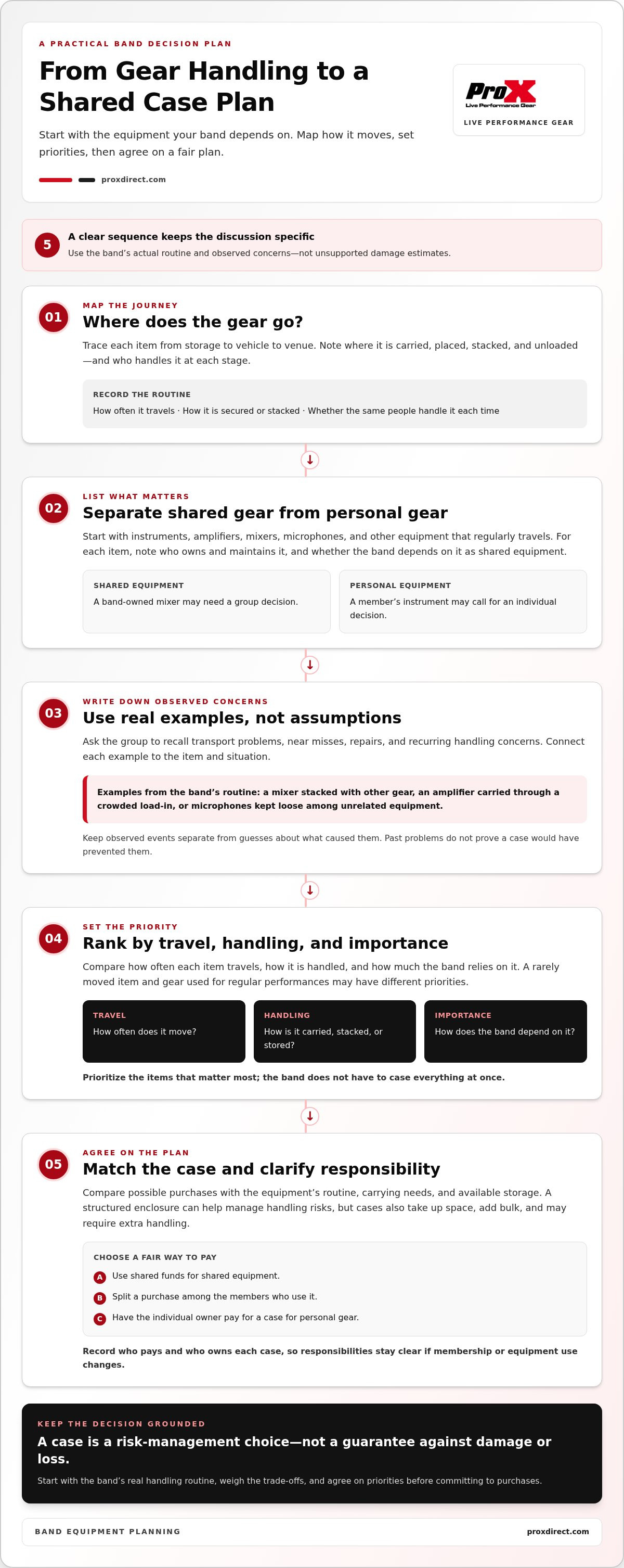
How to Convince Your Band: A Meeting-to-Decision Plan
Keep the discussion focused on equipment everyone can identify. Instead of debating whether the band needs cases in general, agree to review the inventory, compare concerns, and decide on one next step. Invite each member to raise practical objections, including budget limits, storage space, added weight, and ownership. A focused conversation makes it easier to identify shared priorities.
Present the idea with evidence the band recognizes
Bring a simple gear list and note how each item is transported, handled, and stored. If photographs or firsthand examples help explain a concern, use only images and accounts that accurately reflect the band’s experience. Keep the goal specific: improve handling and make a considered plan for selected equipment, not guarantee that damage can’t happen.
- Inventory the gear. List instruments, audio equipment, and other items that move between storage, vehicles, rehearsals, and venues. Note which items are shared and which belong to individual members.
- Record the evidence. Add relevant transport concerns the group remembers, such as a difficult handoff, limited storage space, or equipment being stacked with other items. Distinguish observed events from assumptions about what caused them.
- Set priorities. Rank equipment by how often it travels, how many members rely on it, and which concerns the band considers most important. Ask members to explain their rankings so the decision reflects more than one person’s preference.
- Compare options. Discuss whether a case, soft bag, or existing packaging makes sense for each priority item. Consider practical fit, carrying demands, storage, and how the band handles the gear during setup and pack-down.
- Assign responsibility. Decide whether shared funds, the band, or an individual owner will purchase and maintain each case. Make ownership clear, especially if a case is intended for personal equipment used in group activities.
- Record the decision. Write down the selected item, who is responsible, and the agreed next action. If the band postpones other items, keep them on the inventory for a later review.
Agree on priorities, responsibility, and timing
Use the ranking to resolve disagreements rather than requiring everyone to support every possible purchase. The group might agree that one shared item deserves attention first, while individual owners make separate decisions about personal gear. Set a realistic time to review remaining needs after that first decision, and document the outcome so the discussion doesn’t have to start over.
This process turns how to convince your band to buy road cases into a shared decision with evidence, ownership, and a defined next step. Once the group selects its priority equipment, explore equipment case options that correspond to the items on the list.
Turn Agreement into a Road Case Plan for Your Band’s Equipment
An agreement becomes useful when it identifies what the band will protect first, which case category fits the equipment, and who is responsible for the purchase. Work from the ranked inventory instead of starting with a broad request to case everything. That keeps the plan connected to the band’s actual handling needs and makes it easier to adjust if the group’s budget or equipment changes.
Build a phased case list around real priorities
Begin with the highest-ranked items from the band discussion. For each one, record the equipment type, whether it’s shared or personally owned, how it travels, and who will be responsible for the case. Keep personal gear separate from band-owned equipment so the purchasing plan reflects ownership as well as use. A case is a practical choice for managing transport and storage demands, not a guarantee against damage. For broader background, Wikipedia’s overview of flight case design and purpose explains the general category.
Set up the plan in phases if the group has more priorities than it can address at once. The first phase might focus on the shared item the band ranked highest, with other items left on the list for a later review. Record why each item was prioritized, such as frequent transport or shared use. That gives the band a consistent basis for deciding what comes next instead of restarting the debate with every purchase.
Move from requirements to suitable case categories
Match the equipment to a relevant category before comparing individual options. Instruments, microphones, mixers, amplifiers, and DJ equipment have different forms and uses, so choose the category based on the item the band intends to carry. If the band transports DJ equipment, include mobile DJ cases in the category review. If it doesn’t, there’s no need to add DJ equipment to the plan. Audio equipment may call for mixer console, speaker, or rack case categories, depending on what the inventory contains.
For an item that needs a tailored fit, consider a custom-built case. Base that decision on the equipment and how the band intends to transport or store it, rather than guessing at specifications. Keep the list clear: identify the item, its owner, the relevant case category, the agreed quantity, and who is responsible for the next step. This turns how to convince your band to buy road cases into an actionable plan instead of an open-ended discussion.
Once your priorities are set, explore professional equipment case options by category and use the list to guide your comparison.
Put Your Band’s Case Plan into Motion
A useful decision doesn’t need to settle every equipment question at once. Start with the item your band agreed to prioritize, then use its dimensions, ownership, and handling routine to guide the case selection. Keep the plan available to the group so responsibilities stay clear and future decisions build on what you’ve learned.
If you’re still working out how to convince your band to buy road cases, focus on one practical next step: compare relevant case options with the equipment the group has chosen. Don’t assume one format fits every item. We design and manufacture equipment cases, including custom-built options, and make our catalog available online and through a worldwide dealer network.
Explore equipment case options and bring the relevant categories back to your band’s plan. A measured choice can help your group move forward with clear priorities and responsibilities.
Frequently Asked Questions
Do bands need road cases for every instrument and piece of equipment?
No, a band doesn’t need to case every item by default. A small accessory that travels inside a member’s instrument bag has different handling needs from a mixer or amplifier transported separately. Decide item by item, considering how it moves, where it’s stored, and whether it travels with other gear. This keeps the plan specific instead of turning it into a blanket rule for the whole band.
Can a gig bag protect equipment as well as a road case?
A gig bag and a structured case offer different kinds and levels of protection. A soft bag can be easier to carry and may suit simpler trips, but it doesn’t provide the same structure against crushing or impacts. If gear could be stacked under other equipment or handled in a crowded load-in, compare the options with that actual route in mind. Neither format eliminates every risk.
How much should a band budget for road cases?
There’s no single budget that fits every band. The amount depends on which items need cases and the type selected. Start by identifying the equipment and quantity, then compare listed prices for relevant case categories. If an item needs a tailored fit, a custom-built case is quoted by project based on engineering, materials, and manufacturing complexity. Keep the band’s other essential expenses in view while setting a spending limit.
What should a band case first when its budget is limited?
Start with the item that creates the clearest practical problem in the band’s current setup. For example, if shared equipment is repeatedly packed loose among unrelated items, address that before buying cases for accessories that already travel together. Check that the group can store and handle the proposed case. If one purchase addresses a specific concern, it gives the band a useful basis for reviewing other needs later.
Can one case be shared between different band members?
Yes, if the case is intended for the equipment that will go inside it and the band agrees on access and responsibility. A case isn’t automatically interchangeable just because two members own similar gear. Before sharing, identify the equipment it will hold, who keeps the case between performances, and who is responsible for its condition. Clear expectations help prevent disputes if members’ equipment needs or band roles change.
Are road cases useful when a band only plays occasional gigs?
They can be, depending on the trip and how equipment is handled. A band that plays occasionally may still transport gear in a vehicle where items are stacked or moved by several people. Another group might carry a single instrument a short distance and prefer a lighter bag. Consider the actual journey and storage routine rather than relying on gig frequency alone to decide whether a case is appropriate.
What should a band discuss before buying its first road case?
Agree on which item the case is for, who owns that equipment, and where the case will be stored between uses. Note what travels with the item, including attached components or accessories, so the intended use is clear before comparing options. Set a spending limit and decide who will make the final selection. These details help the group choose a case that fits its plan, not just its initial concern.
Disclaimer
Any trademarks, trade names or brand names appearing herein that do not belong to ProX are the property of their respective owners and/or companies, and such appearance doesn't and shall not constitute or imply endorsement, sponsorship or recommendation by ProX.


