
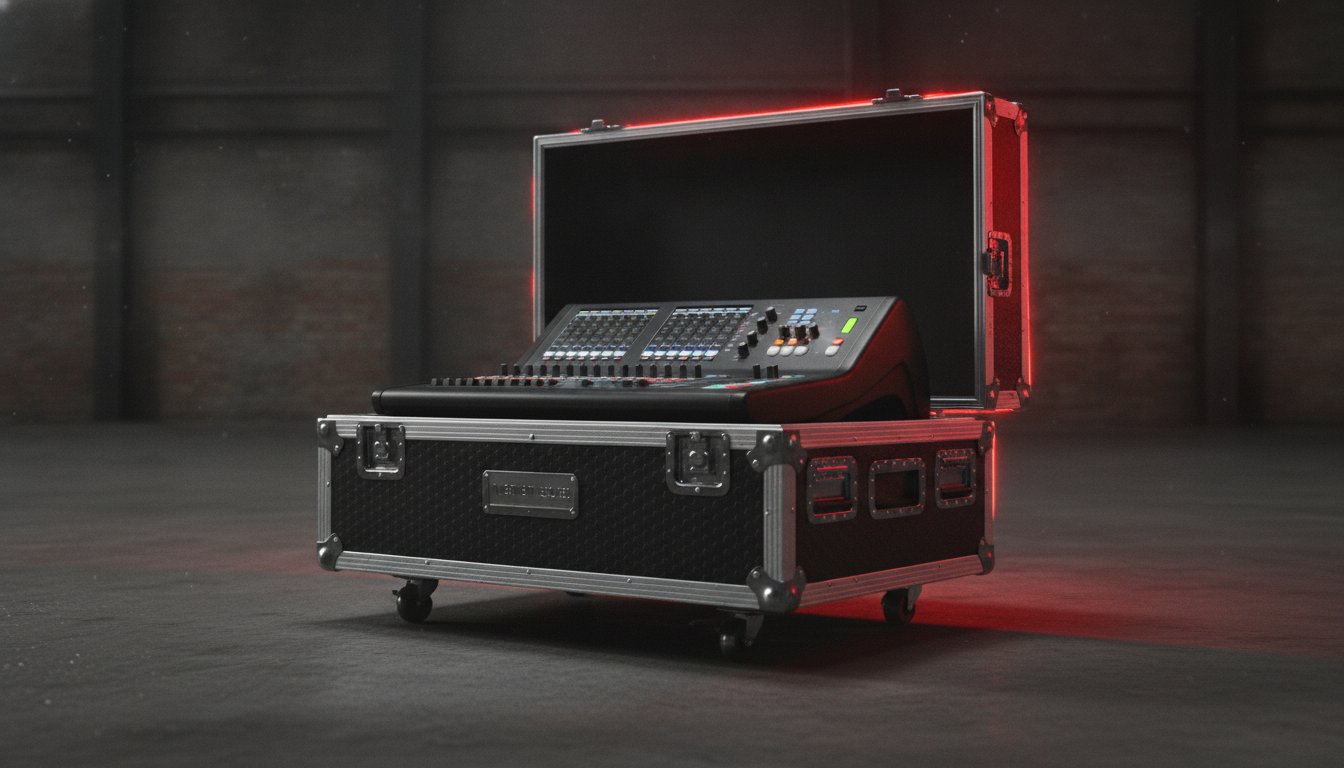
Is the lowest flight case price actually the most expensive mistake in your production budget? For industry professionals, the initial cost of a protective enclosure is secondary to the catastrophic expense of equipment failure during a mission critical event. You already know that universal, poorly fitting cases often result in internal structural damage or inflated shipping fees. It's a common frustration to manage heavy, inefficient designs that compromise both your logistics and your gear's integrity.
This guide provides a technical analysis of the engineering factors that drive professional protection costs, helping you evaluate long-term ROI over immediate expenditure. You'll learn how to identify the precise protection level required for your specific inventory and understand the mechanical differences between traditional plywood and lightweight honeycomb materials. We also examine how standardized dimensions optimize truck pack logistics, allowing you to reduce tour costs through improved density and mechanical handling efficiency.
Key Takeaways
- Analyze the technical specifications of ATA-300 compliance to understand how engineering precision justifies the initial flight case price.
- Evaluate the structural benefits of 3/8" and 1/2" plywood combined with Honeycomb Digital™ laminates for maximum gear protection and surface durability.
- Optimize logistical efficiency by utilizing standardized TruckPaX™ dimensions to improve truck pack density and reduce transportation overhead.
- Differentiate between the utility of specialized AV broadcasting cases and general storage solutions to align your protection strategy with your production budget.
- Adopt an ROI-focused mindset by treating professional housing as a critical insurance policy against equipment replacement and operational downtime.
Factors Influencing Professional Flight Case Price and Value
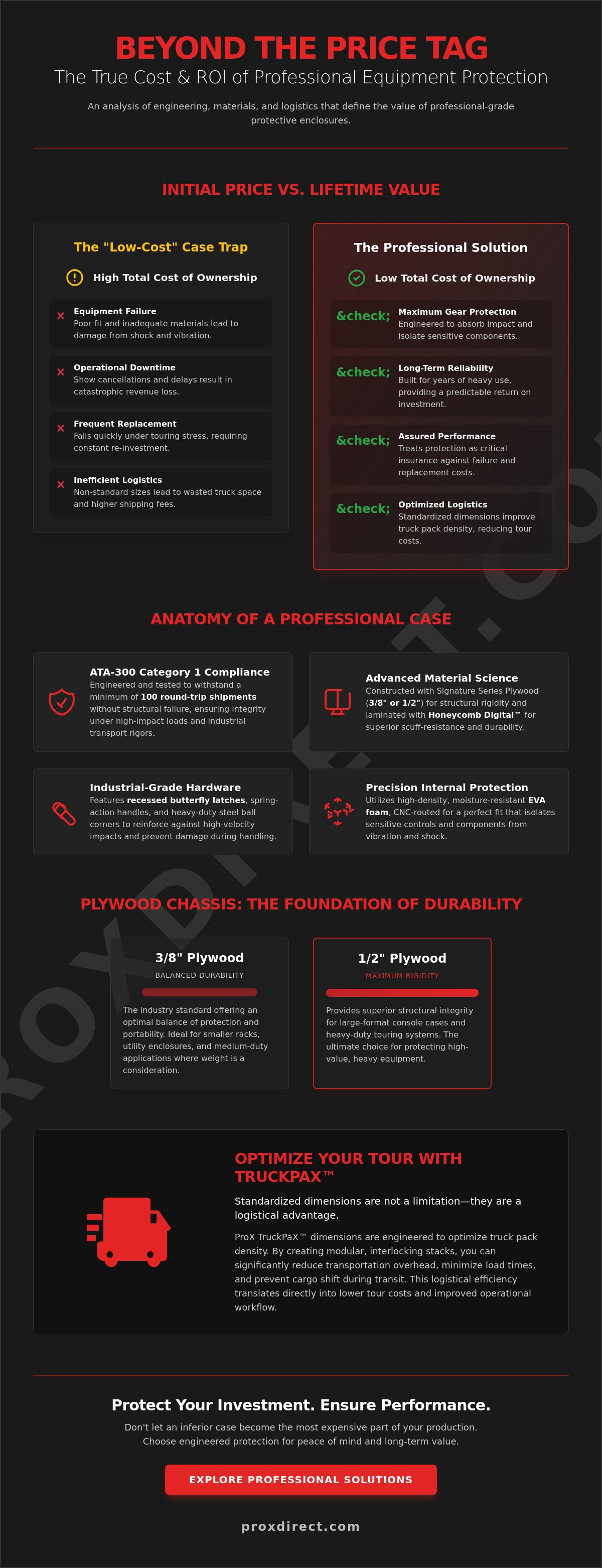
A professional flight case functions as a shipping container specifically designed for the repeated rigors of industrial transport. It is not a static storage box but a precision-engineered logistical tool. The flight case price reflects the engineering standards required to meet ATA-300 Category 1 specifications. These standards dictate that a case must withstand at least 100 round-trip shipments without structural failure. Manufacturing to these tolerances involves specific material grades and mechanical assembly techniques that ensure integrity under high impact loads.
Professional users prioritize the total cost of ownership over the initial purchase price. In high-stakes production environments, the financial impact of equipment failure far exceeds the investment in a high-quality enclosure. A lower-cost case might fail during its first tour, leading to expensive gear repairs or show cancellations. By contrast, a well-engineered professional case maintains its protective capabilities over years of heavy use; this provides a predictable return on investment through equipment longevity and reduced insurance claims.
Standardized Utility vs. Custom Engineering
Off-the-shelf utility cases offer the lowest entry price point because they benefit from mass-production efficiencies and standardized dimensions. These are suitable for non-sensitive accessories like cables or stage weights. However, as equipment complexity increases, the transition to custom engineering becomes necessary. Large-format mixer consoles and mobile workstations require CAD-designed internal structures and CNC-routed foam inserts. The labor-intensive nature of custom design and the precision required for a secure fit naturally increase the final project quote.
The Role of Brand Compatibility
Precision fitment is a critical driver of value for specialized gear. Cases engineered for specific brands, such as Pioneer DJ or QSC, eliminate internal movement that causes mechanical wear. This tailored approach reduces long-term maintenance costs by preventing the degradation of internal foam. Specialized solutions like Flip Ready designs incorporate complex mechanical hinges and hydraulic lifts. These features integrate setup functionality directly into the transport housing, justifying a higher price through reduced labor time and improved operational efficiency on site.
Material Science: The Hidden Costs of Rugged Reliability
The fundamental components of an enclosure determine its structural integrity and its final cost. A major portion of the flight case price is derived from the grade of plywood used in the chassis. Industry standards typically require 3/8-inch or 1/2-inch plywood to ensure the build meets ATA Spec 300 benchmarks for durability. Thicker 1/2-inch panels provide superior rigidity for large-scale console cases but increase overall weight, while 3/8-inch panels offer a balance of durability and portability for smaller racks and utility units.
Mechanical reliability depends on the quality of integrated hardware. Recessed butterfly latches and spring-action handles are essential for preventing damage during automated sorting or heavy truck packing. Steel ball corners reinforce the structure against high-velocity impacts during loading. For touring applications, 4-inch heavy-duty casters are a non-negotiable expense. These wheels must support the static load of the gear while absorbing the kinetic energy of uneven surfaces, ensuring the case remains maneuverable under full capacity.
Internal Protection and Foam Density
Protective interiors go beyond simple padding. High-density EVA foam is preferred over standard open-cell padding because it maintains its shape under constant compression and does not retain moisture. Custom-cut inserts are engineered to isolate sensitive components like faders and PCB boards from vibration. For high-value amplifiers, shock-mounted rack systems utilize internal rubber isolators to suspend the inner frame, providing a secondary layer of protection that justifies a higher flight case price through technical complexity.
Exterior Finishes and Durability
The exterior finish dictates how a case survives the abrasive environment of a loading dock. Honeycomb Digital™ laminate is a scuff-resistant protective layer for professional gear that utilizes a hexagonal grid pattern to mask surface wear. In extreme environments, the UltronX™ series utilizes specialized watertight seals and pressure equalization valves to protect against moisture ingress. Choosing these advanced materials ensures that the enclosure remains functional long after budget alternatives have failed. Professionals often review these specifications when selecting protective cases for mission-critical deployments.
Custom vs. Standard Cases: A Price Comparison Framework
Standard utility/storage cases serve as the baseline for flight case price calculations. These models benefit from high-volume manufacturing and standardized components. They are ideal for general inventory management where specific internal dimensions are secondary to basic structural protection. Because these units utilize common hardware and foam configurations, they offer the most accessible entry point for professional protection without the lead times associated with custom builds.
TruckPaX™ cases represent a specialized tier of standardized engineering designed for logistical optimization. These units feature dimensions specifically calculated to maximize truck pack density. By aligning the footprint of the case with standard 90-inch or 96-inch truck widths, these cases reduce wasted space during transport. This logistical precision provides a quantifiable return on investment. Professionals often find that the efficiency gained in truck loading offsets the price difference between these and non-standardized utility boxes.
Santosom Cases: The Pinnacle of Touring Engineering
When equipment value or tour duration increases, investing in Santosom-level engineering becomes a technical necessity. This tier justifies a higher flight case price through advanced assembly techniques that prioritize weight reduction. By utilizing specialized aluminum extrusions and high-grade plywood, these cases achieve maximum structural strength with lower total mass. Explore the Santosom engineering philosophy to understand how these builds withstand the rigors of global tours while minimizing shipping surcharges associated with overweight gear.
ZCASE and Flip Ready Innovations
Specialized production environments require operational speed in addition to protection. Flip Ready cases, manufactured by ZCASE in Poland, incorporate hydraulic-assisted lifts and integrated mechanical hinges. These design elements allow a single operator to deploy a console in seconds. While the initial investment is higher than a traditional lift-off lid case, the labor savings are significant. Reducing setup and teardown time by even fifteen minutes per show across a fifty-date tour directly impacts the production's bottom line.
Modularity also influences the price framework for workstations and mixer console cases. Units that include integrated rack spaces or monitor mounts provide a comprehensive solution that replaces multiple smaller cases. This consolidation simplifies inventory tracking and reduces the number of individual pieces handled by local crews. Choosing a multi-functional workstation case lowers the total cost of ownership by streamlining the entire logistical chain from the warehouse to the stage.
Calculating the ROI of Professional Equipment Protection
Viewing the flight case price as an insurance premium is the most accurate way to evaluate its value in a production budget. If a professional enclosure prevents the total loss of a high-value digital console or lighting fixture, the return on investment is immediate and quantifiable. Beyond preventing catastrophic failure, professional housing mitigates the cumulative cost of minor repairs and mechanical wear. Equipment maintained in high-grade enclosures also retains a significantly higher resale value on the secondary market, as the internal components and external chassis remain free from transit-related trauma.
The serviceability of a case fleet is a critical factor in long-term ROI. Unlike budget alternatives that must be discarded after a hardware failure, professional builds support field repairs. Investing in a repairable system ensures that the initial expenditure is amortized over a much longer period, reducing the frequency of total fleet replacements.
Optimizing Tour Logistics with TruckPaX™
Logistical efficiency provides a direct financial benefit that is often overlooked in initial price comparisons. Standardizing your inventory with TruckPaX™ dimensions allows for a precise truck pack that utilizes every cubic inch of a 90-inch or 96-inch wide trailer. Uniform case footprints eliminate dead space, which is the unbillable volume that often leads to needing additional vehicles for a single tour. By maximizing density, production managers reduce fuel consumption and transportation overhead. This efficiency also minimizes shifting during transit, which is a primary cause of insurance claims and equipment downtime.
Long-Term Durability and ProX Replacement Parts
The ability to source specific components is essential for maintaining operational readiness. Maintain your fleet with ProX replacement parts to extend the operational life of your inventory by years. Standardized hardware specifications for casters, butterfly latches, and steel corners allow for rapid field maintenance during a tour without requiring specialized tools or long factory lead times. This modularity ensures that a damaged wheel or latch doesn't sideline a critical piece of gear. To secure your inventory for upcoming tours, browse our full selection of professional protective cases today.
Navigating the ProX Catalog for Your Production Budget
Transitioning from technical research to gear acquisition requires a structured approach to your production budget. The flight case price for a complete inventory is best managed by prioritizing protection based on equipment sensitivity. Production companies must differentiate between specialized AV broadcasting cases and general utility storage to maximize their spending. While general storage is sufficient for non-electronic hardware, high-value signal processing gear requires the precision fitment found in application-specific engineering solutions. It's essential to categorize your assets to ensure that the most sensitive electronics receive the highest tier of protection.
Specialized Solutions for Broadcast and Lighting
Broadcast environments demand zero-latency setups and maximum component protection. Professional AV and Broadcasting case solutions integrate rack mounts and monitor supports directly into the transport housing, reducing the risk of damage during repeated assembly. For large-scale visual deployments, specialized LED video panel wall support cases prevent the localized pressure points that often damage delicate diodes. Custom engineering services are also available for unique workstation requirements. This ensures that complex signal chains and proprietary control surfaces remain secure during global transit.
Working with the ProX Dealer Network
Identifying an authorized dealer is the most efficient method for securing verified pricing and comprehensive technical data. Authorized partners provide access to the dealer portal; this is essential for production managers who need bulk quotes and detailed mechanical specifications. This structured network ensures that a consistent flight case price is maintained across different regions. Standardization improves efficiency. This is a vital advantage for touring professionals who require global support and hardware compatibility when they're moving gear across international borders.
Volume ordering provides significant benefits for rental houses and large-scale production firms. Standardizing a fleet with uniform hardware reduces the complexity of maintenance and allows for a consolidated inventory of replacement parts. Moving from the research phase to acquisition involves coordinating with authorized partners to ensure your gear is protected by the highest engineering standards. This methodical approach to procurement ensures that your investment in professional protection delivers the expected logistical and financial returns over the entire lifecycle of your equipment.
Securing Your Production Infrastructure
Evaluating the flight case price requires looking beyond the initial invoice to the long-term operational benefits. Professional protection is defined by engineering precision and material integrity. By prioritizing ATA-300 style construction and standardized dimensions like those found in the TruckPaX™ series, you protect your gear and optimize your logistical overhead. ProX has been engineering performance gear since 1984, providing rugged solutions utilized by major global tours. Our commitment to functional excellence includes maintaining a comprehensive inventory of replacement parts to ensure your fleet remains operational for years. Investing in the right enclosure today prevents the catastrophic costs of equipment failure tomorrow. Take the next step in professionalizing your inventory management by coordinating with our expert network. This strategic investment ensures that your equipment arrives intact and your production remains on schedule. Find an Authorized ProX Dealer Near You to secure the protection your production demands. We look forward to supporting your next tour with industry-leading reliability.
Frequently Asked Questions
Why are custom flight cases more expensive than universal models?
Custom builds require individualized CAD design and CNC routing tailored to the exact dimensions of specific equipment. Unlike mass produced universal models, custom enclosures involve higher labor costs and specialized foam configurations to isolate sensitive internal components. This precision engineering ensures a secure fit that universal cases cannot replicate, justifying the higher investment through superior gear protection during high velocity impacts.
Does the weight of a flight case affect its price and utility?
Weight directly influences both the manufacturing cost and the operational utility of an enclosure. High performance materials like honeycomb laminates or specialized aluminum extrusions reduce weight without sacrificing structural integrity, though they often increase the flight case price. Lower weight reduces shipping surcharges and physical strain on crew members during load in and load out procedures, improving overall tour efficiency.
What is the difference between ATA-300 and standard shipping cases?
ATA-300 Category 1 compliance indicates that a case is engineered to withstand a minimum of 100 round trip air shipments. Standard shipping cases often lack the recessed hardware, steel ball corners, and high density plywood required to meet these rigorous durability standards. Choosing a certified case ensures the enclosure remains structurally sound under the extreme kinetic forces of automated sorting and industrial handling.
Can I save money by building my own flight case using ProX parts?
Utilizing ProX replacement parts for a DIY build is possible, but it rarely results in a lower total cost when accounting for labor and precision tools. Professional manufacturing involves specialized CNC machinery and pneumatic assembly that ensures consistent structural integrity. Most production professionals find that purchasing a factory assembled unit provides a more reliable return on investment and guaranteed component compatibility.
How do I know if a case will fit my specific DJ controller or mixer?
Fitment is verified through specific model compatibility lists and internal dimension specifications provided in the product catalog. ProX designs many cases to match the exact footprints of industry standard hardware from major manufacturers. For non standardized gear, users should compare the external dimensions of their equipment against the internal foam to foam measurements of the case to ensure a zero tolerance fit.
What is the average lifespan of a professional-grade touring case?
A professional grade touring case can remain in service for over a decade when properly maintained with replacement hardware. The lifespan depends on the frequency of transport and the environmental conditions of the tour. Because professional builds utilize standardized components, worn casters or damaged latches can be replaced in the field; this extends the operational life of the chassis indefinitely.
Are watertight cases like the UltronX™ series worth the extra cost?
Watertight cases are essential for high value electronics that are susceptible to moisture, dust, or atmospheric pressure changes. The UltronX™ series utilizes specialized gaskets and pressure equalization valves that standard plywood cases do not offer. This extra investment is justified when transporting gear through extreme climates or maritime environments where environmental ingress would cause immediate equipment failure.
How do truck-pack dimensions impact the overall cost of a production?
Truck pack dimensions determine the density of your cargo and the number of vehicles required for a tour. Standardized dimensions, such as those used in the TruckPaX™ series, allow cases to fit perfectly across the width of a standard trailer. This optimization reduces the flight case price relative to logistical savings, as it prevents dead space and lowers fuel consumption by maximizing the equipment to vehicle ratio.
Disclaimer
Any trademarks, trade names or brand names appearing herein that do not belong to ProX are the property of their respective owners and/or companies, and such appearance doesn't and shall not constitute or imply endorsement, sponsorship or recommendation by ProX.


