

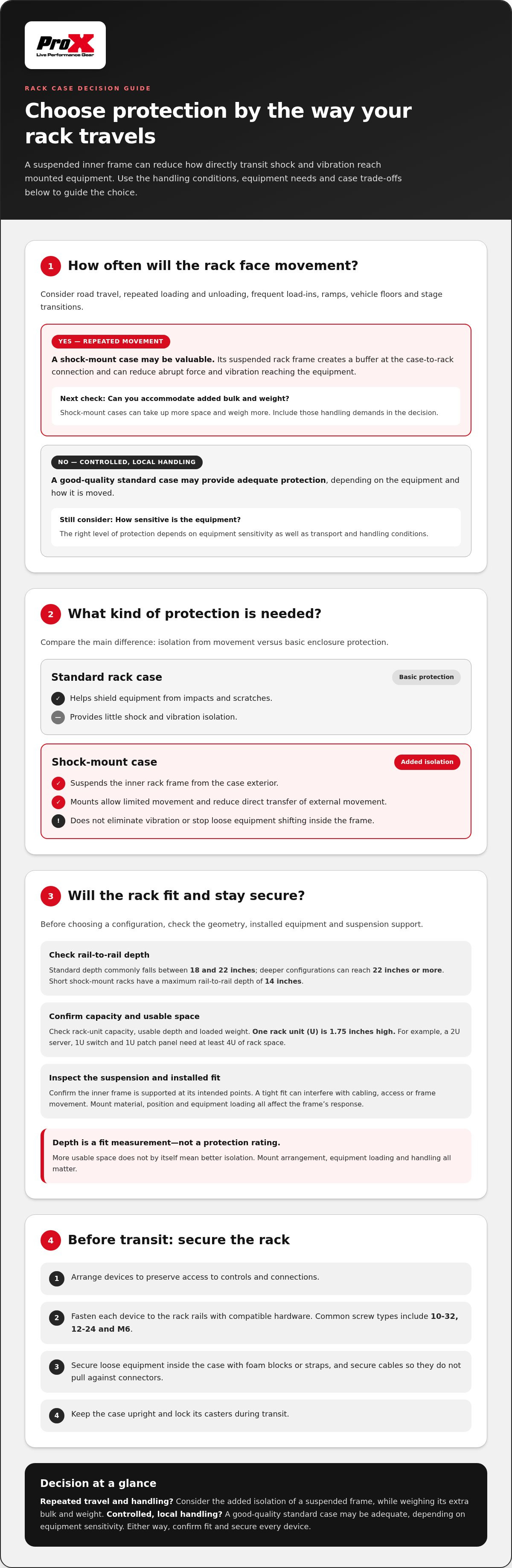
Shock-mount cases provide more isolation from transit shock and vibration than standard rack cases. The key shockmount rack case benefits come from suspending the inner rack frame, which helps reduce the force transferred to mounted equipment. A standard case still protects against impacts and scratches, but provides less isolation.
That difference matters when equipment faces repeated loading, unloading, and road travel. The added protection also involves practical trade-offs: a shock-mount case can take up more space and weigh more. The right choice depends on the equipment’s sensitivity, how it will be handled, and the demands of transport.
This article explains how shock mounts isolate vibration, compares their protection with a standard rack case, and outlines what to consider when choosing a case for touring equipment. It also covers how impact protection, rack fit, and handling requirements affect your decision, so you can match the case design to the way your equipment travels.
Key Takeaways
- Learn how a suspended inner rack frame reduces the transfer of external shock and vibration to mounted equipment.
- Compare the added isolation of a shock-mount design with the basic impact and scratch protection of a standard case.
- Match case protection to equipment sensitivity, transport conditions, and how the rack will be handled.
- Assess rack capacity, usable depth, loaded weight, and handling needs before choosing a case configuration.
- Understand the trade-offs in added bulk and lifting demands, and when another case type may suit the job better.
Shock-mount isolation from external shocks and vibration
A shock-mount rack separates the equipment-supporting frame from the case exterior. Resilient mounts connect the two structures while allowing limited movement between them. When a vehicle crosses a rough surface, the outer shell moves first. The mounts reduce how directly that movement reaches the inner frame. This is the core isolation mechanism, not a guarantee that the equipment experiences no vibration.
In pocket and slam rack designs, cylindrical rubber mounts sit near the top and bottom of the inner rack. Their placement supports the frame while creating a flexible connection to the outer shell. During a jolt, the rubber deforms slightly instead of transferring every movement through a rigid connection. The mounts’ material, position, and loading all affect the frame’s response. Poor support or an overloaded rack can undermine the intended isolation.
Isolation manages movement rather than making the case motionless. A road impact can move the exterior suddenly, while the inner frame responds differently through the mounts. This separation can reduce abrupt force and vibration reaching rack-mounted components. For example, a mixer or processor may face repeated small jolts during a long drive. The suspension system helps moderate those inputs before they reach the equipment.
The distinction matters because vibration can build through repeated handling. Loading ramps, vehicle floors, and stage transitions all introduce movement. A shock-mounted frame creates a buffer at the case-to-rack connection during those transitions. It does not secure loose rack hardware or stop equipment from shifting inside the frame. Each device still needs to be mounted securely.
Use these checks to assess how the isolation system fits your rack:
- Inspect the suspension: Identify the mounts and confirm the inner frame is supported at its intended points.
- Check rack fit: Standard rail-to-rail depth commonly falls between 18 and 22 inches; deeper configurations can reach 22 inches or more.
- Assess short-depth needs: Short shock-mount racks have a maximum rail-to-rail depth of 14 inches.
- Account for installed equipment: A tight fit can interfere with cabling, access, or frame movement.
Those depth figures describe rack geometry, not the level of shock protection. A deep rack, for example, does not isolate better simply because it has more usable space. The deciding factors are the mount arrangement, equipment loading, and how the complete case is handled. Assess them together before choosing a configuration for touring.
Shock-mount versus standard rack-case protection
The main difference is how much transit shock reaches the mounted equipment. Choose between basic enclosure protection and a suspended rack frame based on handling conditions.
Protection Compared with Standard Rack Cases
A standard rack case helps shield equipment from impacts and scratches, but provides little shock and vibration isolation. A shock-mount case adds a suspended inner frame to reduce the direct transfer of external movement. Touring systems exposed to repeated loading and transport can benefit from that added isolation. For local gigs with controlled handling, a good-quality standard case may provide adequate protection, depending on the equipment and how it is moved.
Equipment Installation and Securement
To install equipment, confirm rack-unit capacity, usable depth, and loaded weight first. Position each device on the rails, then secure it with compatible rack screws. Common screw types include 10-32, 12-24, and M6. Keep the equipment within the rack’s capacity and secure cables so they don’t pull against connectors during movement.
Use this sequence before transit:
- Arrange devices to preserve access to controls and connections.
- Fasten each device to the rack rails with compatible hardware.
- Secure loose equipment inside the case with foam blocks or straps.
- Keep the case upright and lock its casters during transit.
Rack-unit planning helps prevent crowding. One rack unit, or U, is 1.75 inches high. A setup with a 2U server, a 1U switch, and a 1U patch panel requires at least 4U of rack space. If your setup incorporates battery backup such as a rack mount UPS New Zealand infrastructure teams rely on, be sure to account for its added weight and depth. Leave practical access for connectors and ventilation panels, and avoid forcing devices into an undersized enclosure.
The transport route matters, too. A touring rack handled by multiple people or moved through frequent load-ins faces different demands from equipment carried directly to a local gig. Shock isolation is valuable when repeated movement is likely; standard protection may suit lighter handling. Either design still requires secure mounting and control of movement inside the case.
For a case choice centered on rack equipment, explore the rack and equipment case range alongside your capacity and handling requirements.
The choice involves balancing added isolation against the weight and cost of transporting the case. One forum member advised touring musicians to use a shock-mount case for added protection, despite the extra cost and weight. That recommendation is most relevant when a rack faces the repeated movement and handling described above. Before choosing, consider how often the system will travel and whether the added protection justifies the weight and expense for your use. Select a case to suit how the equipment will actually be moved, rather than assuming every setup needs the same level of isolation.
A forum member recommended shock-mount cases for touring and suggested that a good-quality non-shock-mount case might suit locally handled gigs. This offers a practical way to match the case to handling conditions: consider a touring case when repeated transport is expected, and weigh a standard case for a setup moved less often or more directly. Either way, careful installation and securement remain essential. Think through the full trip, expected handling, and the cost and weight you are prepared to carry. This comparison helps you make a deliberate choice while keeping equipment capacity, mounting, and interior movement in view. Neither option removes the need to secure the rack and its contents before transit.
Protection from impact and transit damage
Transit damage can result from direct impact, repeated vibration, or equipment shifting inside its enclosure. A shock-mount rack case separates the outer shell from the equipment-bearing frame. The enclosure’s structure and padding matter, too. Protection depends on how the rack is packed, secured, and handled at each transfer point.
Impact can damage components that appear secure from the outside. A hard jolt may crack a circuit board or break a crystal or vacuum tube. One reported incident involved a loaded 16-space shock-mount case tipping face-down, with the rack equipment surviving. Another account described a 16-space rack dropped face-first from a pickup truck that still powered on afterward. These examples illustrate possible outcomes, not guaranteed performance.
Case construction helps manage impact forces. A described standard shock-mount configuration surrounds the wooden outer case with 2 inches of polyurethane and polyethylene foam. Other shock-mount racks are described as having about 1 inch of foam between their inner and outer walls. These are distinct configurations, not interchangeable specifications. The foam arrangement, mount system, and fit of the equipment affect how the case responds during a collision.
Standard cases still provide a useful barrier against scratches and direct knocks. However, reported shipping damage to an 8-space non-shock-mount rack destroyed both the case and the equipment inside. This contrast shows why the transport route and handling process matter. Gear handed between crews, loaded into trucks, or shipped through several transfers faces more opportunities for impact than a rack carried directly to a nearby setup.
Reduce avoidable movement before each trip with these steps:
- Secure the rack: Fasten every device to its rails so equipment cannot shift within the frame.
- Fill movement gaps: Use suitable foam blocks or straps to restrain loose items and accessories.
- Control case position: Keep the rack upright and lock its casters during transit.
- Protect delicate components: Check exposed tubes, connectors, and controls before closing the case.
Interior restraint is essential even with a suspended frame. A small MIDI interface or loose cable can move independently and strike other gear if left unsecured. Padding should support equipment without blocking ventilation panels or fans. These help manage heat during performances and technical runs, so make sure transit packing does not obstruct them during operation.
Choose protection according to the equipment’s sensitivity and exposure to handling. A rack carried locally may face fewer transfers than a system shipped with other freight. For touring equipment, combine structural protection with careful loading, secure mounting, and an inspection after arrival. No case design replaces disciplined handling.
What is a shockmount rack case and how does it work?
A shockmount rack case combines a protective outer enclosure with an equipment-bearing inner rack. Resilient mounts connect the rack frame to the shell, allowing the structures to respond differently when the case moves. This arrangement is designed to reduce the direct transfer of external shock and vibration. In pocket and slam configurations, cylindrical rubber mounts sit at the top and bottom of the inner rack.
The outer case provides the structural enclosure, while the inner rails hold rack-mounted devices. Standard shock-mount cases may use ¼-inch, ⅜-inch, or ½-inch plywood, depending on rack size and payload. Short shock-mount racks use ¼-inch or ⅜-inch plywood. These construction choices relate to the case’s dimensions and intended load; plywood thickness alone does not describe the suspension system or its performance.
Rack geometry determines whether installed equipment fits without forcing cables or connectors into awkward positions. Standard rail-to-rail depth commonly ranges from 18 to 22 inches, while deeper configurations can be 22 inches or more. Short shock-mount racks have a maximum rail-to-rail depth of 14 inches. Measure the equipment from front to rear, including connector clearance, then compare that requirement with usable rail depth.
Some designs use a different enclosure arrangement. A pull-over rack is a shock-mount rack shell inside a B-Style case. It can suit a setting where the rack rarely travels, or where the removed lid serves as a pedestal. This format makes the shell part of the setup as well as the transport enclosure. Consider how often the rack moves and whether the lid will be useful at the destination.
Check these design details before choosing a configuration:
- Match payload to construction: Consider the combined weight of rack-mounted equipment when assessing plywood thickness.
- Measure usable depth: Include rear connectors and cable bend space, not only the device chassis.
- Review rear mounting: Some rear rack rails can be pre-drilled and tapped for 10-32 hardware.
- Plan the enclosure format: Decide whether a conventional outer case or pull-over arrangement suits the transport pattern.
For example, a rack that stays in a studio faces different handling demands from one loaded into a vehicle for each performance. A pull-over format may suit the first use, while frequent travel makes the enclosure, suspension, and loading arrangement central considerations. Evaluate the complete rack assembly, including installed devices, cable access, and the intended case layout.
What are the disadvantages and risks of using a shockmount rack case?
A shockmount case adds suspension, but that protection brings handling and space trade-offs. A loaded 16-space rack can be difficult to move, and one reported example required two people to lift it. Consider the complete setup, including the case, installed equipment, route, and available crew, before choosing this design.
Weight affects more than lifting. A heavier rack can be harder to position in a vehicle, move through a venue, or place near the performance area. If one person regularly handles the system, pay particular attention to the case’s loaded weight and movement path. A two-person lift can also slow transfers when crews are limited or several cases need moving at once.
Exterior dimensions create another constraint. The outer shell must accommodate the inner rack and suspension, so the complete case can take up more room than the rack itself. In a crowded truck pack, that extra volume can compete with space for cables, stands, and other production equipment. Measure the transport space and allow for access around the case, not just the rack’s rail-to-rail depth.
Added protection also comes at a higher cost than a standard case. Base the decision on the equipment’s sensitivity and transport conditions, rather than assuming every rack needs shock suspension. For a locally handled system moved directly by its owner, a standard case may provide practical impact and scratch protection. Repeated touring or freight handling can make added isolation more valuable.
Suspension does not prevent every type of failure. A shockmount case cannot compensate for loose rack screws, unsecured accessories, or an overloaded frame. Equipment can still be damaged if it shifts inside the rack or a connector takes a direct impact. Check installed devices, cable routing, and interior restraints before each trip. Both the mounts and the equipment need proper support.
Use these checks to balance protection against practical demands:
- Plan the lift: Determine whether the loaded case needs two people or mechanical assistance.
- Measure transport space: Include the outer case dimensions and room needed to load it safely.
- Match protection to handling: Compare local owner-handling with repeated crew transfers or freight movement.
- Secure the contents: Fasten rack devices and restrain loose accessories before transit.
For a rack that travels frequently, compare rack case configurations against your equipment, handling plan, and available transport space. A suitable configuration balances isolation with manageable loading and movement.
ProX: Santosom Cases
ProX offers Santosom Cases for production teams assessing protective case options for their equipment and transport workflows. Once you have identified the rack dimensions, installed load, and handling demands, use those requirements to guide your choice. This keeps the decision focused on the equipment and its actual operating conditions, not just the case style.
For broader transport and storage needs, ProX also offers TruckPaX™ Truck Pack Cases, Utility/Storage Cases, and Workstations. Consider these categories when planning how cases and equipment fit into your production setup. Visit proxdirect.com to explore Santosom Cases and related options.
Make the Case Choice Part of Your Touring Plan
Turn your equipment and transport requirements into a practical case brief before the next production cycle. Record the rack layout, installed devices, connection access, loading method, and who will handle each transfer. This shared reference helps production and logistics teams assess the same requirements and avoid last-minute packing compromises.
The benefits of a shockmount rack case matter most when transport exposes sensitive equipment to repeated movement or demanding handling. A standard enclosure may still suit a simpler route and controlled handling. Choose according to how the rack will actually travel, not just its appearance or the level of protection in isolation.
Use your equipment list and handling plan to guide the next step. ProX can help you explore case options suited to your production needs. Contact ProX about rack cases and move forward with a configuration that fits your equipment and workflow.
Frequently Asked Questions
What are the main benefits of a shockmount rack case?
A shockmount rack case helps keep a configured equipment rack together while reducing direct transit shock to its contents. This can be useful when a production system moves between venues without being dismantled after each event. The rack format also keeps devices arranged for repeat setups, giving crews a consistent equipment layout. Isolation matters most when the case faces repeated transport or rough handling.
How much vibration and impact protection do shockmount rack cases provide?
No universal percentage describes the protection provided by every shockmount rack case. Actual performance depends on the mount arrangement, case construction, equipment load, and how the rack is packed and handled. Where applicable, compare designs using product-specific shock, environmental, or military certifications. A certification applies to a particular product and test scope, not every case in the category.
Which equipment benefits most from shockmount rack cases?
Equipment with delicate electronic components and frequent transport stands to benefit most from added isolation. Examples include signal processors, preamps, and rack-mounted conversion equipment traveling repeatedly between venues or production locations. The decision also depends on the consequences of disruption: a central device supporting several parts of a live system may warrant more protection than gear used occasionally in a controlled room. Consider both transport exposure and the equipment’s role.
How do shockmount rack cases compare with standard rack cases?
A shockmount case provides greater shock and vibration isolation, while a standard rack case offers more basic protection from impacts and scratches. The practical choice depends on the transport pattern. A rack carried by its owner for occasional local use may not need the same isolation as equipment transferred between vehicles, crews, and venues. Compare expected handling, equipment sensitivity, case size, and lifting demands before choosing either design.
Disclaimer
Any trademarks, trade names or brand names appearing herein that do not belong to ProX are the property of their respective owners and/or companies, and such appearance doesn't and shall not constitute or imply endorsement, sponsorship or recommendation by ProX.


