
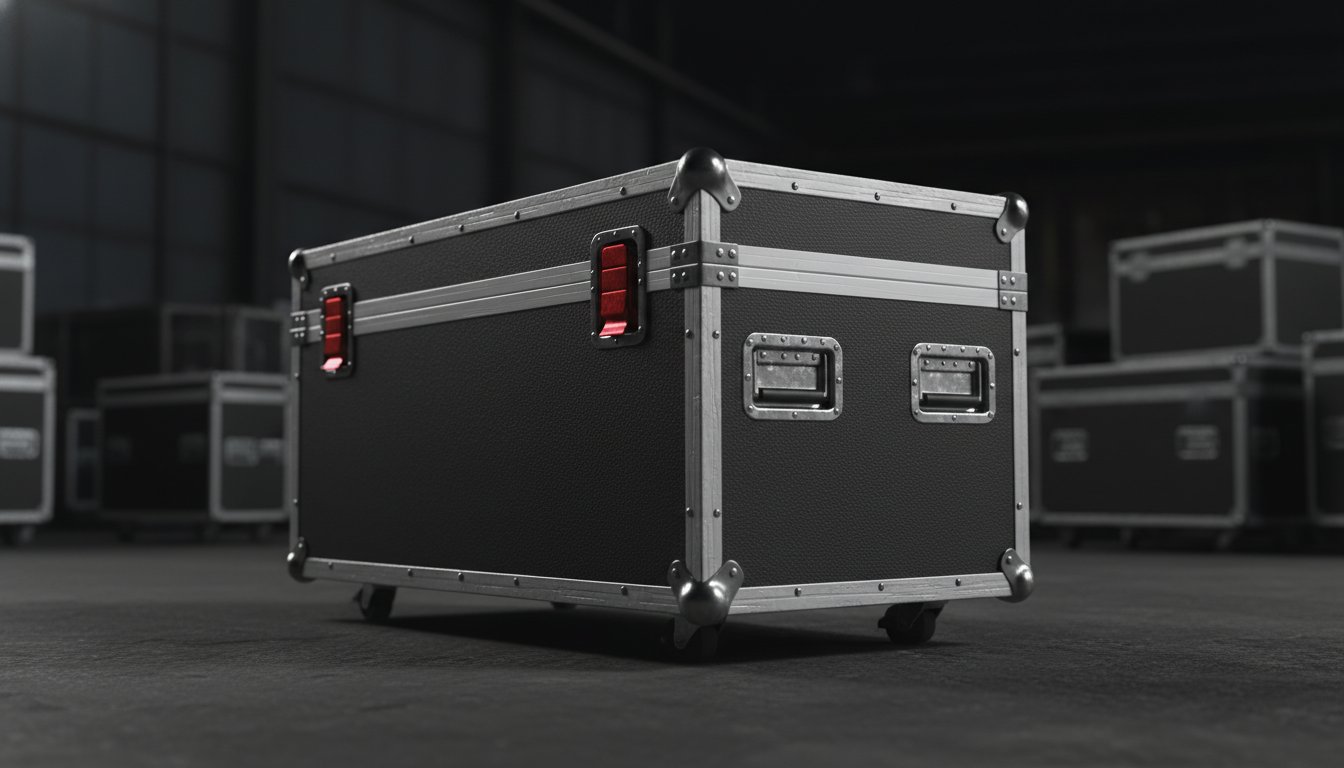
A guitar amp road case is not merely a transport box; it is a precision-engineered kinetic management system designed to mitigate the physical and thermal stresses of global transit. Professional touring demands more than just a hard shell. It requires a solution that addresses the high-stakes environment where equipment failure isn't an option. You recognize that a single hardware failure or a heat-damaged transformer can derail an entire production schedule.
You expect your gear to arrive in the same condition it left the warehouse, regardless of the distance or the intensity of the load-in. This guide will help you master the technical standards of professional amplifier protection, focusing on ATA-300 Revision 2020.1 compliance and industrial material science. We'll examine how 10mm Birch-Ply construction and standardized dimensions facilitate zero equipment failure and maximum logistical efficiency. You'll gain a clear understanding of the ROI associated with Category I rated gear and how it ensures a consistent, predictable truck pack.
Key Takeaways
- Identify why ATA-300 Category 1 specifications serve as the mandatory benchmark for professional equipment protection during high-frequency transit.
- Evaluate the structural integrity of 3/8-inch versus 1/2-inch plywood and the technical benefits of Honeycomb Digital™ laminate surfaces.
- Learn how standardized dimensions for a guitar amp road case facilitate efficient truck packs by optimizing trailer floor space.
- Differentiate between "Live-In" and "Lift-Off" configurations to ensure proper thermal management for tube amplifiers in enclosed environments.
- Explore how precision engineering from Santosom and ZCASE addresses the specific protective requirements of vintage and high-value hardware.
Defining Professional Standards: The ATA-300 Road Case
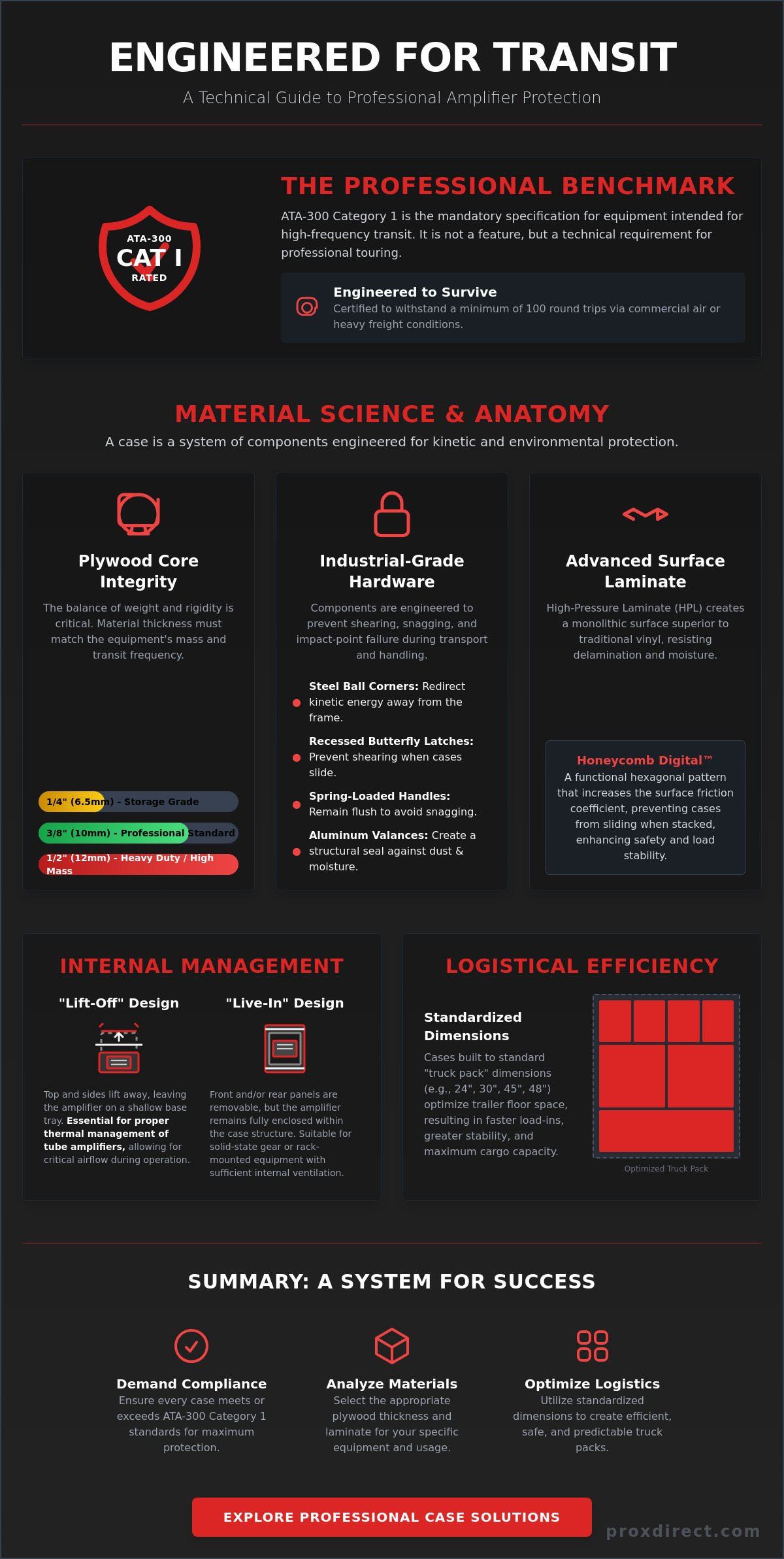
The Air Transport Association established the ATA 300 Specification to standardize the durability of shipping containers in high-stress environments. For a professional guitar amp road case, achieving a Category 1 rating is the absolute benchmark. This classification isn't a mere suggestion. It's a technical requirement for gear that must survive a minimum of 100 round trips in commercial air transport or heavy freight conditions. Standard hard shell cases often fail because they lack the structural reinforcement to handle the kinetic energy of automated sorting systems or the vertical pressure of stacked cargo. Investing in a high-specification guitar amp road case ensures that internal components remain isolated from these external forces.
Professional-grade protection relies on three primary mechanical elements working in synchronization:
- Reinforced Plywood: Usually 3/8-inch or 1/2-inch birch panels for maximum impact resistance.
- Aluminum Valances: Tongue-and-groove extrusions that create a structural seal against moisture and dust.
- Steel Hardware: Zinc-plated components, including ball corners and recessed latches, designed for heavy-duty cycling.
These materials create a rigid exoskeleton. Plywood provides superior impact absorption compared to molded plastic. It prevents external shocks from reaching the amplifier's sensitive vacuum tubes or circuit boards. This mechanical integrity is what defines a case as suitable for professional touring.
Transit Cases vs. Storage Cases
A critical distinction exists between cases designed for local storage and those engineered for professional transit. Storage-grade cases often utilize 1/4-inch plywood. This material lacks the density required to support heavy amplifiers during movement. These non-rated units frequently exhibit failure at the hinges or use plastic corners that shatter upon impact. Professional ProX Cases utilize industrial-grade adhesives and high-pressure lamination. This ensures the plywood layers don't delaminate when exposed to the fluctuating humidity and temperature of a cargo hold.
Recessed Hardware and Safety
Mechanical failure during transport often starts with exposed hardware. Butterfly twist latches must be fully recessed into the case body to prevent shearing when cases slide against one another in a truck pack. Spring-loaded handles are another engineering necessity. They stay flush against the case when not in use. This reduces the risk of snagging while providing an ergonomic grip for crews. Steel ball corners are specifically designed to redirect kinetic energy. By rounding the impact point, the corner distributes force across the aluminum valance rather than concentrating it on a single point of the amplifier's chassis.
Material Science: The Anatomy of Professional Protection
The structural integrity of a guitar amp road case begins with the selection of the substrate. Most professional builds utilize 3/8-inch birch plywood for standard amplifier heads and medium-weight combos. This thickness provides an ideal balance between weight and rigidity. However, for heavy 4x12 speaker cabinets or vintage tube amplifiers exceeding 80 pounds, 1/2-inch plywood becomes the engineering requirement. The increased density of 1/2-inch ply resists deflection under static loads, preventing the case walls from bowing during long-term storage or high-stacking in a trailer.
Traditional vinyl wraps are susceptible to peeling and moisture ingress. High-pressure laminates (HPL) provide a superior alternative by bonding a resin-impregnated decorative layer directly to the plywood core. This creates a monolithic surface that resists delamination. Precision is maintained through CNC (Computer Numerical Control) cutting. This automated process ensures every panel, valance, and hardware recess of the guitar amp road case is cut to a zero-tolerance specification. This accuracy is vital for maintaining the structural alignment of the ProX Cases valance systems, ensuring a consistent seal across hundreds of use cycles.
Honeycomb Digital™ Technology
The science of protective materials has evolved to include specialized surface textures like Honeycomb Digital™ laminate. This hexagonal pattern serves a functional purpose beyond aesthetics. The raised grid increases the surface friction coefficient, which prevents cases from sliding when stacked on high-gloss stages or truck ramps. Additionally, the geometry of the hexagonal pattern localizes surface abrasions. A scratch on a smooth surface can propagate into a structural tear, but the honeycomb grid contains minor impacts within individual cells. These industrial laminates also offer high UV and chemical resistance, protecting the case from the harsh solvents and intense stage lighting common in professional production.
Internal Foam Engineering
Interior protection requires a sophisticated understanding of kinetic energy. Standard open-cell foam is insufficient for professional transit as it compresses too easily and loses its memory over time. High-density EVA (Ethylene-Vinyl Acetate) foam is the industry standard for shock absorption. EVA foam manages G-force by decelerating the amplifier's movement during a drop, distributing the impact energy across a wider surface area. For maximum security, custom-cut foam inserts are engineered to the exact dimensions of specific amp heads. This eliminates "internal migration," where the gear shifts inside the guitar amp road case, potentially damaging knobs or delicate vacuum tubes. Universal fits are available for standard combo sizes, but precision-engineered inserts provide the highest ROI for rare or high-value equipment.
Logistical Efficiency: Standardized Dimensions and Truck Packs
In professional touring, the utility of a guitar amp road case is measured by its ability to integrate into a high-density truck pack. A "Truck Pack" refers to the methodical arrangement of equipment to maximize trailer volume while minimizing movement. Standardized dimensions are critical because they allow crews to calculate the exact footprint of the gear before it reaches the loading dock. Most professional trailers feature an internal width of 90 to 96 inches. By engineering cases with 22.5-inch or 45-inch widths, manufacturers ensure that four or two cases can sit side-by-side with zero lateral play. This tight tolerances prevent the load from shifting during transit, which is a primary cause of external hardware failure.
Secure vertical stacking is achieved through the integration of caster dishes. These recessed steel cups are mounted on the top lid of the case, precisely aligned with the wheel footprint of the unit above. This configuration prevents the stack from shifting during sudden braking or sharp turns. It effectively transforms individual units into a unified structural column. This engineering detail significantly reduces the risk of equipment toppling and allows for more aggressive loading schedules without compromising safety.
TruckPaX™ Integration
The TruckPaX™ system is specifically engineered to optimize the 90-inch trailer standard. By eliminating dead space, these cases reduce logistical overhead and prevent the kinetic damage associated with loose cargo. Standardized heights are equally vital. When cases share a uniform height, they create a level surface for secondary loading tiers, often referred to as "decking." This allows for more efficient use of the vertical space in 53-foot trailers, maximizing the ROI of every transport mile by fitting more equipment into a single vehicle.
Casters and Mobility
The touring industry relies on 4-inch heavy-duty casters for several technical reasons. Larger wheels provide the necessary ground clearance to navigate ramps, thresholds, and uneven stage surfaces without bottoming out the guitar amp road case. High-quality casters feature ball-bearing swivels and non-marring rubber treads. These components must be mounted on reinforced caster boards, typically 18mm birch, to distribute the static load across the entire base of the case. Maintenance is a logistical necessity; crews should regularly inspect casters for debris and apply lithium-based lubricants to the bearings to ensure fluid mobility throughout a multi-city tour.
Internal Management: Thermal and Kinetic Protection
The internal architecture of a guitar amp road case must address two competing technical requirements: thermal dissipation and kinetic isolation. While the exterior shell manages logistical stresses, the interior environment directly impacts the operational lifespan of the amplifier. Tube-driven hardware's particularly susceptible to heat soak in enclosed spaces. Engineering a case that remains functional during a performance requires precise airflow management.
The primary choice in design lies between Lift-Off lid configurations and Live-In cases. Lift-off designs are standard for combo amplifiers; the lid is removed, and the amplifier remains on the bottom tray. For head-and-cabinet setups, a live-in guitar amp road case is often more efficient. These units feature removable front and rear panels. This configuration allows the amplifier to remain patched into the speaker cabinet and power source throughout the tour. It's a setup that significantly reduces time on stage while maintaining the required airflow across the chassis.
For boutique or vintage hardware, shock-mount rack systems provide the highest level of protection. These designs utilize an internal rack frame suspended by rubber shock absorbers within the outer shell. This isolation layer filters out high-frequency vibrations that can lead to solder joint failure or microphonic tube issues.
Thermal Dissipation in Live-In Cases
Effective thermal management requires at least two inches of clearance around ventilation ports. High-wattage tube heads often require integrated fans to move air across the transformer and power tubes. Internal foam must be strategically placed to avoid blocking heat sinks or vents. Cable management also plays a role in airflow. Integrated storage compartments for speaker cables and power cords prevent cable clutter from obstructing the rear exhaust of the amplifier. Proper airflow prevents the premature failure of capacitors and other heat-sensitive internal components.
Kinetic Energy Management
Calculating foam thickness isn't just a matter of preference; it's a calculation based on amplifier mass. Heavier amplifiers require higher density foam to prevent the unit from bottoming out during a drop. This protection is vital for vacuum tubes, which are sensitive to micro-vibrations during transit. Heavy components like power transformers require dedicated support blocks. Without these supports, the sheer mass of the transformer can warp the amplifier chassis if the case is subjected to a vertical drop. Precise internal engineering ensures that kinetic energy is absorbed by the foam rather than the amplifier's internal circuitry.
Explore our range of ProX Cases for specialized amplifier protection.
Professional Solutions: Santosom and ZCASE Engineering
Selecting a guitar amp road case requires a transition from general protective concepts to specific industrial applications. Santosom Cases represent the European benchmark for precision engineering in the touring industry. Their professional line utilizes 10mm Birch-Ply construction, providing a significant increase in shear strength compared to standard 7mm or 9mm alternatives. This higher material density is vital for maintaining structural alignment over years of heavy use. ProX facilitates access to these high-specification solutions, ensuring that your equipment benefits from the same engineering rigor used by global production houses.
ZCASE Custom Build Cases, manufactured in Poland, offer another layer of specialized protection. These designs often incorporate Flip Ready technology or fiberglass epoxy exteriors for maximum durability. When your touring requirements exceed the capabilities of off-the-shelf units, custom engineering ensures that every internal support and external latch is optimized for your specific amplifier's weight and dimensions. This commitment to functional excellence is what separates professional-grade equipment from consumer-level storage solutions.
Santosom Custom Engineering
The process of designing a bespoke Santosom case begins with a technical assessment of the hardware's physical requirements. This is particularly relevant for hybrid setups or workstations that integrate multiple amp heads and rack-mounted effects into a single mobile unit. By utilizing CNC precision and high-grade industrial adhesives, Santosom creates a monolithic structure that manages the unique kinetic stresses of multi-component systems. Production houses prioritize these assets because they reduce the complexity of stage setups while providing a guaranteed ROI through the prevention of transit-related damage. These cases are engineered to withstand the rigors of Category I transport, ensuring they remain operational for a minimum of 100 round trips.
Selecting Your Professional Grade Gear
When you evaluate a potential guitar amp road case, focus on the hardware specifications rather than aesthetic appeal. A professional unit must feature zinc-plated steel ball corners, recessed butterfly latches, and high-density EVA foam interiors as discussed in previous sections. The long-term ROI of investing in ATA-300 rated protection is found in the absence of repair costs and the preservation of the amplifier's resale value. Lower-quality cases may save initial capital, but they frequently fail during the critical first 20 cycles of a tour, leading to expensive emergency replacements and potential equipment downtime.
Mastering your tour logistics starts with the right protective foundation. You can browse professional Santosom amp cases to find a solution that meets the highest industrial standards. For broader applications, explore the full range of ProX Cases to ensure every component of your signal chain is secured by professional-grade engineering.
Standardizing Your Touring Infrastructure
Professional touring requires a commitment to technical standards that prioritize equipment longevity over temporary savings. You've seen how ATA-300 Category 1 compliance and high-density material science form the backbone of a reliable transport system. Implementing these standards ensures your gear survives the physical stresses of global transit while maintaining optimal thermal performance. Standardized dimensions allow your crew to execute precise truck packs, reducing logistical overhead and preventing transit-related hardware failure.
Since 1984, we've engineered performance gear that meets the rigorous demands of production professionals. Our ATA-300 Category 1 compliant construction's trusted by global touring crews to protect high-value assets across hundreds of round trips. Selecting a high-specification guitar amp road case is an investment in your production's operational reliability and long-term ROI. We provide the structural integrity required for the most demanding environments.
View our full catalog of professional Santosom Amp Cases to secure your sound for the next tour. Your hardware's integrity's our primary engineering objective.
Frequently Asked Questions
What is the difference between an ATA-300 Category 1 and Category 2 case?
ATA-300 Category 1 cases are engineered for a minimum of 100 round trips, making them the industry standard for professional touring. According to the ATA Specification 300 Revision 2020.1, Category 2 cases are only rated for 10 round trips and are generally unsuitable for heavy freight or commercial air transport. The primary difference lies in the gauge of the steel hardware and the density of the plywood chassis.
Why should I choose a front-loading amp case over a hinged lid?
A front-loading guitar amp road case facilitates a "live-in" setup where the unit remains in the bottom tray during the entire performance. Hinged lids or lift-off designs are typically utilized for combo amplifiers where the entire top shell must be removed to expose the speakers for proper projection. Your choice should depend on whether the amplifier requires full removal for stage use or can remain secured.
Is 1/2-inch plywood always better than 3/8-inch for amp road cases?
1/2-inch plywood is not always superior; it's a matter of mass management and structural necessity. While 1/2-inch provides maximum rigidity for heavy 4x12 cabinets exceeding 80 pounds, 3/8-inch birch-ply is often the preferred choice for standard heads. This keeps the total transport weight manageable without sacrificing the structural integrity required for high-frequency transit in professional production environments.
How does Honeycomb Digital™ laminate differ from standard finishes?
Honeycomb Digital™ laminate features a raised hexagonal grid that significantly increases the friction coefficient compared to smooth vinyl or standard laminates. This specialized texture prevents cases from sliding in a truck pack and ensures that minor surface abrasions stay localized. The hexagonal geometry ensures that a scratch doesn't evolve into a structural tear in the protective laminate layer over time.
What are the benefits of a "Live-In" amplifier case for touring?
Live-in cases significantly reduce stage setup time by allowing the amplifier to remain patched into the speaker cabinet and power source throughout the tour. These units feature removable front and rear doors, ensuring that the internal components receive adequate airflow. This setup keeps the amplifier secured within its shock-absorbing foam environment at all times, which minimizes the risk of accidental drops during setup.
Can a road case protect my tube amp from extreme temperature changes?
A high-specification guitar amp road case provides passive thermal insulation through its thick plywood walls and high-density EVA foam construction. This slows the rate of temperature change, which protects delicate vacuum tubes and solder joints from thermal shock. This is vital when moving gear between a cold cargo hold and a high-heat stage environment, as it prevents condensation and internal component stress.
How do I ensure my custom amp case fits in a standard truck pack?
To ensure a custom case integrates into a professional truck pack, the external width must be a factor of the 90 to 96-inch trailer standard. Specifying a width of 22.5 inches or 45 inches allows the case to sit flush against other standardized gear. This configuration eliminates dead space and prevents the load from shifting laterally during transit, which is a primary cause of hardware damage.
What maintenance is required for spring-loaded handles and butterfly latches?
Spring-loaded handles and butterfly latches require periodic cleaning to remove road debris and dust that can jam the mechanical assemblies. Applying a small amount of lithium-based lubricant to the internal springs and ball-bearing swivels ensures the hardware remains operational throughout a multi-city tour. Regular maintenance prevents latch shearing and ensures handles don't snag, remaining flush against the case body when not in use.
Disclaimer
Any trademarks, trade names or brand names appearing herein that do not belong to ProX are the property of their respective owners and/or companies, and such appearance doesn't and shall not constitute or imply endorsement, sponsorship or recommendation by ProX.


