
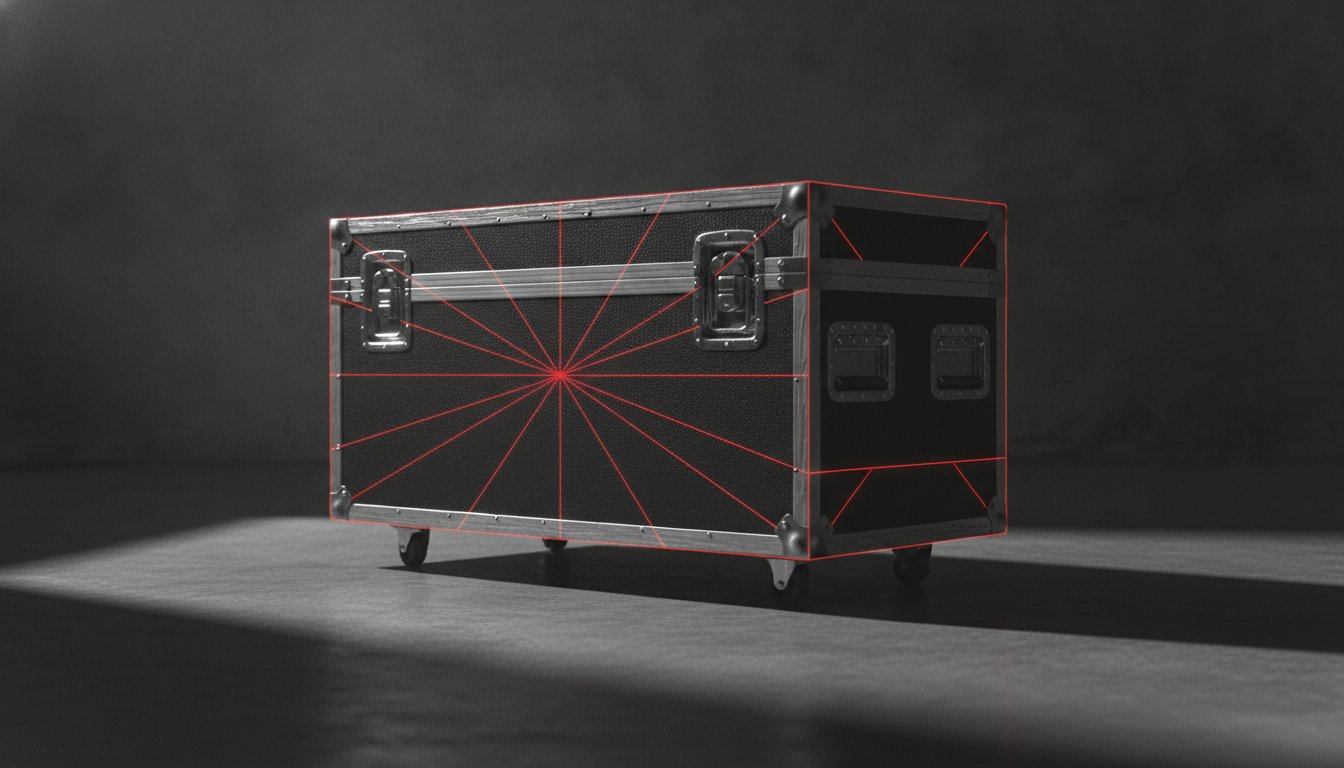
A utility case isn't just a storage box; it's a calibrated logistical tool engineered to withstand 100 round-trip shipments. In the high-stakes environment of professional production, equipment failure isn't an option. You've likely experienced the frustration of inconsistent case dimensions that waste truck space or hardware that fails at the worst possible moment. Relying on a high-quality ata 300-style truck utility flight case ensures that your gear remains secure during transit while maintaining a standardized footprint for efficient loading.
This guide explores the technical standards, structural engineering, and logistical benefits of these essential containers. You'll learn how to standardize your logistical workflow, protect your gear over the long term, and minimize maintenance costs through superior build quality. We provide a methodical overview of the material science behind Category I standards, the mechanics of reinforced hardware, and the logistical advantages of precision-engineered dimensions.
Key Takeaways
- Understand the rigorous requirements of ATA Spec 300 Category I, which demands a minimum durability of 100 round-trip shipments for reusable containers.
- Evaluate how structural engineering choices, such as 12mm plywood and Honeycomb Digital™ laminates, protect critical gear from impact and abrasion.
- Optimize your logistical workflow using an ata 300-style truck utility flight case designed for modular loading within standard 90-inch and 96-inch trailer widths.
- Identify the mechanical advantages of high-tension butterfly latches and 10mm high-density padding for maintaining equipment integrity during long-haul transit.
- Explore the integration of TruckPaX™ and Santosom Cases to create a standardized, high-performance fleet tailored for professional touring environments.
Understanding the ATA 300 Standard for Utility Flight Cases
The ATA 300 specification serves as the primary benchmark for reusable shipping containers in the professional production industry. Originally developed by the Air Transport Association, this standard provides a framework for the design and procurement of packaging that survives the rigors of frequent airline or ground transport. A genuine ata 300-style truck utility flight case prioritizes Category I requirements. This specific classification mandates that a container must withstand a minimum of 100 round-trip shipments without structural failure or compromise to the internal cargo.
Engineering to this standard involves rigorous impact resistance protocols. The "drop test" methodology requires a loaded case to survive consecutive falls from specific heights onto every face, edge, and corner. For cases under 50 lbs, this height is typically 30 inches. The goal is to verify that the structural integrity of the plywood, aluminum valances, and internal foam remains intact. While many manufacturers use the term "ATA-style," it indicates that the case utilizes the materials and assembly techniques required to meet these benchmarks. It represents a commitment to industrial-grade durability and professional-grade protection.
Category I vs. Category II: Knowing the Difference
Category I containers are designed as permanent shipping assets. They utilize high-grade 9mm or 12mm plywood and reinforced aluminum extrusions to achieve their 100-trip rating. Category II cases only provide protection for a minimum of 10 round-trips. For professional touring, where gear moves daily, Category II engineering is insufficient. Most utility trunks require Category I engineering to ensure a standardized logistical workflow and long-term gear protection. An ata 300-style truck utility flight case built to Category I standards ensures that maintenance costs remain low over years of heavy use.
The Role of Recessed Hardware in ATA Standards
Mechanical handling often shears protruding components. ATA standards dictate the use of recessed butterfly twist latches and spring-loaded handles. These components sit flush within the case wall, protected by heavy-duty steel dishes. This design prevents hardware from snagging on other cases or truck walls during loading. High-tension engagement in latches maintains a tight seal against dust and moisture. Industrial-grade zinc plating is essential for corrosion resistance, especially during outdoor load-ins. These features are integral to ProX Cases, ensuring that stacking integrity and structural longevity remain uncompromised on the road.
Structural Engineering: Anatomy of a Heavy-Duty Truck Pack Case
The structural integrity of an ata 300-style truck utility flight case depends on material science and mechanical assembly. Most professional cases utilize 3/8-inch (9mm) plywood for standard utility applications. However, 1/2-inch (12mm) plywood is the preferred specification for oversized trunks or heavy equipment. This thicker substrate prevents sidewall deflection under the weight of stacked gear. Every plywood panel is finished with Honeycomb Digital™ laminate. This hexagonal grid surface increases surface hardness, which reduces friction during loading and resists deep gouges that can compromise the wood's moisture resistance.
Precision-milled aluminum tongue-and-groove valances create a structural frame for the case. These extrusions serve as a physical barrier against dust and moisture. They ensure that the lid and base remain perfectly aligned even after years of mechanical stress. Inside the case, high-density interior padding acts as a kinetic energy dampener. This foam converts vibration from transport into heat. It protects delicate internal components from the micro-shocks common in long-haul trucking. For those building out a professional fleet, selecting engineering-grade utility cases ensures that your structural standards remain consistent across all departments.
Joinery and Reinforcement: Beyond the Surface
Redirecting impact energy is the primary goal of professional joinery. Heavy-duty steel ball corners act as the first point of contact during a drop. They disperse force across the reinforced aluminum extrusions rather than allowing it to concentrate on the plywood joints. Industrial rivets must be spaced at precise intervals to ensure structural stability. In larger utility trunks, internal bracing is often added to the floor and lid. This prevents the "oil-can" effect where large surface areas flex and weaken over time. These engineering details are what separate professional containers from consumer-grade alternatives.
Caster Board Integration and Load Distribution
Logistical mobility requires 4-inch heavy-duty casters. This size is the industry standard because it provides the necessary ground clearance for steep loading ramps. Standardized freight handling, as detailed by resources from the Intermodal Association of North America, requires equipment that can withstand the high-impact environment of intermodal transport. Caster boards must be reinforced with 18mm or thicker plywood. This prevents "punch-through" where the caster assembly is driven through the bottom of the case during a high-impact drop. Locking casters are equally vital. They provide stationary stability inside the truck, preventing the load from shifting during transit. A properly engineered ata 300-style truck utility flight case integrates these components into a single, cohesive unit designed for the rigors of the road.
Optimizing Logistics with Standardized Truck Utility Dimensions
Logistical efficiency in the touring industry is governed by the "Truck Pack" philosophy. This engineering approach designs equipment footprints to fit the internal dimensions of standard 90-inch and 96-inch wide trailers. When you utilize an ata 300-style truck utility flight case, you're adhering to a modular system that eliminates "dead air." Dead air is the unutilized volume between cases that leads to load shifting and wasted trailer capacity. By using standard footprints of 22.5, 30, and 45 inches, production managers can create tight, interlocking grids across the trailer floor.
Vertical density is equally critical for maximizing trailer volume. Professional utility cases feature integrated caster cups on the lid. These male/female alignment points lock the casters of the stacked case into the lid of the lower case. This creates a stable vertical column that resists lateral movement during transit. This stacking integrity allows for multi-tier loading without the need for excessive shoring or decking, significantly reducing the time required for secure load-ins.
Full-Trunk vs. Half-Trunk Configurations
Choosing between full-trunk and half-trunk configurations depends on the mechanical requirements of the cargo. 48-inch full trunks provide the necessary volume for heavy cable looms, stage truss hardware, and base plates. Conversely, 24-inch half-trunks offer greater versatility for lighting fixtures and specialized electronics. Organizing these utility/storage cases with adjustable plywood dividers allows for high-density storage of smaller components while maintaining the same external footprint. This consistency ensures that every case in the fleet contributes to a predictable logistical grid.
Calculating Logistical Density for Touring
Maximizing the volume per trailer reduces the total number of vehicles required, which directly lowers fuel consumption and operational overhead. While volume is the primary concern for utility trunks, logistical planners must also monitor Gross Vehicle Weight (GVW) limits. Heavy cable trunks should be distributed across the trailer axles to prevent overloading. Uniform case heights are the final component of rapid logistics. When every ata 300-style truck utility flight case in a tier shares the same height, it creates a level surface for secondary layers or ramps. This predictability allows crew members to move gear with greater speed and safety during high-pressure load-outs.

Evaluating Durability: Hardware and Material Specifications
Durability in an ata 300-style truck utility flight case is often determined by the tension of its mechanical fasteners. High-tension butterfly twist latches are designed to pull the lid and base together with significant force. This action compresses the aluminum valance to create a secure, rattle-free closure that resists lateral shearing. If a latch lacks sufficient tension, mechanical vibrations during transport can cause the hardware to vibrate loose. This leads to structural fatigue and compromises the case's protective seal. Beyond the latches, 10mm high-density interior padding provides essential vibration dampening. This material differs from standard upholstery foam because it's engineered with a specific closed-cell structure. This structure absorbs kinetic energy and prevents it from reaching the equipment chassis, which is vital for protecting internal circuit boards and optical components.
External finishes have evolved from traditional smooth ABS laminates to modern textured surfaces. These surfaces provide a higher coefficient of friction, which is beneficial when stacking cases in dark or damp environments. Textured laminates are also more durable than smooth alternatives because they resist deep scratching and hide scuffs. Maintenance is a logistical necessity for any touring fleet. Casters should be inspected for flat spots, bearing play, or debris every six months. Handles that don't snap back into their recessed dishes indicate spring fatigue. You should replace these components immediately to prevent them from snagging on other cases or truck walls during loading operations.
The Weakest Link: Hardware Failure Points
Hardware failure points are the primary cause of equipment damage on the road. Non-ATA style storage boxes often fail at the hinges or handles because they use light-duty rivets and thin-gauge steel. In professional utility trunks, spring-loaded handles must feature thick rubber grips. These provide ergonomic safety for the crew and reduce the risk of hand fatigue during high-velocity load-outs. Piano hinges are the technical standard for lids because they distribute weight across the entire rear edge of the case. Split hinges concentrate stress on two small points, which eventually leads to plywood tear-out and lid failure under heavy loads.
Environmental Protection and Weather Resistance
Environmental protection is a core requirement for specialized AV Broadcasting Cases. These units often feature integrated gaskets that prevent moisture ingress during outdoor load-ins or in humid climates. An ata 300-style truck utility flight case must also manage extreme temperature fluctuations. In storage environments, rapid cooling and heating can cause condensation to form inside the case. High-quality builds utilize materials that resist oxidation and humidity, ensuring that internal components remain dry and functional. This level of protection prevents the long-term corrosion of connectors and hardware.
Maintain your equipment's integrity by exploring our full range of professional utility cases today.
Professional Grade Solutions: The ProX Engineering Approach
ProX has engineered performance gear since 1984. This decades-long expertise informs the construction of every ata 300-style truck utility flight case we manufacture. Our approach prioritizes functional excellence over aesthetics, ensuring that every design choice serves a specific mechanical purpose. We developed TruckPaX™ cases specifically to address the logistical challenges of modern touring, where trailer volume and weight distribution are critical variables. For bespoke requirements that exceed standard specifications, our integration with Santosom Cases provides a pathway for specialized engineering. This partnership allows for the creation of unique interior configurations while maintaining the structural integrity required for Category I transport.
Supporting a professional fleet requires more than just the initial build. ProX provides a comprehensive dealer portal and a robust inventory of ProX Cases Replacement Parts. This ecosystem ensures that your investment remains in service for the long term. If a caster or latch fails after years of mechanical stress, standardized replacement components allow for rapid field repairs. This commitment to lifecycle support is a hallmark of our engineering philosophy. It allows production companies to maintain high operational standards without the need for redundant inventory.
Custom Engineering vs. Off-the-Shelf Utility
Sensitive electronics often require custom-built solutions with precision-cut foam inserts to isolate delicate components from vibration. However, standardized utility trunks remain the backbone of general production hardware. These off-the-shelf solutions provide the most efficient path to fleet-wide standardization. Whether you choose a custom build or a standard ata 300-style truck utility flight case, the underlying engineering precision remains identical. We use the same high-grade plywood, Honeycomb Digital™ laminates, and reinforced hardware across our entire catalog to ensure consistent performance on the road.
Next Steps for Production Professionals
Optimizing your logistical workflow starts with a comprehensive audit of your current inventory. Identify cases that don't conform to standard truck-pack dimensions or those showing signs of structural fatigue. It's essential to select cases that match your primary transport method, whether that's local box trucks or 53-foot intermodal trailers. Consult with authorized ProX dealers to discuss fleet-wide standardization strategies. They can provide technical guidance on selecting the right mix of TruckPaX™ and Santosom solutions for your specific needs. Standardizing your cases is a long-term investment in gear protection and operational efficiency.
Advancing Your Logistical Infrastructure
Standardizing your equipment fleet around the ATA 300 Category I specification is a fundamental step toward long-term operational stability. By prioritizing 100-trip durability and modular "Truck Pack" dimensions, you eliminate the inefficiencies that lead to equipment damage and wasted trailer volume. Every ata 300-style truck utility flight case in your inventory should serve as a reliable asset that simplifies complex load-outs and protects critical hardware. It's a calculated investment in the physical integrity of your professional gear.
ProX has been engineering performance gear since 1984. Our meticulous approach to material science and mechanical assembly is trusted by industry leaders like Pioneer DJ and QSC. With a global dealer network providing professional support, we ensure your workflow doesn't suffer from hardware failure on the road. Transitioning to a standardized case system reduces maintenance costs and improves the overall safety of your production environment.
Explore the full range of ProX Professional Utility Cases to find the exact configurations required for your next project. Investing in precision-engineered solutions today ensures your gear is protected for the challenges of tomorrow.
Frequently Asked Questions
What does ATA 300-style actually mean for a utility case?
ATA 300-style indicates that a case is engineered to meet the durability benchmarks set by the Air Transport Association. This involves Category I standards, which require the container to survive at least 100 round-trip shipments. Construction utilizes industrial-grade plywood, aluminum extrusions, and recessed hardware to achieve this rating. It's designed to function as a permanent shipping asset rather than a temporary solution for high-value production equipment.
How do I know if a case is suitable for international touring?
What is the difference between 9mm and 12mm plywood in case construction?
The thickness of the plywood determines the case's resistance to sidewall deflection and its overall weight. 9mm plywood is the industry standard for most utility applications, providing sufficient strength for cables and hardware. 12mm plywood is necessary for larger trunks that carry heavier loads, as it provides the rigidity required to prevent the case from bowing when stacked. Choosing the correct thickness is vital for maintaining the structural stability of the entire load.
Why are 4-inch casters better than smaller wheels for utility trunks?
4-inch casters are the professional standard because they offer superior mobility over uneven surfaces and steep ramps. Smaller wheels frequently snag on door thresholds or cable ramps, which can cause the case to tip or the caster board to fail. The larger diameter and heavy-duty bearings of 4-inch casters allow for easier movement of high-density loads. This reduces physical strain on the crew and ensures that the case navigates the venue floor smoothly.
Can I stack different brands of ATA-style cases together?
Inter-brand stacking is possible only if the caster cup positions and external footprints are identical across the units. Many manufacturers utilize modular dimensions, but slight variations in hardware placement can compromise vertical stability. Secure stacking requires the casters of the top case to seat perfectly into the cups of the lower case. It's best to standardize your inventory with a single brand to ensure that your vertical columns remain stable and maximize trailer height.
How do I maintain the hardware on my utility flight cases?
Hardware maintenance involves routine cleaning and mechanical inspection of all moving parts to prevent failure. You should remove hair and debris from caster axles and check for flat spots that impede mobility. Applying a dry silicone lubricant to butterfly latches ensures they maintain the necessary tension for a secure seal. If rivets become loose or hardware is sheared, replace the components immediately to restore the case's original structural integrity and protective capabilities.
What are truck pack dimensions and why are they standardized?
Truck pack dimensions are standardized footprints designed to fit perfectly within 90-inch or 96-inch trailer widths. Utilizing an ata 300-style truck utility flight case with these specific dimensions allows for modular, interlocking loading patterns. This strategy eliminates wasted space and prevents the load from shifting during transit. It's a critical component of logistical planning that improves fuel efficiency and ensures the safety of both the gear and the transport crew.
Are ATA 300-style cases waterproof or just water-resistant?
Standard ATA 300-style cases are water-resistant but not hermetically sealed for total submersion. The aluminum tongue-and-groove valances create a tight mechanical seal that protects against rain and dust during typical loading operations. For environments where equipment faces extreme moisture, a specialized ata 300-style truck utility flight case from the UltronX™ line is required. These cases feature integrated O-rings and pressure valves to provide a completely waterproof and airtight environment for sensitive components.
Disclaimer
Any trademarks, trade names or brand names appearing herein that do not belong to ProX are the property of their respective owners and/or companies, and such appearance doesn't and shall not constitute or imply endorsement, sponsorship or recommendation by ProX.


